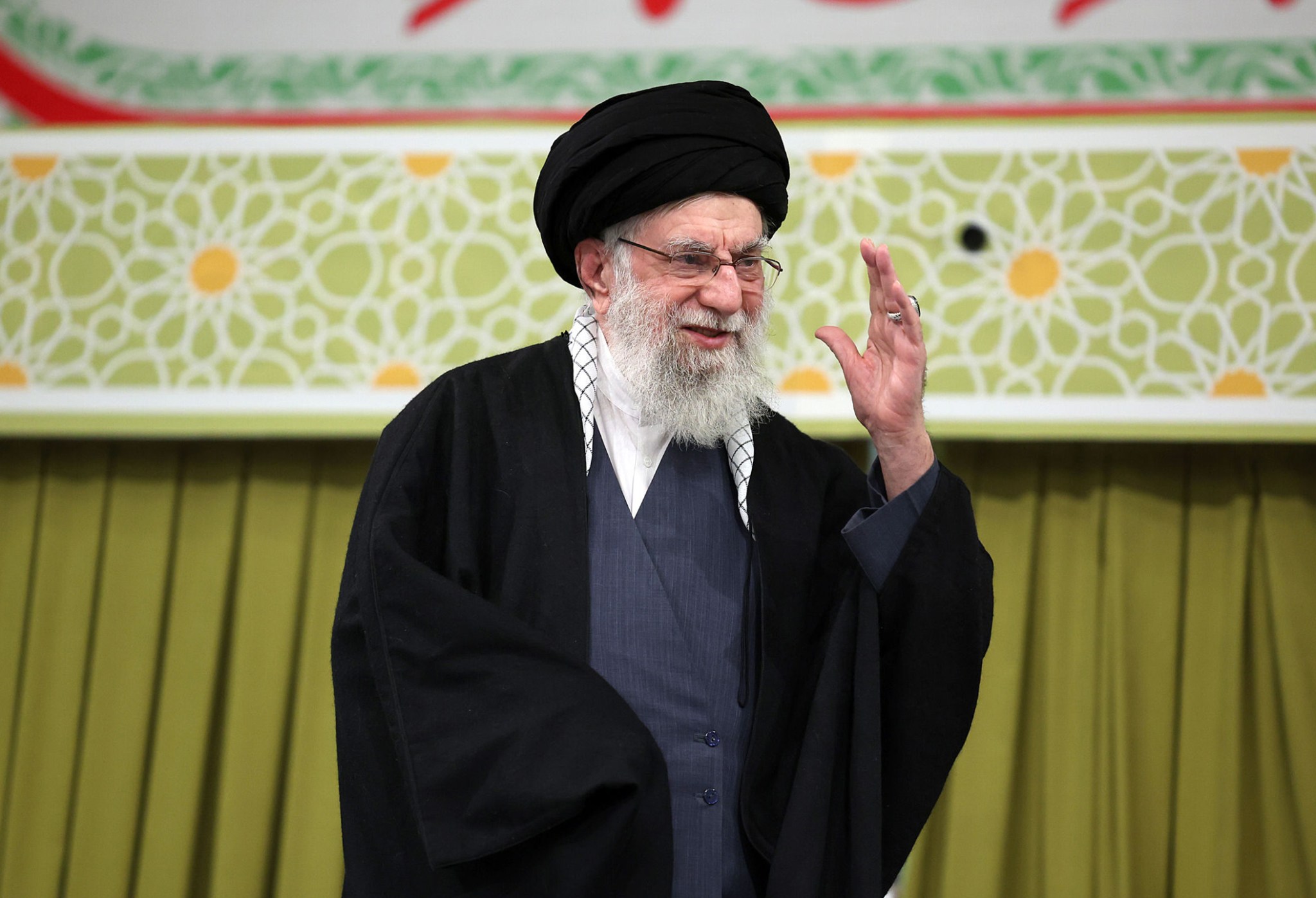
In a dramatic escalation of regional tensions, Supreme Leader Ali Khamenei of Iran has reportedly been killed, a development emerging amidst a coordinated two-pronged military strategy executed by the United States and Israel against Iranian targets. President Donald Trump, speaking early Saturday, publicly endorsed reports of Khamenei's demise, simultaneously articulating a vision for regime change in Tehran by urging the Iranian populace to rise against their government once the current aerial bombardments cease. According to analysis from the Institute for the Study of War (ISW), shared on X, Israel's operational focus has primarily been on what are described as 'decapitation strikes' and other military installations, while the United States has predominantly concentrated its efforts on broader military objectives. This strategic offensive has reportedly plunged Iran's leadership into disarray, potentially triggering a profound succession crisis at the highest echelons of power within the Islamic Republic, as various sources indicate. The reported death of the long-serving Supreme Leader marks a pivotal moment in the ongoing geopolitical confrontation, with immediate and far-reaching implications for regional stability and international relations.
The reported death of Ali Khamenei, who assumed the mantle of Supreme Leader following the passing of revolutionary founder Ayatollah Ruhollah Khomeini in 1989, signifies the potential end of an era defined by his steadfast, often repressive, rule. For over three decades, Khamenei exerted absolute authority, meticulously enforcing the ideological tenets of the Islamic Revolution through his firm control over the Islamic Revolutionary Guard Corps (IRGC) and other vital security apparatuses. His removal from power, if confirmed, would inevitably ignite a complex succession battle, a scenario compounded by the current operational environment. Iran's constitution outlines a process wherein a council of senior clerics is tasked with selecting a new Supreme Leader; however, reports from Axios suggest that Israel's targeted 'decapitation strikes' have severely disrupted and disorganized the country's top leadership structure, potentially complicating or delaying this critical constitutional procedure. This deliberate targeting of key figures aims not just at military objectives but at destabilizing the very core of Iran's governance, creating a vacuum that could lead to internal power struggles and uncertainty.
Further details emerging from the conflict zone indicate that the strategic strikes have reportedly resulted in the deaths of several other high-ranking Iranian officials. The Institute for the Study of War cited reports suggesting that the commander of the Islamic Revolutionary Guard Corps, Iran’s defense minister, its intelligence chief, and the secretary of the defense council were also among those killed. Regarding Supreme Leader Khamenei, Axios specifically reported that he perished in an Israeli strike, with an official source confirming that his body was subsequently recovered from his extensively damaged compound. In anticipation of such targeted assaults on its senior command, the Iranian regime reportedly implemented a contingency plan to decentralize its military's chain of command, pushing decision-making authority down to lower-ranking officers. This tactical adjustment, according to observers, likely contributed to the
The reported disarray within Iran's leadership, as highlighted by Axios, and the potential for a succession crisis following Khamenei's reported death, carry profound implications for the future trajectory of the Islamic Republic and regional stability. The strategic objectives of the United States, articulated by President Trump as regime change, and Israel's focus on 'decapitation strikes,' appear to be designed to exploit any resulting power vacuum and internal instability. Experts suggest that the loss of multiple key decision-makers, as reported by ISW, could severely hamper Iran's ability to formulate coherent long-term strategies, potentially leading to a period of unpredictable internal dynamics. Paradoxically, despite this reported leadership chaos, Iran's military response has been characterized by ISW as having
The reported death of Supreme Leader Ali Khamenei, alongside other senior Iranian officials, marks a critical juncture in the escalating confrontation between Iran and the US-Israel alliance. While the United States and Israel pursue a dual strategy aimed at military targets and leadership disruption, Iran has demonstrated a swift, albeit potentially decentralized, capacity for retaliation. The immediate aftermath is characterized by significant uncertainty regarding Iran's future leadership, with the constitutional process for succession potentially complicated by the reported disarray within the clerical establishment. As the region braces for further developments, the international community will closely monitor the internal power dynamics within Iran and the broader implications for regional security, particularly concerning the ongoing missile and drone exchanges. The coming days are expected to reveal more about the veracity of these reports and the strategic responses from all involved parties, shaping the geopolitical landscape for years to come.