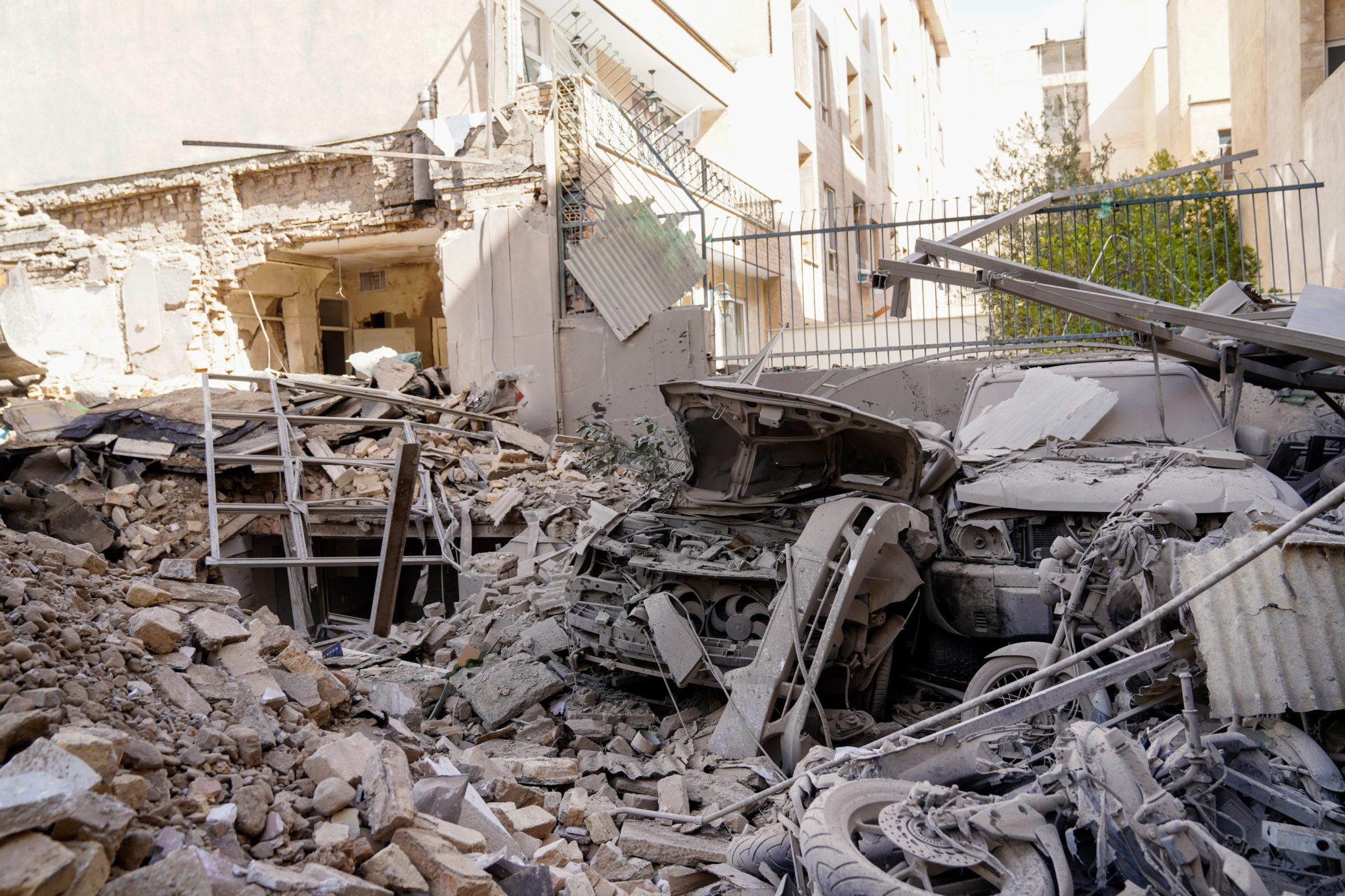
Iran's Supreme Leader, Ayatollah Ali Khamenei, has reportedly died following a significant military assault on the nation, an operation President Donald Trump attributed to a joint effort by the United States and Israel. Speaking on social media Saturday, President Trump characterized Khamenei's demise as "the single greatest chance for the Iranian people to take back their Country." The incident occurred in the wake of a coordinated aerial bombardment by American and Israeli forces, which specifically targeted Iranian military installations and governmental facilities. President Trump further indicated that these intensive and precise aerial assaults were slated to persist "uninterrupted" for at least a week, potentially longer. As of the latest reports, Iranian authorities had not yet issued any official statement or comment regarding the claims.
The reported death of Ayatollah Ali Khamenei, who served as the Islamic Republic's second paramount leader, introduces profound uncertainty regarding Iran's future trajectory. Khamenei assumed the supreme leadership after Ayatollah Ruhollah Khomeini, the architect of the 1979 Islamic Revolution, and held ultimate authority over all significant policy decisions within the nation. He was at the helm of Iran's influential clerical establishment and its powerful paramilitary Revolutionary Guard, which together constitute the dual pillars of authority within the country's theological governance. The absence of a clearly appointed successor for a figure of such immense power and influence could cast the nation into political turmoil and heighten the likelihood of prolonged hostilities, especially given Iran's prior pledges of reprisal against any such aggression.
Further elaborating on the operation, President Trump described the ongoing military actions as involving "heavy and pinpoint bombing," which he stated would continue without cessation for an extended period. In his social media post, President Trump also leveled strong criticism against Khamenei, labeling him "one of the most evil people in history." He asserted that Khamenei was "unable to avoid our Intelligence and Highly Sophisticated Tracking Systems and, working closely with Israel, there was not a thing he, or the other leaders that have been killed along with him, could do." Separately, Israeli Prime Minister Benjamin Netanyahu, in a nationally televised address, noted "growing signs" that Khamenei had been killed when Israeli forces targeted his residential complex in the early hours of Saturday. Shortly after Netanyahu's statement, two Israeli officials, speaking anonymously to The Associated Press ahead of a formal declaration, confirmed Khamenei's demise, though they refrained from providing additional specifics.
The reported elimination of Iran's Supreme Leader, particularly without a clear line of succession, carries immense strategic implications for the region and global stability. Analysts suggest that such a power vacuum could trigger internal struggles within Iran's intricate political and religious structures, potentially leading to instability or a reordering of its leadership. President Trump's direct appeal to the Iranian populace, urging them to "seize control of your destiny" by initiating an uprising against the current Islamic regime, underscores a clear objective to foster internal dissent and potentially facilitate a change in governance. The prospect of "protracted conflict," as indicated by reports, is a significant concern, especially considering Iran's history of robust responses to perceived external threats and its network of regional proxies. The joint nature of the US-Israeli operation signals a coordinated and assertive stance against the Iranian leadership, potentially escalating an already volatile geopolitical landscape.
In summary, the reported death of Ayatollah Ali Khamenei, following a joint US-Israeli aerial bombardment, marks a pivotal moment with far-reaching consequences for Iran and the broader Middle East. President Trump's immediate call for the Iranian people to rise up against their current leadership highlights a strategic aim to leverage this event for internal change. The absence of a designated successor for the Supreme Leader introduces significant uncertainty regarding Iran's future political direction and raises the specter of increased regional instability and potential retaliatory actions. As the situation unfolds, the world will be closely watching for any official response from Tehran, the emergence of new leadership, and the potential for a dramatic shift in the geopolitical dynamics of the region.