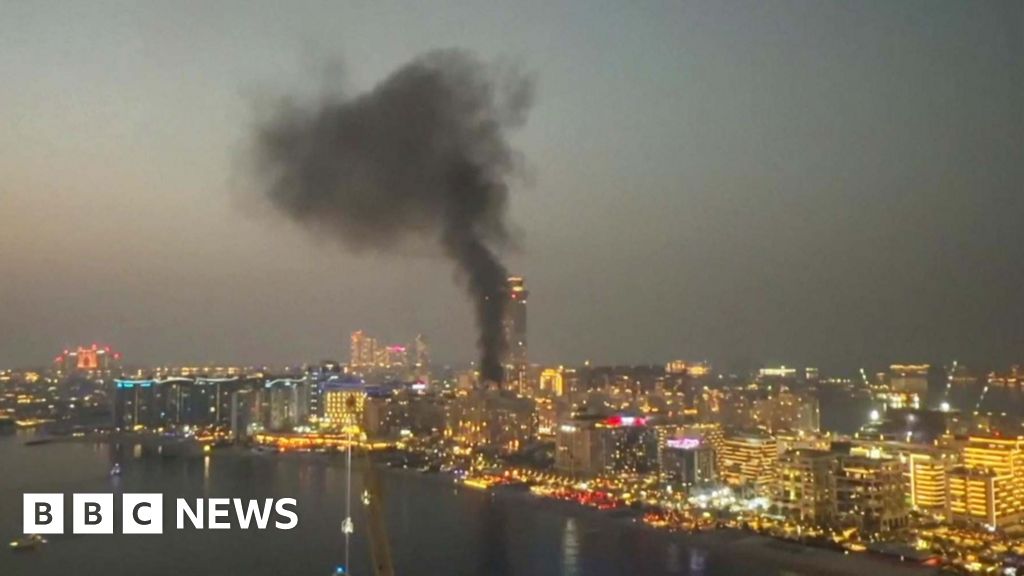
Dubai, a prominent global financial and tourism hub, has been subjected to a sustained barrage of missile and drone attacks for two consecutive days, with assaults reportedly continuing into Sunday. These actions, attributed to Iran, are understood to be a retaliatory measure following significant and ongoing strikes against Iran by the United States and Israel. The unprecedented aggression has caused considerable disruption, leading residents to largely remain indoors as the city grapples with the escalating regional tensions. Reports indicate that several luxury hotels and Dubai's main international airport, recognized as the world's busiest by passenger volume, have sustained damage. This series of events marks a critical moment for the United Arab Emirates (UAE), challenging its reputation as a bastion of stability amidst a volatile geopolitical landscape, as the city experiences a stark departure from its customary vibrant daily rhythm, according to individuals residing in and visiting the region.
The current offensive targeting Dubai is part of a broader regional response initiated by Iran, directly linked to what it describes as extensive and persistent attacks carried out by US and Israeli forces against its territory. This tit-for-tat escalation underscores the deeply entrenched and volatile nature of Middle Eastern geopolitics, where actions by major international and regional powers often trigger immediate and far-reaching repercussions. Dubai, with its critical infrastructure and status as a major international transit point and economic powerhouse, represents a high-profile target, amplifying the message of Iran's retaliatory capacity. The choice to strike such a globally connected city highlights the potential for wider economic and humanitarian impacts, drawing international attention to a conflict that threatens to destabilize key trade routes and investment hubs across the Gulf region.
Specific incidents reported during the attacks illustrate the direct impact on Dubai's iconic landscape. On the artificial archipelago of Palm Jumeirah, the five-star Fairmont The Palm hotel reportedly experienced a substantial explosion. Furthermore, authorities have confirmed that debris resulting from the interception of an incoming drone caused a "minor fire" on the exterior facade of the renowned five-star Burj Al Arab hotel. Local residents have described a tense atmosphere; one resident, Becky Williams, recounted witnessing approximately 15 interceptor missiles launched from behind her home, describing the distinct sounds of aerial interceptions. Despite the visible and audible signs of conflict, Williams conveyed a sense of calm within her family, expressing confidence in the UAE military's ability to safeguard its airspace and her belief that the situation would soon de-escalate, according to reports.
The targeting of Dubai's critical infrastructure, including its world-renowned airport and luxury hospitality sector, carries significant implications for the city's economic future and its standing as a safe haven for international business and tourism. Observers suggest that while UAE authorities have demonstrated robust defensive capabilities through missile interceptions, the mere occurrence of such attacks could prompt a re-evaluation of risk by investors and travelers alike. The disruption to daily life, characterized by residents staying indoors and a pervasive sense of unease, underscores the vulnerability even of highly developed urban centers to regional conflicts. This situation raises pertinent questions about the long-term stability of the Gulf region and the potential for these escalating tensions to impact global supply chains and energy markets, given the strategic importance of the area.
As the missile and drone attacks attributed to Iran continue to challenge Dubai's security, the immediate focus remains on the ongoing defensive efforts by UAE authorities and the safety of its residents and visitors. The incidents at key landmarks like the Fairmont The Palm and Burj Al Arab, alongside the disruption at the international airport, serve as stark reminders of the broader regional conflict's reach. The resilience expressed by some residents, coupled with the visible military response, paints a picture of a city under duress but actively defending itself. Moving forward, the international community will closely monitor the trajectory of these retaliatory strikes and their potential to further escalate, with significant attention on diplomatic efforts to de-escalate tensions and restore stability to a vital global crossroads.