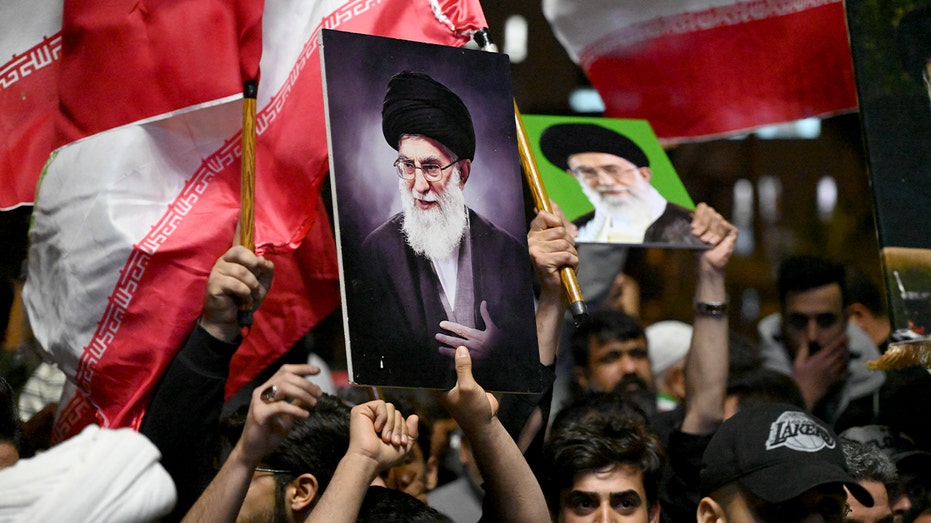
Iran has embarked on an unprecedented and uncertain path following the demise of its Supreme Leader, Ayatollah Ali Khamenei, on Saturday. His death brings to an abrupt close more than three decades of his authoritarian stewardship, initiating a carefully orchestrated leadership transition that the Islamic Republic's establishment has reportedly been preparing for extensively. This significant development unfolds against a backdrop of heightened regional instability, marked by recent military actions, including reported strikes by the United States and Israel across the nation. A senior Arab diplomat, speaking to The Times of Israel, characterized Khamenei's passing as a profound setback for the Islamic Republic, yet underscored Tehran's proactive measures to withstand such a scenario. The diplomat suggested that simply enduring this period of transition would constitute a strategic success for the regime, highlighting the immense pressure and challenges it now confronts in maintaining stability and continuity.
Ayatollah Ali Khamenei's tenure, spanning over thirty years, solidified his position as the ultimate authority in Iran's unique system of clerical rule, deeply shaping its domestic and foreign policies. His passing not only marks the end of an era but also triggers a critical test for the resilience and adaptability of the entrenched theocracy. For years, the Iranian establishment has reportedly engaged in contingency planning for this very eventuality, aiming to ensure a seamless transfer of power and preserve the ideological foundations of the Islamic Republic. This transition is further complicated by the volatile geopolitical landscape, with recent U.S. and Israeli military operations reportedly targeting various sites within the country. These external pressures exacerbate the internal challenges of succession, placing the regime's institutionalized power structure under intense scrutiny and potentially influencing the trajectory of its future leadership.
The constitutional framework of the Islamic Republic outlines a specific process for selecting the next Supreme Leader. According to Jason Brodsky, policy director of United Against Nuclear Iran (UANI), who spoke to Fox News Digital, the Assembly of Experts, a body composed of senior clerics, is constitutionally mandated to choose Khamenei's successor. In the interim period, should a leadership vacancy occur, an provisional leadership council is designed to form, comprising the sitting president, the chief justice, and a representative from the Islamic Revolutionary Guard Corps (IRGC). Reports from the Council on Foreign Relations (CFR) have identified three potential paths for Iran post-Khamenei: a managed continuation of the current regime, an overt or gradual military assumption of power, or a complete systemic breakdown. The CFR report further cautions that even a change at the highest level of leadership may not immediately lead to substantial political reforms, primarily due to the deeply embedded power structures controlled by a select group of clerical elites and the influential IRGC. Furthermore, historical accounts, including insights from leaked documents, reveal Khamenei's strategic approach to quelling internal dissent, underscoring the regime's reliance on force to maintain control.
Experts analyzing the potential scenarios for Iran's future frequently discuss the concept of "Khamenei-ism without Khamenei," a trajectory highlighted by the Council on Foreign Relations. This scenario suggests that while a new Supreme Leader will emerge, the fundamental ideological tenets of the Islamic Republic will likely be preserved, with the successor relying heavily on the established security apparatus, particularly the IRGC, to ensure stability and continuity. The substantial influence wielded by the clerical elite and the IRGC means that any leadership transition will be carefully managed to safeguard the regime's core principles and power base. Given the deeply institutionalized nature of the theocracy and its documented history of employing force to suppress opposition, achieving meaningful political reform in the immediate future appears to be a formidable challenge. This internal dynamic, coupled with the ongoing regional tensions and the strategic importance of Iran, implies that the succession process will have profound implications not only for the country itself but also for the broader stability of the Middle East.
The death of Ayatollah Ali Khamenei marks a pivotal moment for Iran, ushering in a period of significant uncertainty and a critical test for its long-standing theocratic system. While the regime has reportedly prepared for this transition, the path forward remains complex, with potential trajectories ranging from managed continuity to a military takeover or even systemic collapse, as outlined by the CFR. The immediate focus will be on the Assembly of Experts' role in selecting a new Supreme Leader and the actions of the interim leadership council. The enduring influence of the IRGC and the clerical establishment will be crucial in shaping the outcome, as the regime prioritizes its survival and the preservation of its ideological framework. Observers will closely monitor internal dynamics, potential shifts in foreign policy, and the regime's response to both domestic and international pressures in the coming months.