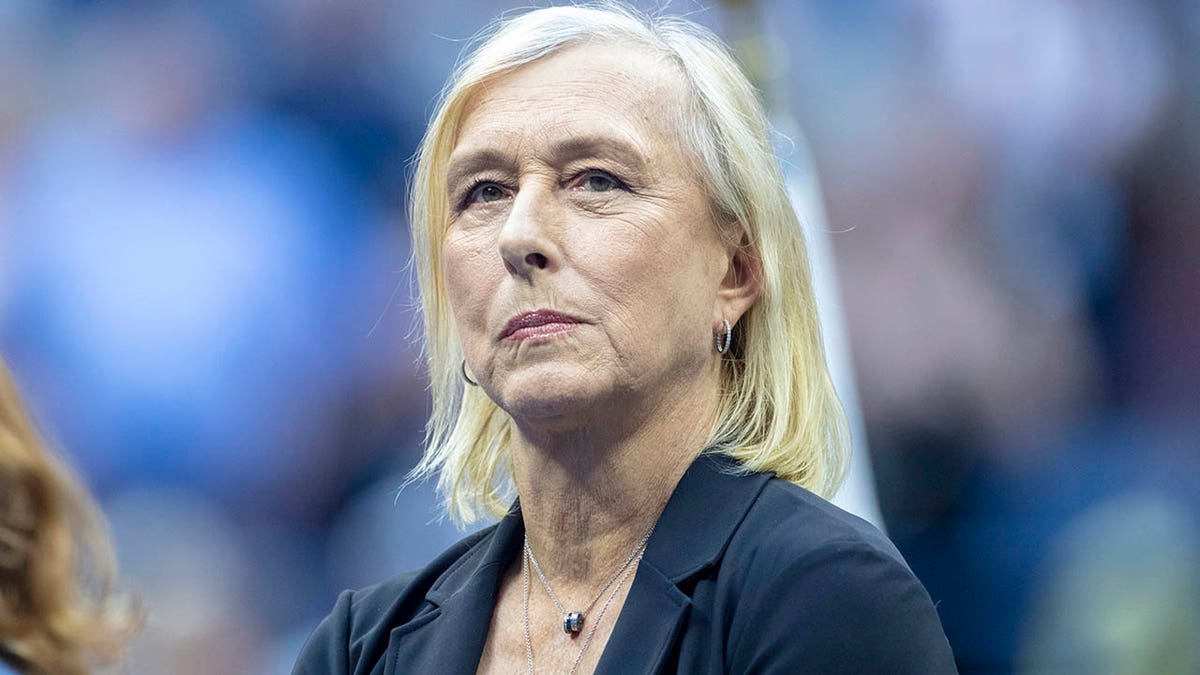
Tennis icon Martina Navratilova recently offered her strong perspective on the U.S.-Israeli military actions targeting Iran, which occurred on Saturday. A vocal critic of former President Donald Trump, Navratilova publicly characterized him as a "psychopath" in a post on the social media platform X. Her remarks, made in response to a post by Representative Marjorie Taylor Green that criticized Trump's decision regarding the strike, asserted that Trump demonstrated a complete disregard for the lives potentially lost due to his directives, according to her widely shared online statement. In a separate social media interaction, Navratilova also expressed a favorable view regarding reports of the death of Iranian Supreme Leader Ali Khamenei, indicating that such news "would be good." Khamenei's demise was subsequently confirmed on Saturday, following an Israeli strike in Tehran that reportedly left his compound in ruins. These statements underscore Navratilova's consistent engagement with geopolitical events and her willingness to voice controversial opinions on global leadership and conflict.
The recent U.S.-Israeli military operations in Iran, which culminated in the confirmed death of Supreme Leader Ali Khamenei, mark a significant escalation in regional tensions. Khamenei had presided over the Islamic Republic for more than three decades, a period characterized by severe domestic repression and persistent adversarial relations with both the United States and Israel. His passing creates a substantial power vacuum within Iran, with potential ramifications for the country's future trajectory and its standing on the international stage. Martina Navratilova's outspoken commentary is consistent with her established pattern of engaging in political discourse, particularly concerning authoritarian figures and international conflicts. She has frequently voiced strong criticisms of former President Trump, notably following a military operation in Venezuela in January that led to the capture of Nicolás Maduro, where she similarly condemned his actions as "insane" and "illegal," according to her social media pronouncements at the time. Her background as a refugee who fled totalitarian communist rule in Czechoslovakia in 1975 has profoundly shaped her worldview, fueling her deep-seated resentment of limitations on personal freedoms and her strong anti-authoritarian stance, which she has often cited when drawing comparisons between Trump and leaders from her former homeland.
Navratilova's pointed critique of former President Trump following the Iran strikes was delivered with unreserved language. On the platform X, she described him as a "psychopath," alleging that he was indifferent to the human casualties resulting from his decisions. This strong condemnation echoed her earlier remarks regarding the January military action in Venezuela, where she characterized Trump as "absolutely insane" and accused him of engaging in "completely illegal" activities. She further asserted that Trump had violated more laws than all previous presidents combined, labeling him a "serial criminal on so many different fronts," according to her posts on January 4th. In contrast to her criticism of Trump, Navratilova reacted positively to the news concerning Iranian Supreme Leader Ali Khamenei. When confronted with an early report suggesting his death, she responded online that such an outcome "would be good news." This sentiment was later substantiated when officials confirmed Khamenei's death on Saturday, attributing it to an Israeli strike in Tehran that reportedly devastated his residential compound. Navratilova's engagement with Iranian affairs extends beyond these recent comments; in November, she joined a coalition of athletes, including Riley Gaines, in signing a letter that denounced the Iranian regime for its death sentence imposed upon boxing champion Mohammad Javad Vafaei Sani, highlighting her consistent opposition to human rights abuses under authoritarian rule.
Martina Navratilova's dual commentary—harshly condemning a former U.S. president while expressing approval for the death of a foreign adversary's leader—illustrates the complex and often polarizing role of prominent public figures in global political discourse. Her willingness to leverage her platform as a celebrated athlete to weigh in on sensitive geopolitical events, particularly through social media, amplifies these discussions and can shape public opinion. Her consistent anti-authoritarian stance, rooted in her personal history as a refugee from Soviet-era Czechoslovakia, provides a critical lens through which she views leadership and governance, leading her to draw parallels between Trump's actions and the repressive regimes she experienced. The implications of Khamenei's confirmed death are profound, potentially ushering in a period of uncertainty and transition within Iran. Analysts will be closely watching for shifts in the country's internal power dynamics, its regional foreign policy, and its future interactions with the United States and Israel. Navratilova's comments, while personal, reflect a broader sentiment among some who view the demise of long-standing authoritarian leaders as a positive development for human rights and international stability, even as they simultaneously criticize the methods of other global powers.
In summary, tennis legend Martina Navratilova has once again positioned herself at the center of a significant international debate, offering a stark contrast in her reactions to recent geopolitical developments. She delivered an unsparing critique of former President Donald Trump, labeling him a "psychopath" in the wake of U.S.-Israeli strikes against Iran, while simultaneously welcoming the confirmed death of Iranian Supreme Leader Ali Khamenei, describing it as "good news." These statements, shared on social media, are consistent with her long-standing public opposition to authoritarianism, a perspective deeply informed by her personal experience as a refugee. As the international community grapples with the aftermath of Khamenei's death and the ongoing tensions in the Middle East, Navratilova's outspoken views serve as a reminder of the powerful, albeit sometimes controversial, role that public figures can play in shaping narratives around global conflicts and leadership. Future developments in Iran's political landscape and the broader regional stability will undoubtedly remain a focal point of international attention, with figures like Navratilova continuing to offer their distinct perspectives.