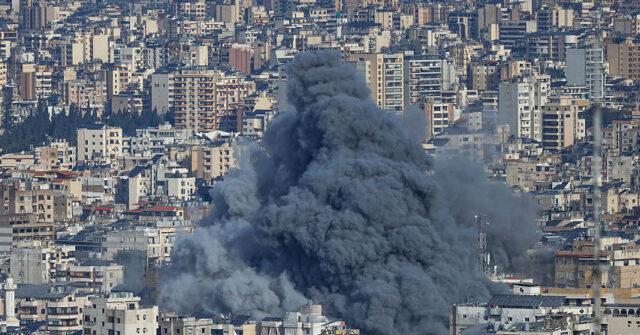
A significant military engagement targeting Iran, dubbed Operation Epic Fury, has now reached its fifth day, with reports indicating continued aerial assaults by United States and Israeli forces across various locations, including the Iranian capital, Tehran, and parts of Lebanon. Simultaneously, Iran is navigating a critical internal political process to select a new supreme leader, a development unfolding amidst the intense external military pressure. The Israeli Air Force has disclosed a substantial aerial campaign, reporting the deployment of over five thousand munitions against Iranian targets since the operation's inception on Saturday. This aggressive posture aims to solidify air superiority, particularly over the Tehran region, according to official statements. The broader implications of the conflict are already reverberating globally, with the Vatican expressing profound concerns over the erosion of international legal frameworks and QatarEnergy, a major global energy supplier, declaring force majeure on its liquefied natural gas shipments, signaling potential disruptions to international energy markets.
The ongoing military actions, which commenced on Saturday, mark a significant escalation in regional tensions, with Operation Epic Fury representing a concerted effort by US and Israeli forces. This sustained campaign targets Iran's military infrastructure and capabilities, as evidenced by the extensive Israeli aerial bombardment. The strategic context of these strikes extends beyond Iran's borders, encompassing targets in Lebanon, suggesting a broader regional strategy to counter perceived threats. Concurrently, Iran faces the complex challenge of managing a critical political transition, specifically the selection of its next supreme leader. This internal process is now inextricably linked with the external military pressure, potentially influencing the succession dynamics and the nation's response to the ongoing conflict. Furthermore, the economic fallout is becoming increasingly apparent, with QatarEnergy's decision to halt liquefied natural gas production on Monday, citing the instability in the Strait of Hormuz – a vital maritime choke point for global energy transit – and the broader conflict in Iran. This move by a nation responsible for approximately one-fifth of the world's LNG exports underscores the far-reaching economic consequences of the current hostilities.
Detailed reports from the Israeli Air Force confirm the intensity of their operations, stating that more than five thousand munitions have been dropped on Iranian territory since the conflict began on Saturday. Officials from the IAF have articulated their intent to 'deepen air superiority' across all of Iran, with a particular focus on the strategic Tehran area, indicating a sustained and targeted aerial campaign. On the diplomatic front, the Vatican has voiced strong condemnation regarding the prevailing geopolitical climate. Cardinal Secretary of State Pietro Parolin, the Holy See's chief diplomat, lamented what he described as the 'erosion of international law' and its replacement by the 'law of force' in the context of the Iran conflict. Speaking to Vatican News, Cardinal Parolin issued a stark warning: if states were to unilaterally assert a right to 'preventive war' based on their own criteria and without a robust supranational legal framework, the entire world would face the severe risk of widespread conflagration. Economically, QatarEnergy, a state-owned entity, formally declared force majeure on its liquefied natural gas shipments on Wednesday. This contractual clause, which indemnifies a firm against liabilities stemming from extraordinary and unforeseeable events like war, follows the company's Monday announcement to cease LNG production due to the conflict in Iran and the heightened uncertainty surrounding the Strait of Hormuz, through which its gas is exported. Meanwhile, General Dan Caine, Chairman of the Joint Chiefs of Staff, provided an assessment of Iran's military capacity, noting a significant reduction in its capabilities since the commencement of Operation Epic Fury. General Caine specifically highlighted an 86 percent decrease in ballistic missile firings from Iran since the fighting began, suggesting a substantial degradation of their offensive missile arsenal.
The multifaceted developments surrounding Operation Epic Fury carry profound implications for regional stability and international norms. The Vatican's strong condemnation of 'preventative war' and the 'erosion of international law,' articulated by Cardinal Parolin, underscores a growing concern among global diplomatic bodies regarding the precedent being set by the current conflict. Analysts suggest that such statements reflect a broader anxiety about the potential for a return to a less regulated international order, where unilateral actions could supersede established legal frameworks, potentially leading to widespread global instability. From a military perspective, General Caine's assessment of an 86 percent reduction in Iranian ballistic missile launches implies a significant strategic success for Operation Epic Fury, potentially limiting Iran's ability to project power regionally and respond to ongoing strikes. This reported degradation of capabilities could reshape the military balance in the Middle East, though the long-term effectiveness and sustainability of this reduction remain subjects of ongoing scrutiny. Economically, QatarEnergy's declaration of force majeure on its LNG shipments, given its substantial share of global exports, is expected to send ripples through international energy markets. Experts anticipate further price volatility and potential supply shortages, exacerbating existing global energy challenges and highlighting the interconnectedness of geopolitical conflicts with global economic stability. Furthermore, Iran's attempt to select a new supreme leader amidst intense external military pressure presents an unprecedented challenge, potentially influencing the outcome of the succession process and the country's future trajectory.
As Operation Epic Fury progresses into its fifth day, the situation remains highly fluid, characterized by ongoing US and Israeli military actions against Iran and Lebanon, coupled with significant international reactions and economic repercussions. The reported scale of Israeli airstrikes, alongside claims of a substantial reduction in Iran's missile capabilities, indicates an intense and effective initial phase of the military operation. Simultaneously, the Vatican's strong diplomatic stance against 'preventative war' highlights the broader ethical and legal debates ignited by the conflict, while QatarEnergy's decision to halt LNG exports underscores the immediate and far-reaching economic consequences for global energy markets. The confluence of external military pressure and Iran's internal political transition to select a new supreme leader creates a complex and unpredictable environment. Moving forward, observers will closely monitor the trajectory of military operations, the nature of Iran's response, the evolving diplomatic landscape, and the sustained impact on global energy supplies, all of which will shape the future of this critical regional and international crisis.