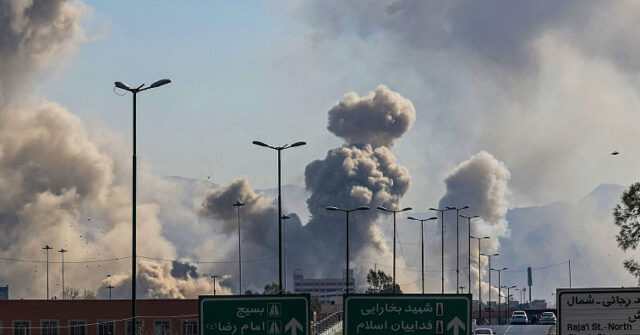
The military operation targeting Iran has now extended into its sixth day, marked by significant escalation following the reported sinking of an Iranian warship. Tehran has issued strong warnings of retaliation against the United States, accusing Washington of a "war crime" after its vessel was reportedly struck by a submarine-launched torpedo in international waters on Wednesday morning. Concurrently, Iran's regional aggression appears to be intensifying, with Azerbaijan becoming the latest nation to experience drone attacks, according to official statements from Baku. These developments underscore a rapidly deteriorating security situation across the Middle East, as the conflict, dubbed "Operation Epic Fury," continues to unfold with increasing volatility. Reports indicate that Iranian leadership is actively leveraging the warship incident to galvanize domestic and international sentiment, while its military actions extend beyond direct adversaries, raising concerns about broader regional destabilization.
The current wave of hostilities, now in its second week, follows earlier "decapitation strikes" reportedly carried out by American and Israeli forces over the preceding weekend. This context is crucial to understanding Iran's present strategy, which, according to observers, involves striking a wide array of targets within its operational reach, seemingly without discrimination regarding their involvement in the initial strikes. The loss of the Iranian warship on Wednesday morning, reportedly due to a submarine-launched torpedo, has become a central point of contention for Tehran. Iranian authorities are actively portraying this incident as a grave violation of international law, framing it as a "war crime" in public discourse and across social media platforms. This narrative aims to rally support and justify potential retaliatory actions, transforming the naval engagement into a symbolic flashpoint within the broader conflict and signaling a determined stance from the Iranian regime.
The intensity of Iran's rhetoric has reached a critical level, with prominent religious figures issuing stark calls for violence. According to reports, Ayatollah Abdollah Javadi Amoli, a high-ranking Shiite cleric, delivered a rare public statement on state television, declaring that the nation stood "on the verge of a great test." In a highly provocative address, he reportedly called for "the shedding of Zionist blood, the shedding of Trump’s blood," asserting that fighting "oppressive America" was a personal duty. This statement, attributed to one of Iran's most senior religious authorities, signals a profound shift towards explicit calls for retribution against US leadership. Simultaneously, Iran's regional military actions continued, with a drone reportedly striking the passenger terminal of the airport in Azerbaijan’s Nakhchivan exclave, resulting in two reported injuries. The Azerbaijani Ministry of Foreign Affairs confirmed a second drone landed "near a school building" and demanded an apology from Iran, reserving the right to implement "appropriate response measures." The Azerbaijani Ministry of Defence adopted an even more assertive stance, explicitly threatening retaliation and indicating their military was "preparing the necessary" response.
Analysts suggest that Iran's dual strategy of escalating rhetoric against the United States while simultaneously launching indiscriminate attacks on regional neighbors signifies a dangerous expansion of the conflict. The framing of the warship sinking as a "war crime" by Tehran is likely an attempt to garner international sympathy and justify a robust response, potentially aiming to shift global perception away from its own aggressive actions. The targeting of Azerbaijan, a country seemingly uninvolved in the initial "decapitation strikes," indicates a broader Iranian objective to destabilize the region and project power, possibly as a deterrent or a punitive measure against any perceived alignment with US and Israeli interests. This approach risks drawing more nations into the conflict, transforming what began as a targeted operation into a widespread regional conflagration. The explicit threats from Azerbaijan's defense ministry further highlight the immediate danger of a tit-for-tat escalation, making the prospect of de-escalation increasingly remote as the operation progresses and tensions continue to mount.
As "Operation Epic Fury" enters its sixth day, the Middle East faces an increasingly volatile landscape. Iran's defiant stance, marked by calls for retribution against the US and continued strikes on regional states like Azerbaijan, signals a determined effort to escalate the conflict on multiple fronts. The international community will be closely watching for any direct Iranian response to the warship sinking, as well as how Azerbaijan chooses to act on its threats of retaliation. The coming days are critical in determining whether these escalating tensions can be contained or if they will inevitably lead to a broader, more destructive regional confrontation. The rhetoric from Tehran, particularly from its religious leadership, suggests a nation bracing for prolonged conflict and demanding a high price for perceived affronts, setting the stage for further instability.