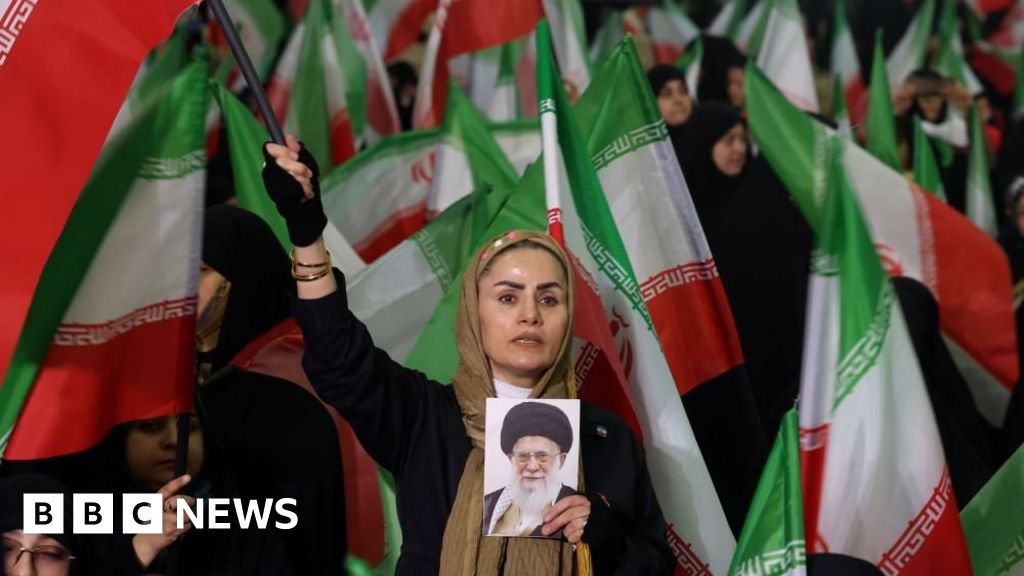
The Islamic Republic of Iran is navigating a period of profound uncertainty following reports and subsequent confirmation of the death of its 86-year-old Supreme Leader, Ayatollah Ali Khamenei. His demise reportedly occurred after his official residence was targeted during an initial wave of Israeli military strikes on Saturday morning, an event that has sent shockwaves across the region. Satellite imagery obtained shortly after the assault revealed substantial damage to the compound, corroborating the severity of the attack. Initial statements from Iranian authorities asserted that the leader had been relocated to a secure location, with expectations of a televised address that never materialized. However, the narrative shifted dramatically when Israeli Prime Minister Benjamin Netanyahu, in a public address, indicated strong evidence suggesting the Supreme Leader was no longer alive. This claim was later echoed by unnamed officials cited in various Israeli and US media outlets, who spoke of compelling proof of his death, despite continued denials from Tehran. The situation culminated several hours after US President Donald Trump publicly announced the news on his social media platform, prompting Iranian state television to confirm Ayatollah Khamenei's death.
This incident marks a pivotal and potentially transformative juncture in the turbulent history of the Islamic Republic, described by observers as an 'extraordinary moment' for which Iran's most influential clerics and military commanders have been meticulously preparing. The strategic foresight for such an eventuality was reportedly sharpened during a 12-day conflict that unfolded last June, which served as a stark reminder of the vulnerabilities faced by the nation's leadership and critical personnel. During the very first night of that conflict, in a concentrated series of initial attacks, Israel successfully carried out the assassinations of nine nuclear scientists, alongside a number of high-ranking security chiefs. This previous campaign of targeted killings reportedly focused the minds of Iranian strategists on the imperative of succession planning and resilience in the face of external aggression, underscoring the long-term anticipation of a scenario involving the loss of key figures, including potentially the Supreme Leader himself.
The sequence of events leading to the confirmation of Ayatollah Khamenei's death was characterized by a rapid succession of conflicting reports and official statements. Following the initial strike on his residence on Saturday morning, which satellite images later confirmed had caused significant damage, Iranian officials initially maintained that the Supreme Leader had been moved to safety. There were even expectations, widely reported, that the 86-year-old cleric would address the nation via state television, a broadcast that ultimately did not occur. As the day progressed, the narrative began to shift dramatically. By early evening, Israeli Prime Minister Benjamin Netanyahu made a televised declaration, stating that there were 'many signs' indicating the Supreme Leader was 'no longer.' This was quickly followed by a flurry of reports in Israeli and US media, citing unnamed officials who claimed to possess 'convincing evidence' of his demise. Despite these mounting external claims, Iranian officials steadfastly continued to deny the reports. The definitive turning point arrived several hours after US President Donald Trump publicly shared the news on his social media platform, after which Iranian state television finally confirmed that Ayatollah Khamenei had indeed been killed.
The assassination of Iran's Supreme Leader carries profound implications for the nation's internal dynamics, its regional posture, and the broader geopolitical landscape. Experts suggest that the loss of such a central and unifying figure could trigger a complex power struggle within the clerical establishment and the Revolutionary Guard Corps, potentially leading to shifts in Iran's domestic and foreign policies. The meticulous preparations reportedly undertaken by Iranian leadership for such a contingency will now be put to the ultimate test, determining the stability of the succession process and the country's immediate response to what it will undoubtedly view as an act of state-sponsored terrorism. Furthermore, this event is expected to significantly escalate tensions between Iran and Israel, with potential repercussions for regional stability, including the involvement of proxy forces. The timing and manner of the confirmation, particularly following announcements from foreign leaders like Prime Minister Netanyahu and President Trump, also raise questions about the strategic communication challenges faced by Tehran in controlling its own narrative during a crisis of this magnitude.
In summary, the reported assassination of Iran's Supreme Leader, Ayatollah Ali Khamenei, following an Israeli strike on his residence, marks a watershed moment for the Islamic Republic. The initial confusion, denials, and eventual confirmation underscore the gravity and sensitivity of the event, which has been described as a defining period for the nation. As Iran navigates the immediate aftermath, the world will be closely watching for signs of succession, any potential shifts in leadership, and how the country chooses to respond to this unprecedented challenge. The long-term preparations by Iranian authorities for such a contingency will now be crucial in determining the path forward for a nation grappling with the loss of its paramount spiritual and political authority, and the potential for increased regional instability remains a significant concern.