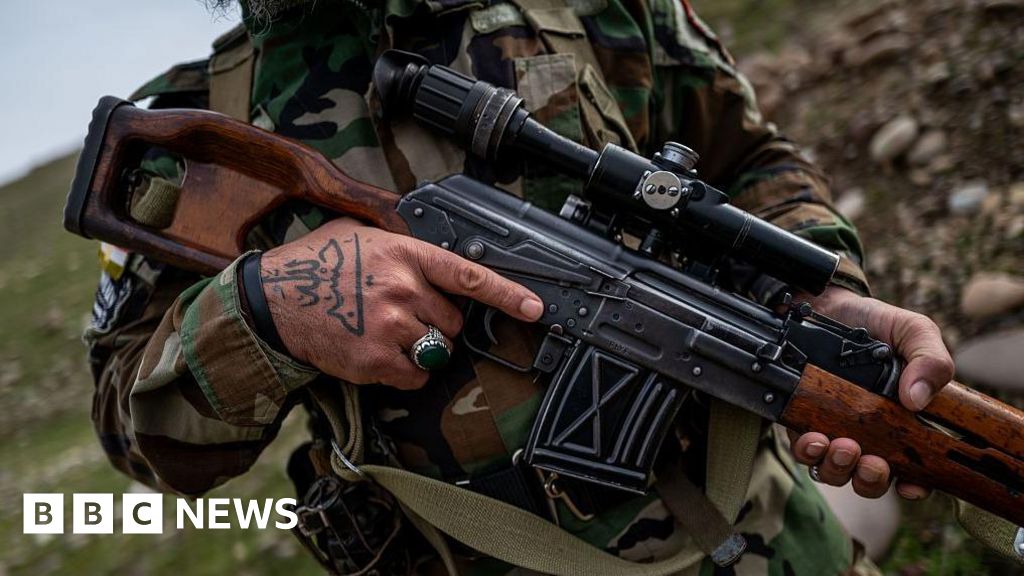
As the United States and Israel continue an aerial campaign against targets within Iran, now in its sixth day, speculation mounts regarding the potential for ground forces to enter the conflict. While American troops are not anticipated to be deployed, Iranian Kurdish opposition factions, operating from exile in northern Iraq, have confirmed their long-held strategies for cross-border incursions. These groups, however, explicitly deny any current presence of their fighters inside Iran, according to recent reports. Hana Yazdanpana, a representative for the Kurdistan Freedom Party (PAK), which identifies itself as possessing the largest armed contingent among these groups, articulated that preparations for such an eventuality have been underway for nearly half a century, specifically since the establishment of the Islamic Republic. Despite these extensive preparations, Yazdanpana firmly stated that 'not a single Peshmerga has moved,' emphasizing that any future advance is contingent upon specific strategic conditions being met by the ongoing US-led air operations.
The concept of Iranian Kurdish groups engaging in ground operations against the Iranian regime is rooted in decades of historical grievances and political struggle. These opposition movements, many of whom have maintained a presence in northern Iraq, view themselves as a vital force prepared to challenge Tehran. According to statements from the Kurdistan Freedom Party, their readiness for a potential conflict dates back 47 years, coinciding with the rise of the Islamic Republic. This long-term strategic planning underscores a deep-seated aspiration for self-determination and opposition to the current Iranian government. The term 'Peshmerga,' meaning 'those who face death' in Kurdish, reflects the profound commitment and historical resilience of these fighters. Their presence in exile in northern Iraq has long been a complex geopolitical factor, positioning them as potential actors in any broader regional conflict involving Iran, while also navigating the sensitivities of their host nation.
Further detailing their operational posture, reports indicate that six distinct Iranian Kurdish opposition groups have recently formalized a coalition, signifying a unified approach to any potential military action. Hana Yazdanpana confirmed this coordinated effort, stating that 'no-one moves alone' and that there is collective awareness regarding any planned movements by their 'brothers.' Despite their readiness, these groups do not anticipate deploying forces this week. Their strategic calculus dictates that the United States must first 'pave the way' by neutralizing aerial threats and destroying key military infrastructure. Yazdanpana stressed the critical importance of the air above them being 'cleaned' and the regime's 'weapons depots to be destroyed,' warning that an advance without these preconditions would be 'suicidal' given the Iranian regime's 'very brutal' nature and their own limited armaments, with the Kalashnikov being their most advanced weapon. Consequently, these groups have repeatedly requested the US to establish a no-fly zone to safeguard their fighters.
The potential involvement of Iranian Kurdish ground forces introduces a significant layer of complexity to the ongoing conflict. While the US and Israel are currently conducting an air campaign, the introduction of 'boots on the ground,' even by proxy, could dramatically alter the dynamics. Expert perspectives suggest that such a move, if coordinated effectively with the US, could provide a crucial ground component that air power alone cannot achieve, potentially targeting regime assets and personnel more directly. However, the disparity in weaponry, as highlighted by the Kurdish groups themselves, poses a substantial risk. The demand for a US-imposed no-fly zone and the destruction of regime weapon depots underscores the high stakes and the perceived vulnerability of lightly armed fighters against a well-equipped, 'brutal' state apparatus. This conditional readiness also places a strategic burden on the US, implying that any future Kurdish ground action would necessitate a more extensive and protective air campaign to mitigate the risks of a 'suicidal' engagement.
In summary, while the US and Israel continue their aerial bombardment of Iran, the prospect of ground operations remains a live, albeit conditional, possibility. Iranian Kurdish opposition groups, organized in a newly formed coalition, affirm their long-standing preparedness for cross-border action, yet firmly deny any current deployment. Their strategic advance is explicitly tied to significant preparatory actions by the US, including air superiority and the neutralization of key Iranian military assets. The coming days will be crucial in observing whether these preconditions are met and how the geopolitical landscape evolves, particularly regarding any potential shifts in US military strategy that could 'pave the way' for these long-prepared ground forces. The ongoing coordination among Kurdish factions and their persistent calls for a no-fly zone will be key indicators to watch.