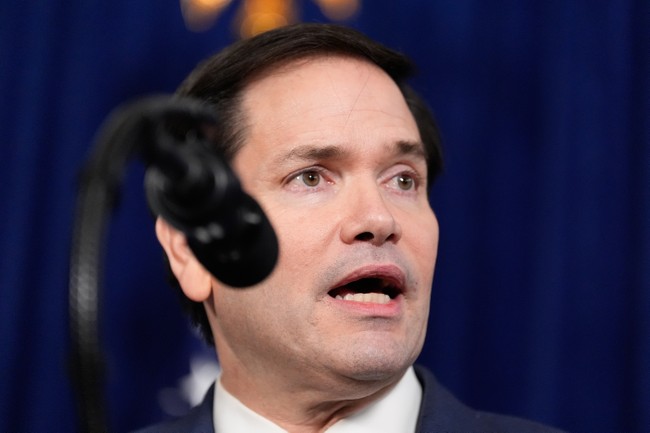
Secretary of State Marco Rubio recently addressed members of the press, offering crucial insights into the evolving circumstances concerning Iran's activities and the broader regional dynamics. This public statement on Monday followed a confidential briefing Mr. Rubio delivered to the Congressional Gang of Eight, where he reportedly detailed the advancements and ongoing developments of a strategic initiative known as Operation Epic Fury. The Secretary underscored the critical necessity of this operation, attributing its launch to an urgent assessment of Iran's rapidly developing military capabilities. According to official statements, the primary driver behind the intervention was the projection that within approximately 12 to 18 months, Iran would acquire a formidable arsenal of short-range missiles and unmanned aerial vehicles (drones), reaching a point where any effective counteraction would become exceedingly difficult, if not impossible. This impending threshold, described as 'crossing the line of immunity,' was presented as a grave threat to global stability, necessitating immediate and decisive action to prevent Iran from gaining unassailable leverage on the international stage.
The rationale behind the timing of Operation Epic Fury was a central theme of Secretary Rubio's update. He elaborated on intelligence assessments indicating that Iran was on a trajectory to significantly enhance its military capacity, specifically in the realm of short-range ballistic missiles and advanced drones. Officials suggested that this accumulation of weaponry would not only bolster Iran's regional influence but also allow it to project power in a manner that could effectively 'hold the whole world hostage,' as stated by the Secretary. This projected scenario painted a stark picture of a future where international efforts to contain or respond to Iranian aggression would be severely hampered by the sheer volume and sophistication of its armaments. The Secretary highlighted the current impact of what he characterized as an already 'weakened Iran,' emphasizing that the damage it is presently capable of inflicting would be dramatically magnified once it reached this critical military threshold, making the operation a preventative measure against a far more dangerous future.
Further details provided by Secretary Rubio underscored the specific nature of the threat posed by Iran's anticipated military advancements. The focus was particularly on the proliferation of short-range missiles and drones, which, according to reports, were nearing a quantity and sophistication that would fundamentally alter the regional power balance. The Secretary pointed to the existing destructive potential of Iran, even in its current state, as a precursor to the far greater dangers that would emerge if its military expansion continued unchecked. He stressed that the operation was deemed essential irrespective of other geopolitical considerations, indicating a high level of urgency and an independent assessment of the direct threat. Additionally, officials acknowledged an awareness of Israeli strategic intentions concerning the region, and the imperative for the United States to be prepared to respond accordingly, suggesting a coordinated or at least informed approach to regional security challenges. These factors collectively contributed to the determination that Operation Epic Fury was an unavoidable necessity.
The implications of Secretary Rubio's statements regarding Operation Epic Fury are far-reaching, signaling a significant shift in the approach to managing Iran's military ambitions. The concept of Iran 'crossing the line of immunity' introduces a new dimension to strategic planning, suggesting that the window for conventional deterrence or intervention is rapidly closing. Experts in international relations note that such a pre-emptive justification for military action, based on projected future capabilities, highlights a heightened sense of urgency within the U.S. administration regarding Iran's nuclear and conventional weapons programs. This strategy could set a precedent for future engagements, emphasizing preventative measures over reactive responses when faced with perceived existential threats. The acknowledgment of 'Israeli intentions' also suggests a complex web of alliances and shared security concerns in the Middle East, indicating that regional stability remains a precarious balance influenced by multiple actors and their respective strategic imperatives.
In conclusion, Secretary of State Marco Rubio's recent update on Operation Epic Fury paints a picture of a critical juncture in U.S. foreign policy toward Iran. The operation, launched due to intelligence projections of Iran's impending acquisition of an overwhelming number of short-range missiles and drones, was presented as an unavoidable necessity to prevent Iran from gaining unassailable military leverage. The administration's concern centers on Iran's potential to 'hold the whole world hostage' once it crosses this 'line of immunity,' making the current intervention a preventative measure against a significantly more dangerous future. As the situation develops, international observers will be closely watching for further details on Operation Epic Fury's progress and its long-term impact on regional stability, the global balance of power, and the future trajectory of Iran's military capabilities.