At least six American service members tragically lost their lives in a recent apparent Iranian drone strike on a facility in Kuwait, marking the first U.S. fatalities in the ongoing U.S.-Israeli conflict with Iran, according to reports from CBS News. The deadly incident occurred at a tactical operations center situated within the Shuaiba port, a strategic location described by some U.S. military officials as a "makeshift office space." While U.S. Central Command has publicly acknowledged the deaths, a critical point of contention has emerged regarding the safety and structural integrity of the targeted site. Three U.S. military officials, reportedly possessing direct knowledge of Iran's attack, have raised serious questions about the assertion that the building was adequately fortified against such a powerful assault, directly contradicting initial statements from high-ranking defense officials. This incident not only highlights the immediate dangers faced by U.S. personnel but also casts a spotlight on the operational conditions and defensive measures in place across U.S.-allied nations experiencing heightened aggression. The attack in Kuwait is a stark reminder of the escalating tensions and the complex threat landscape in the Persian Gulf, where U.S. forces are increasingly exposed to sophisticated weaponry.
This devastating attack represents a significant escalation in the regional conflict, as it marks the initial loss of American lives since the U.S. and Israel reportedly commenced striking Iran early on Saturday. The broader context involves a surge in Iranian missile and drone attacks targeting several U.S.-allied countries throughout the Persian Gulf region, with Kuwait being the latest casualty. The Pentagon has moved to identify the fallen, publicly naming four of the six service members by Tuesday, while the identities of the remaining two are being respectfully withheld pending the notification of their next of kin. This customary procedure ensures families are informed before public disclosure, reflecting the solemn nature of these losses. The incident at Shuaiba port underscores the precarious security environment in the Gulf, where U.S. forces are deployed to support regional stability and counter hostile actions. The strategic importance of Kuwait as a U.S. ally in the region means that any attack on its soil, particularly one resulting in American casualties, carries substantial geopolitical weight and implications for future defense postures.
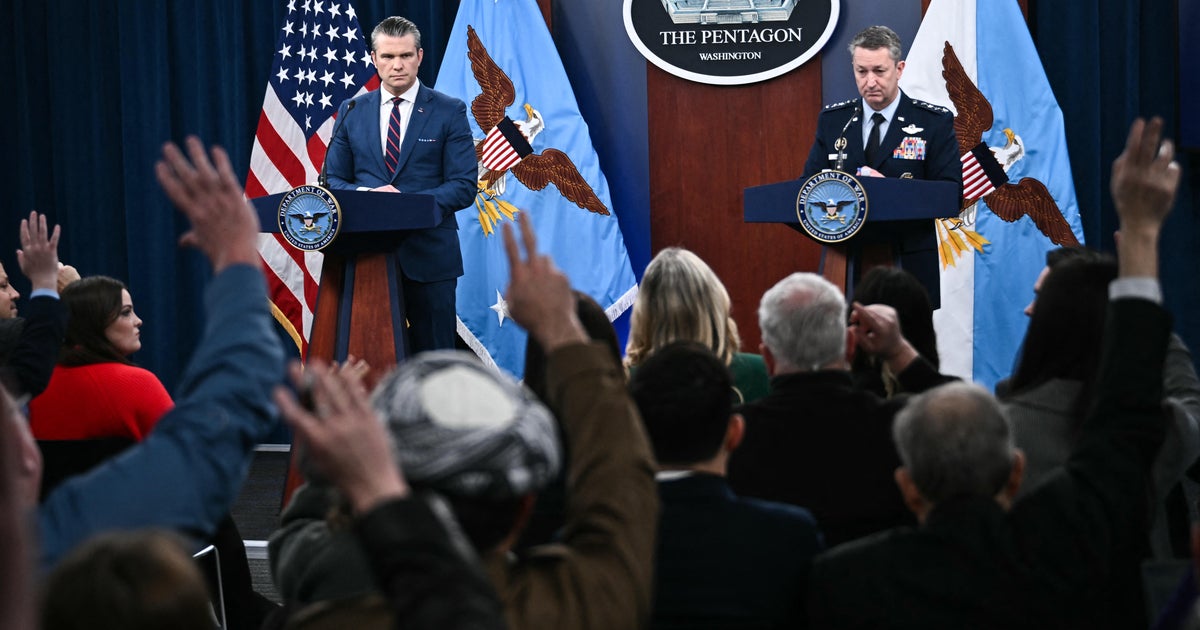
In the immediate aftermath of the strike, Defense Secretary Pete Hegseth addressed the public, attributing the fatalities to a potent Iranian weapon. During a Pentagon news conference, Hegseth asserted that this weapon managed to penetrate both the existing air defenses and the fortifications of the operations center. He described such a successful breach as an unfortunate occurrence, using the term "squirter" to characterize a projectile that evades defensive measures. Hegseth emphasized that while air defenses intercept most incoming threats, occasionally one "makes its way through," and in this particular instance, it struck a "fortified" tactical operations center. However, this official narrative has been directly challenged by three U.S. military officials, whose insights were shared with CBS News. These officials explicitly questioned the validity of the claim that the building was sufficiently fortified, suggesting a potential discrepancy between official statements and the reality on the ground. The discrepancy between the Defense Secretary's assessment and the concerns raised by military officials highlights a critical area of scrutiny regarding the preparedness and protection afforded to U.S. personnel in forward operating locations.
The conflicting accounts regarding the fortification of the Shuaiba port facility raise serious questions about the safety protocols and infrastructure supporting U.S. personnel in high-risk zones. If the tactical operations center was indeed a "makeshift office space" and not adequately fortified as suggested by some military officials, it could indicate significant vulnerabilities in troop protection measures. Such a revelation could prompt an internal military review into deployment practices, facility assessments, and the allocation of resources for defensive upgrades across the Persian Gulf. Furthermore, this incident could influence future strategic planning, potentially leading to stricter guidelines for housing and operational centers in areas susceptible to drone and missile attacks. The challenge of defending against advanced weaponry, particularly "squirters" that evade air defenses, is a persistent concern for military planners. This event underscores the need for continuous adaptation in defensive strategies and infrastructure, especially in a region where adversaries are constantly evolving their offensive capabilities. The broader implications extend to the confidence of allied nations in U.S. protective capabilities and the morale of deployed forces.
In conclusion, the tragic loss of six American service members in Kuwait marks a somber milestone in the U.S.-Israeli conflict with Iran, bringing the human cost of escalating regional tensions into sharp focus. The incident at Shuaiba port, attributed to an Iranian drone strike, has sparked immediate and critical questions regarding the adequacy of the targeted facility's defenses, with some military officials directly challenging official assertions of its fortification. As the Pentagon proceeds with identifying all casualties and the broader conflict continues to unfold, the international community will be closely watching for further details on any potential investigations into the facility's safety. This event serves as a stark reminder of the volatile security landscape in the Persian Gulf and the imperative for robust protection measures for deployed personnel. The trajectory of U.S. engagement in the region and the evolving nature of defensive strategies against sophisticated threats will undoubtedly remain key areas of focus moving forward.