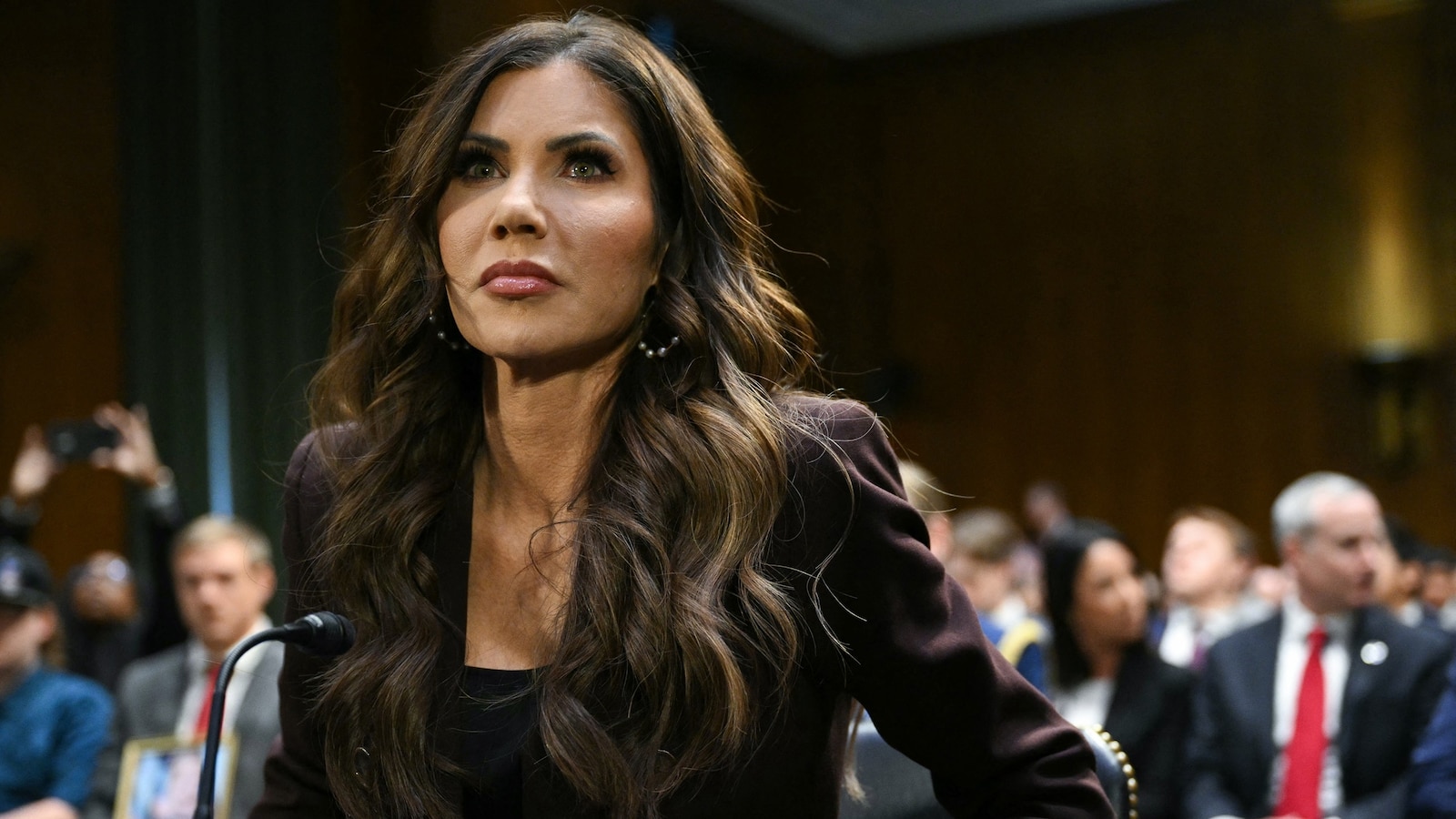
Secretary of Homeland Security Kristi Noem is undergoing extensive questioning on Capitol Hill this week, facing scrutiny from Democratic lawmakers regarding her department's immigration enforcement strategies and the broader implications for national security following recent U.S. military actions against Iran. The high-stakes testimony, which began before the Senate Judiciary Committee on Tuesday and is scheduled to continue with the House Judiciary Committee on Wednesday, unfolds amidst a partial shutdown of several critical components within her agency. This operational disruption, affecting entities from the Federal Emergency Management Agency (FEMA) to the Transportation Security Administration (TSA) and the U.S. Coast Guard, stems from an ongoing legislative impasse over funding for Immigration and Customs Enforcement (ICE). Lawmakers from the Democratic party have explicitly stated their unwillingness to approve full departmental funding unless significant reforms are implemented within ICE, particularly in light of recent controversies surrounding federal law enforcement actions, according to congressional reports.
The current congressional confrontation represents a critical juncture for the Department of Homeland Security (DHS), an agency established in the aftermath of the September 11, 2001, attacks with a broad mandate to protect the nation from a range of threats. The funding dispute specifically targeting ICE highlights escalating tensions between the executive branch's enforcement priorities and congressional oversight, particularly concerning immigration policy. This standoff has led to a situation where essential services provided by other DHS components are curtailed, raising concerns about national preparedness and public safety. The backdrop of U.S. strikes against Iran further complicates Noem's testimony, as lawmakers seek assurances regarding the nation's defensive posture and the department's capacity to counter potential retaliatory threats. This dual pressure — internal policy disagreements and external geopolitical challenges — underscores the significant political and operational challenges confronting the Secretary and her department at this moment, according to legislative analysts observing the proceedings.
Senator Dick Durbin, the leading Democrat on the Senate Judiciary Committee, issued a strong statement on Monday, indicating that Secretary Noem should anticipate "tough" questioning, accusing her of "stonewalling" Congress on previous occasions. Durbin's remarks underscored deep-seated concerns among Democrats regarding the operational conduct of ICE, characterizing the agency's actions under Noem's leadership as an "abominable anti-immigrant crusade." He further alleged that federal agents continue to "wreak havoc" in American communities, reportedly acting with "unspeakable cruelty against children, immigrant families, and American citizens." These accusations are particularly potent in the context of recent tragic events, including the shooting deaths of Renee Good and Alex Pretti in Minneapolis, incidents that involved federal law enforcement personnel and have fueled calls for accountability and reform within the agency, as reported by congressional sources. The specific demand for changes to ICE's practices is now directly linked to the release of crucial funding for the entire department, creating a high-stakes negotiation.
Political observers suggest that Secretary Noem's appearance before Congress is not merely a routine oversight hearing but a pivotal moment that could redefine the future of immigration enforcement and inter-branch relations. The Democratic strategy of leveraging departmental funding to force policy changes within ICE signifies a significant escalation in the ongoing debate over immigration. Experts in constitutional law note that while Congress holds the power of the purse, directly tying funding to specific operational reforms within an executive agency can lead to protracted stalemates and potentially impact national security functions. The partial shutdown of non-ICE components of DHS, such as FEMA and the Coast Guard, serves as a stark illustration of the broader consequences of this legislative gridlock, potentially undermining public trust and operational readiness in critical areas like disaster response and maritime security. This situation highlights the deep ideological chasm between the parties on immigration, making a swift resolution challenging, according to political commentators.
As Secretary Noem concludes her two days of testimony on Capitol Hill, the immediate future of the Department of Homeland Security remains uncertain. The intense scrutiny over ICE operations, coupled with the critical need for comprehensive departmental funding and heightened concerns about homeland security post-Iran strikes, places the agency at a crossroads. Lawmakers and the public will be closely watching for any indications of compromise or further entrenchment from either side. The outcome of these hearings and the subsequent funding negotiations will not only determine the operational capacity of DHS but also set a precedent for how future disputes over executive agency conduct and congressional oversight are resolved. The calls for reform, particularly in light of recent incidents involving federal agents, are unlikely to subside, ensuring that immigration enforcement remains a contentious and central issue in national discourse.