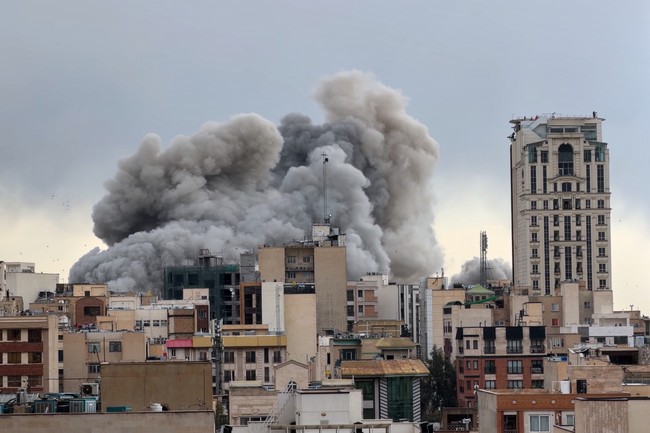
Amidst intensifying joint military operations by the United States and Israel, Iran's intelligence apparatus reportedly initiated an indirect overture to the Central Intelligence Agency (CIA) seeking discussions for a potential ceasefire. This development, as detailed in recent reports, comes despite the Iranian regime's public posture of unwavering defiance and claims of inflicting significant damage on American and Israeli forces. Officials briefed on the outreach indicated that operatives from Iran’s Ministry of Intelligence attempted to establish contact with the CIA shortly after the commencement of the allied assaults. However, American officials have expressed considerable skepticism regarding the immediate readiness of either the Trump administration or Tehran to genuinely pursue a de-escalation, suggesting a complex and potentially protracted path to any resolution. This private plea for an end to hostilities stands in stark contrast to the regime's public declarations, highlighting a significant divergence between its outward rhetoric and internal assessment of the escalating conflict.
The reported outreach from Tehran's intelligence services unfolds against a backdrop of sustained and powerful military actions, dubbed 'Operations Epic Fury' and 'Roaring Lion,' conducted jointly by the United States and Israel. These operations have reportedly subjected Iranian military assets and infrastructure to intense barrages, leading to significant pressure on the regime. Publicly, Iranian leaders have maintained a defiant stance, asserting their military's capacity to withstand and retaliate against the allied forces. Statements from Iranian state-controlled media and officials have frequently boasted of inflicting substantial harm upon American and Israeli personnel and equipment, even going so far as to claim that the USS Abraham Lincoln aircraft carrier was on the verge of being incapacitated. This outward show of strength and refusal to negotiate publicly with the Trump administration has been a consistent feature of their communication strategy, designed to project an image of resilience and control despite the ongoing military pressure.
According to reports, the indirect communication from Iran's Ministry of Intelligence operatives to the CIA occurred just a single day after the US and Israeli attacks commenced, underscoring the swift impact of the allied military campaign. This rapid attempt to open a backchannel for dialogue suggests a significant internal recognition within the Iranian leadership of the severity of the situation, despite their public pronouncements. The nature of the outreach was described as indirect, indicating a cautious approach by Tehran to explore potential off-ramps without overtly acknowledging vulnerability. However, US officials, who were briefed on these discussions, conveyed a strong sense of doubt regarding the immediate prospects for a genuine de-escalation. They reportedly believe that neither the Trump administration nor the Iranian leadership is currently prepared for a substantive end to the conflict, suggesting that the outreach might be more exploratory than a firm commitment to peace. This skepticism is further compounded by a historical perception among some international observers that Iran has a track record of employing deceptive tactics in past negotiations over several decades, making any new overtures subject to intense scrutiny.
The reported attempt by Iran's intelligence service to engage the CIA for ceasefire talks, while publicly maintaining a defiant posture, reveals a critical internal tension within the Iranian regime. This duality suggests that despite outward bravado, the leadership privately recognizes the severe existential threat posed by the relentless US-Israeli military operations. Expert analysis indicates that such an indirect plea, especially so early in the conflict, could signal a level of desperation not openly admitted. The skepticism expressed by US officials regarding the sincerity or immediate viability of such an 'off-ramp' is likely rooted in both the historical context of past negotiations and the current political climate, where trust between the parties is virtually non-existent. Furthermore, the timing of President Trump's 'too late!' post on Truth Social, which some interpret as a direct response to this intelligence, suggests a firm resolve from the US side to continue applying pressure until more significant concessions or changes in behavior are observed from Tehran. This dynamic implies that any genuine de-escalation would require substantial shifts in policy or leadership from Iran, rather than merely a tactical pause.
In conclusion, the revelation of Iran's private attempt to seek a ceasefire through its intelligence channels, juxtaposed with its public declarations of defiance and military strength, paints a complex picture of the ongoing conflict. While the US and Israeli military operations, known as 'Epic Fury' and 'Roaring Lion,' continue to intensify, the Iranian regime appears to be navigating a precarious balance between maintaining face domestically and internationally, and seeking a practical resolution to the escalating barrages. The skepticism from US officials regarding the immediate prospects of a genuine de-escalation highlights the deep mistrust and the perceived historical pattern of Iranian negotiation tactics. As the conflict progresses, observers will be closely watching for any further, more direct, or substantive signals from either side that could indicate a true readiness to move beyond the current military confrontation. The immediate future suggests a continuation of military pressure, with any diplomatic resolution remaining a distant and uncertain prospect.