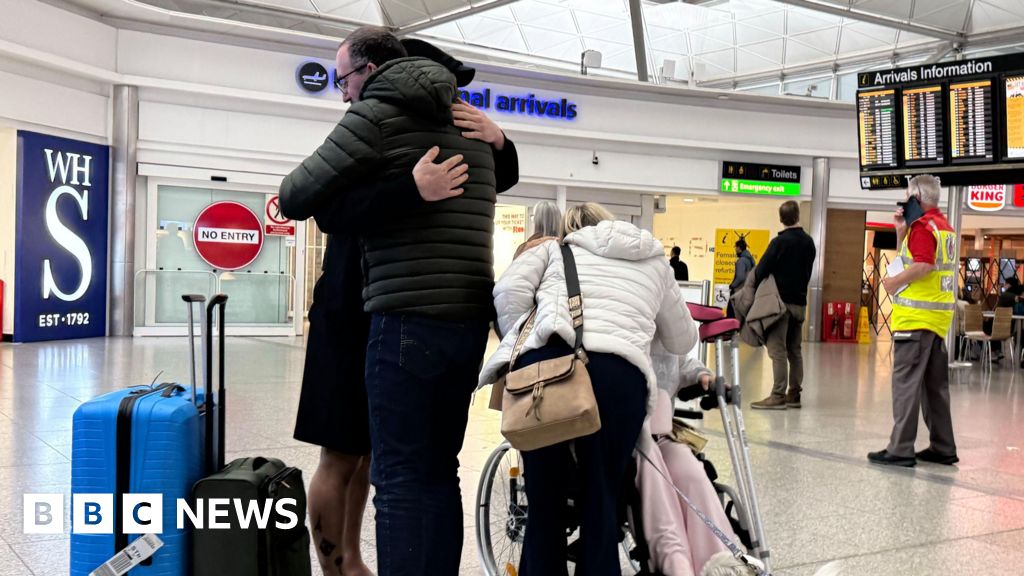
British citizens arriving in the United Kingdom aboard the inaugural government-organized evacuation flight from the Middle East have recounted their challenging journeys, describing a 'surreal' dash across national borders to secure a seat on the plane. The flight, which brought nationals from Oman's capital, Muscat, to London's Stansted Airport, marks the first such operation since widespread regional conflict intensified six days prior. Passengers detailed a frantic effort to reach the departure point amidst escalating tensions. Initially slated for departure on Wednesday evening, the flight experienced an almost 24-hour postponement due to technical difficulties, eventually taking off on Thursday night local time before landing in the UK early Friday morning. This initial wave of evacuees offers a glimpse into the urgent situation facing thousands of expatriates caught in the rapidly deteriorating security landscape across the region, highlighting the significant logistical challenges involved in such a large-scale humanitarian effort.
The necessity for this evacuation stems from a dramatic escalation in regional hostilities. Reports indicate that the conflict intensified following US-Israeli military actions against Iran, which subsequently led to retaliatory strikes by Iran across various locations in the Middle East. This cycle of aggression has created a volatile and unpredictable environment, prompting governments to initiate plans for the safe return of their citizens. The city of Dubai, a major regional hub and home to a significant expatriate population, has reportedly endured multiple direct strikes from Iran since Saturday. These attacks have caused damage at key infrastructure sites, including Dubai International Airport, and affected several upscale hotels, underscoring the broad reach and severity of the ongoing conflict and the immediate threat it poses to civilian populations and critical services.
Among those evacuated was Fazal Chowdhury, a Dubai resident, who characterized the ordeal as 'a little bit surreal.' He elaborated that he and his wife made the decision to drive to the Omani capital immediately upon learning of initial attacks targeting Dubai. 'We simply decided to leave immediately,' Mr. Chowdhury informed the BBC following his arrival at Stansted on Friday, adding that they secured accommodation in Muscat and awaited further instructions. The flight itself, which carried these British nationals to safety, was originally scheduled to depart from Muscat on Wednesday night. However, it faced a significant delay of nearly 24 hours due to unspecified technical issues, finally departing on Thursday night local time. It touched down at London's Stansted Airport at 00:53 GMT on Friday. The urgency of the situation is further highlighted by the fact that over 140,000 British citizens residing in the area have registered their details with the UK's foreign office, indicating the potential scale of future evacuation requirements.
This initial government-organized flight underscores the profound implications of the escalating Middle East conflict for international citizens and regional stability. Observers suggest that the rapid deterioration of security, particularly the direct strikes on major urban centers like Dubai, has transformed a geopolitical standoff into an immediate threat to civilian life and commerce. The logistical hurdles encountered, such as the nearly 24-hour delay due to technical issues, highlight the complexities inherent in orchestrating large-scale evacuations under duress. The sheer number of British nationals who have registered with the Foreign Office – exceeding 140,000 – signals the potential for a protracted and extensive humanitarian operation, placing considerable strain on diplomatic and military resources. This situation serves as a stark reminder of the interconnectedness of global security and the vulnerability of expatriate communities when regional tensions erupt into open conflict, demanding swift and decisive governmental responses.
The successful, albeit delayed, arrival of the first government-chartered flight provides a crucial lifeline for British nationals caught in the escalating Middle East conflict. The harrowing accounts from passengers like Fazal Chowdhury paint a vivid picture of the urgency and personal challenges faced by those seeking safety. With over 140,000 Britons registered with the Foreign Office, this initial evacuation is likely just the beginning of a broader effort to assist citizens in the volatile region. Governments globally will continue to monitor the rapidly evolving security situation, assessing the need for further humanitarian operations and diplomatic interventions. The coming days will be critical in determining the trajectory of the conflict and the safety of remaining international residents, as the world watches for signs of de-escalation or further instability.