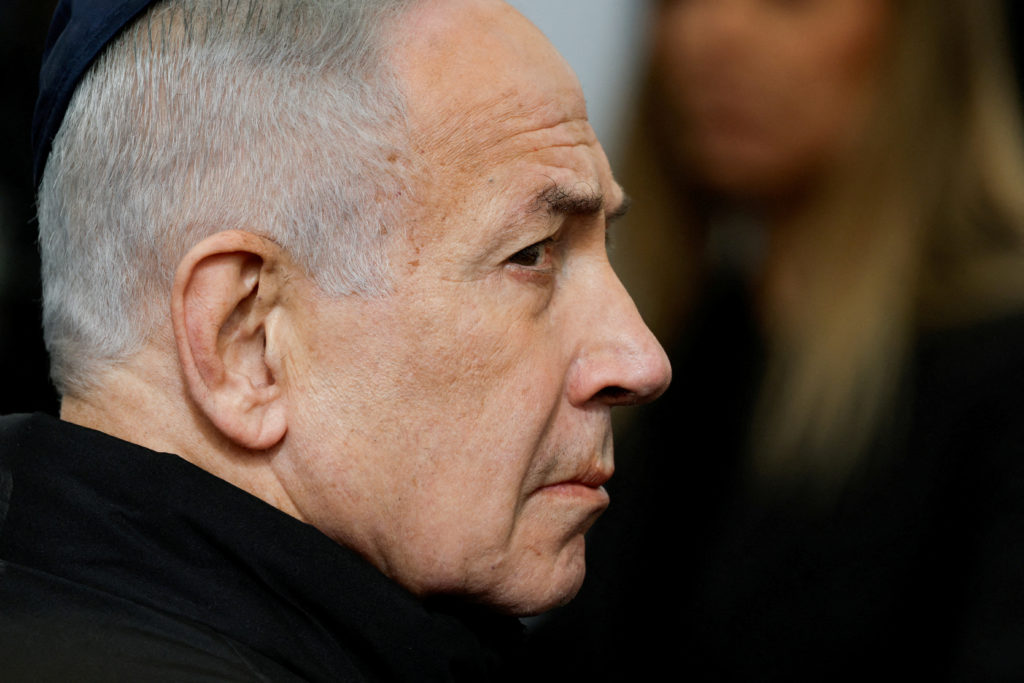
Israeli Prime Minister Benjamin Netanyahu has publicly announced a substantial intensification of the ongoing hostilities with Iran, signaling the commencement of a distinct and more aggressive phase of military action. In a pre-recorded statement disseminated on Saturday morning, the Prime Minister revealed that the current offensive, which reports indicate is designated as "Operation Epic Fury," is strategically designed to exceed both the ferocity and the consequences of the prior 12-day military engagement between Israel and Iran that occurred in June. According to the Prime Minister's declarations, a primary goal of these renewed attacks is to bolster the Iranian citizenry, thereby facilitating their capacity to "take their fate into their own" hands. This declaration marks a critical juncture in the protracted regional rivalry, suggesting a deliberate shift towards more decisive and impactful military interventions aimed at achieving specific strategic outcomes beyond mere retaliation or containment. The timing and nature of this announcement underscore a heightened level of commitment from the Israeli leadership to reshape the dynamics of the conflict.
This latest declaration of an escalated offensive follows a period of persistent, albeit often covert, tensions and direct confrontations between Israel and Iran. The reference to a "previous 12-day confrontation" in June serves as a crucial benchmark, indicating that "Operation Epic Fury" is not merely a continuation but a deliberate amplification of prior strategies. That earlier engagement, while significant, evidently did not achieve the desired long-term deterrence or strategic objectives from Israel's perspective, prompting the current push for a more impactful approach. Historically, the relationship between Israel and Iran has been characterized by deep-seated animosity, fueled by ideological differences, regional power struggles, and Iran's nuclear program. These underlying factors have frequently erupted into proxy conflicts and, increasingly, direct military exchanges. The Prime Minister's explicit aim to surpass the intensity and impact of previous encounters suggests a calculated risk to alter the status quo, potentially leading to a more volatile period in the Middle East as both nations vie for regional dominance and security.
The naming of the current offensive as "Operation Epic Fury" itself conveys a message of determined and forceful action, underscoring the gravity of Israel's intentions. Officials stated that this new phase of military engagement is intended to be more comprehensive and far-reaching than previous operations. While specific operational details were not immediately disclosed in the Prime Minister's public remarks, the emphasis on surpassing the intensity and impact of the June confrontation implies a broader scope of targets, increased frequency of strikes, or the deployment of more advanced capabilities. Crucially, the stated objective to empower the Iranian populace represents a significant political dimension to the military campaign. By aiming to enable the Iranian people to "take their fate into their own" hands, as attributed to the Prime Minister's remarks, Israel appears to be signaling a desire to foster internal change within Iran, potentially by exacerbating domestic pressures or supporting dissident movements. This strategic goal moves beyond conventional military deterrence, venturing into the realm of influencing internal Iranian politics, a move that could have profound and unpredictable consequences for regional stability.
Observers suggest that Prime Minister Netanyahu's declaration of "Operation Epic Fury" and its ambitious objectives could usher in a period of unprecedented regional instability. The explicit aim to surpass the intensity of previous conflicts indicates a willingness to absorb and potentially escalate responses from Iran and its proxies, raising concerns about a wider conflagration. Analysts believe that by framing one of the core objectives as empowering the Iranian populace, Israel is not only pursuing military gains but also attempting to leverage internal dissent within Iran, a strategy fraught with complexities and potential blowback. This approach could be interpreted by the Iranian regime as a direct interference in its internal affairs, potentially hardening its stance and prompting more aggressive countermeasures. Furthermore, the success of such an objective is highly dependent on factors beyond military might, including the socio-political landscape within Iran and the willingness of its citizens to act on perceived external encouragement. The international community will undoubtedly be watching closely for signs of de-escalation or further intensification, given the potential for this conflict to draw in other regional and global powers.
In summary, Prime Minister Benjamin Netanyahu's announcement of "Operation Epic Fury" marks a significant and deliberate escalation in the long-standing conflict between Israel and Iran. The operation is explicitly designed to exceed the scale and effect of previous military engagements, with a stated dual objective of achieving greater military impact and fostering internal change within Iran by empowering its populace. This strategic shift, revealed in a Saturday morning statement, signals a new, potentially more volatile phase in Middle Eastern geopolitics. As the region braces for potential repercussions, the coming days and weeks will be critical in observing the immediate operational outcomes of "Operation Epic Fury" and the nature of Iran's response, which will undoubtedly shape the future trajectory of this deeply entrenched rivalry.