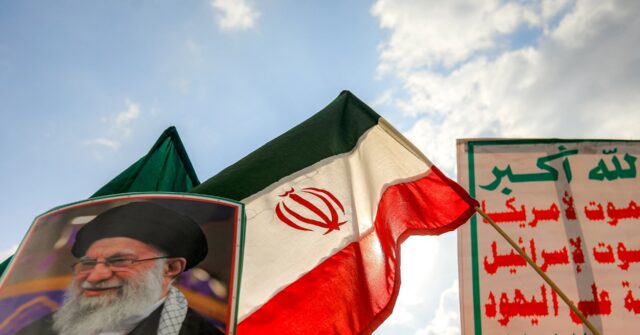
In a dramatic development, President Donald Trump reportedly informed ABC News on Sunday that "Operation Epic Fury," the United States military engagement responsible for the elimination of Iranian Supreme Leader Ayatollah Ali Khamenei, also successfully targeted and killed every individual considered a potential successor by American experts. The operation, launched on Saturday, coincided with a parallel kinetic engagement conducted by Israeli forces against various targets within Iran. President Trump personally confirmed Khamenei's death on Saturday evening, describing the removal of the 86-year-old leader as an act of justice for the Iranian populace, for Americans, and for people globally who had suffered under Khamenei's regime, which he characterized as a "gang of bloodthirsty thugs." This unprecedented outcome has plunged Iran into an immediate and profound leadership vacuum, with the identity of the nation's next top authority remaining entirely unclear as the country grapples with the aftermath of these decisive military actions, according to official statements.
Ayatollah Ali Khamenei's death marks the end of a long and influential reign, during which he served as Iran's Supreme Leader, holding ultimate authority over the country's political, religious, and military affairs. His removal, confirmed by President Trump, represents a monumental shift in the geopolitical landscape of the Middle East. The structure of Iranian governance places the Supreme Leader above all other officials, including the nation's president, Masoud Pezeshkian, who is subordinate to the Supreme Leader's directives. The process for selecting a new Supreme Leader traditionally falls to the Assembly of Experts, a powerful clerical body that has reportedly already convened to deliberate on a successor. However, the American administration's claim that all anticipated candidates were eliminated in the recent operation introduces an extraordinary layer of complexity and uncertainty to this established process, potentially altering the course of Iranian leadership in unforeseen ways. President Trump articulated the broader objective of the ongoing military actions as achieving "peace throughout the Middle East and, indeed, the world," signaling a far-reaching strategic intent behind the operation.
Further details emerging from President Trump's interview with ABC News's Jonathan Karl on Sunday night underscored the profound impact of "Operation Epic Fury." According to Karl's report, President Trump disclosed that the United States had maintained a specific list of preferred successors for Khamenei, but these individuals were also eliminated during the military engagement. Trump reportedly conveyed that the operation was so effective in its scope that it neutralized most of the potential candidates, implying that the next leader of Iran would likely be an unexpected figure, as all previously considered options were no longer viable. While Iranian state media has confirmed the Assembly of Experts is in session, tasked with appointing a new Supreme Leader, the American assertion directly challenges earlier speculations which had pointed to several 'hardline' clerics and even Mojtaba Khamenei, the late dictator's son, as potential successors. The current status of Iran's governance remains ambiguous, with President Pezeshkian, himself a member of the Assembly of Experts and a figure chosen under Khamenei's leadership, navigating an unprecedented power vacuum. Meanwhile, President Trump indicated that American forces would continue "heavy and pinpoint bombing" operations without interruption throughout the week, or for as long as deemed necessary to achieve the stated objectives.
The elimination of not only Iran's Supreme Leader but also all known potential successors, as claimed by President Trump, presents an unparalleled scenario with vast implications for Iran's future and regional stability. This development suggests a deliberate strategy to dismantle the established leadership hierarchy, potentially preventing a smooth, pre-determined transition of power. The prospect of an 'unexpected name' ascending to the Supreme Leadership could lead to significant internal power struggles, as factions within the Assembly of Experts and the broader clerical establishment contend for influence without clear frontrunners. Analysts suggest this situation could either destabilize the regime further, opening avenues for new political dynamics, or paradoxically consolidate power around a previously obscure figure who might be more susceptible to external pressures or internal manipulation. The stated goal of achieving 'peace throughout the Middle East and the world' through such a disruptive military action raises questions about the definition of peace and the methods employed to achieve it, particularly given the potential for increased volatility in a region already prone to conflict.
As Iran's Assembly of Experts convenes amidst this profound leadership crisis, the world watches closely for any indication of who might emerge as the nation's next Supreme Leader. The American administration's claim that all anticipated successors have been eliminated introduces an element of unpredictability that could reshape Iran's political landscape for decades. The ongoing "heavy and pinpoint bombing" campaign, as announced by President Trump, underscores the continued military pressure on the nation. The immediate future of Iran remains uncertain, with the potential for internal power struggles, shifts in foreign policy, and broader regional ramifications. The coming days will be critical in observing how the Assembly of Experts navigates this unprecedented challenge and whether an 'unexpected name' indeed assumes the mantle of Supreme Leader, fundamentally altering the trajectory of the Islamic Republic.