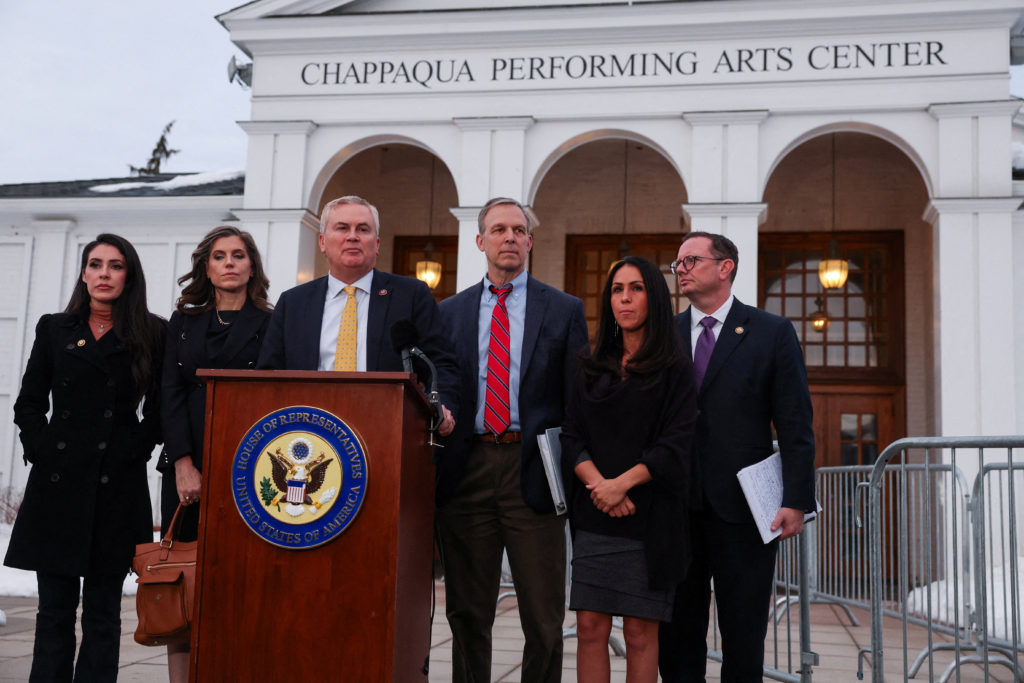
The House committee tasked with investigating the late financier Jeffrey Epstein recently concluded high-profile depositions with former President Bill Clinton and former Secretary of State Hillary Clinton, a process that reportedly took six months to arrange. However, according to videos released by the House Oversight Committee on Monday, these eagerly anticipated sessions, intended to scrutinize the Clintons' connections to Epstein, reportedly diverged into unexpected territory. Accounts indicate that the questioning of two of the most prominent figures ever to appear before Congress became sidetracked by discussions concerning the Pizzagate conspiracy theory, inquiries about the disclosure of government information regarding unidentified flying objects (UFOs), and even a protocol-violating leaked photograph. This development raises questions about the committee's focus and the effectiveness of its efforts to gather crucial information related to Epstein's extensive network and alleged abuses, as lawmakers face public demands for accountability in the wake of Epstein's death while awaiting sex trafficking charges.
The committee's investigation into Jeffrey Epstein stems from a broader societal demand for accountability following his 2019 death by suicide in a New York correctional facility, where he was facing federal charges for sex trafficking and abusing underage girls. Epstein's illicit activities and his network of powerful associates have led to significant repercussions globally, with numerous high-status individuals resigning from their positions due to revelations about their relationships with Epstein and his former associate, Ghislaine Maxwell. In the United States, however, reports suggest that serious legal consequences for those connected to Epstein have been less evident so far. The House committee's persistent efforts to depose the Clintons, spanning half a year, underscored the perceived importance of their testimonies, given Bill Clinton's past association with Epstein, including flights on his private jet, and the Clintons' long-standing prominence in American political life. The depositions were intended to shed light on any knowledge or involvement they might have had concerning Epstein's criminal enterprise, addressing the public's desire for a thorough reckoning.
During his deposition, former President Bill Clinton reportedly sought to distance himself from Epstein, although he emphasized the critical importance of anyone possessing information about Epstein's abuses coming forward, according to the released videos. The sessions, conducted behind closed doors last week, also included former Secretary of State Hillary Clinton, whose questioning reportedly became heated at times. She consistently maintained to the committee that she had no recollection of ever meeting Epstein, despite hours of interrogation. A notable disruption occurred during Hillary Clinton's testimony when Republican Representative Lauren Boebert reportedly transmitted a photo of Clinton from the closed session to a conservative influencer, who subsequently posted it online. This action, which violated the committee's established protocols for depositions, briefly paused the proceedings and highlighted the politically charged atmosphere surrounding the inquiry, further diverting attention from the core subject of Epstein's activities.
The reported diversions into conspiracy theories like Pizzagate and discussions about government UFO disclosures during the depositions suggest a broader political dynamic at play, potentially overshadowing the stated purpose of the Epstein investigation. For decades, the Clintons have been central figures in Democratic politics, making their depositions a significant event that, according to reports, some Republican lawmakers found difficult to resist turning into a spectacle. This focus on tangential, often conspiratorial, topics raises questions about the committee's strategic priorities and whether the opportunity to gather substantive information about Epstein's network was fully leveraged. Following these recent depositions, sources indicate that Republican lawmakers appear to be shifting their focus away from further scrutinizing the Clintons regarding their decades-old connections to Epstein and Ghislaine Maxwell. This apparent shift could signal a winding down of this particular line of inquiry, despite the ongoing public demand for comprehensive answers and accountability in the Epstein saga, especially given the comparative lack of high-profile U.S. resignations or legal consequences seen elsewhere.
In summary, the recent depositions of Bill and Hillary Clinton by a House committee, after months of anticipation, reportedly saw significant deviations from the core investigation into Jeffrey Epstein. While former President Clinton reportedly distanced himself from Epstein and urged cooperation, and former Secretary Clinton denied any recollection of meeting him, the sessions were marked by procedural breaches and discussions of unrelated conspiracy theories. The apparent decision by Republican lawmakers to move on from scrutinizing the Clintons' Epstein connections, as indicated by reports, suggests a potential conclusion to this specific aspect of the inquiry. Moving forward, observers will be watching to see how the committee intends to proceed with its broader investigation into Epstein's network and whether the public's demand for a comprehensive reckoning will be fully met, particularly in light of the perceived disparity in consequences between the U.S. and other nations.