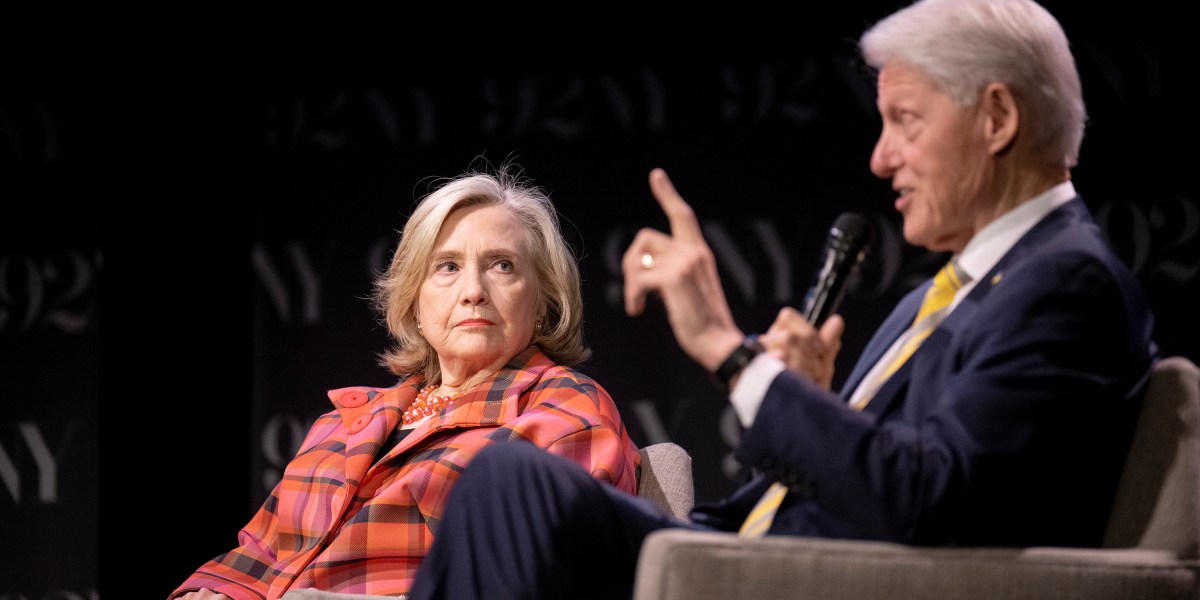
Recent congressional depositions of former President Bill Clinton and former Secretary of State Hillary Clinton, conducted by a House committee investigating the late financier Jeffrey Epstein, reportedly deviated into unexpected territory, including discussions about a leaked photograph, the 'Pizzagate' conspiracy theory, and inquiries concerning government information on unidentified flying objects. Videos of these closed-door sessions, which took place last week, were released on Monday by the House Oversight Committee, offering a glimpse into the high-stakes questioning. According to reports, former President Clinton sought to distance himself from Epstein, while simultaneously emphasizing the critical importance of anyone possessing information about Epstein's abuses coming forward. Conversely, former Secretary Clinton, during hours of questioning that at times grew contentious, consistently maintained that she had no recollection of ever meeting Epstein. These depositions represent a culmination of a six-month effort by the committee to engage with two of the most prominent figures ever to be questioned by Congress in such a capacity, as lawmakers continue their pursuit of accountability in the wake of Epstein's extensive criminal enterprise.
The committee's intense focus on Epstein's network stems from his 2019 death by suicide in a New York correctional facility, where he was awaiting trial on charges of sex trafficking and abusing underage girls. His illicit activities and connections to powerful individuals across the globe have led to widespread demands for a reckoning, with numerous high-profile men worldwide facing resignations and professional repercussions due to revelations about their associations with Epstein and his former associate, Ghislaine Maxwell. Despite these international consequences, observers note that serious legal ramifications for Epstein's U.S.-based associates have been less evident thus far. The congressional inquiry aims to address this perceived gap, seeking to uncover the full extent of Epstein's network and hold those connected accountable. The decision to depose the Clintons underscores the committee's determination to scrutinize all significant figures linked to Epstein, given their decades-long prominence in American political life and previously reported connections, however indirect, to the financier's orbit.
Details emerging from the depositions highlight the contentious atmosphere, particularly during former Secretary Hillary Clinton's session last Thursday. The proceedings were reportedly paused early on after Republican Representative Lauren Boebert allegedly transmitted a photograph of Secretary Clinton during the deposition to a conservative influencer, who subsequently posted it online. This action, according to committee officials, constituted a violation of established committee protocols for such sensitive proceedings and momentarily threatened to derail the session. Beyond procedural breaches, the nature of the questioning itself drew attention. Reports indicate that lawmakers delved into topics far removed from Epstein's criminal activities, including the widely discredited 'Pizzagate' conspiracy theory and inquiries regarding the disclosure of government information on UFOs. While former President Bill Clinton reportedly made statements about the necessity of individuals with knowledge of Epstein's abuses coming forward, he also concurrently worked to establish distance from the deceased financier, reflecting a nuanced approach to his testimony.
The trajectory of these high-profile depositions, particularly the diversions into conspiracy theories and unrelated topics, raises questions about the primary objectives and effectiveness of the congressional inquiry. Analysts suggest that the contentious nature and the inclusion of off-topic questions might reflect political motivations among some Republican lawmakers, who, according to reports, appeared to relish the 'spectacle' of questioning a couple who have long been central figures in the Democratic Party. Following the conclusion of these depositions last week, there are indications that Republican scrutiny of the Clintons regarding their decades-old connections to Epstein and Ghislaine Maxwell may be waning. This potential shift suggests a possible conclusion to this particular line of inquiry for the committee, at least concerning the Clintons. The broader implications for achieving comprehensive accountability for Epstein's network in the U.S. remain uncertain, especially if future investigative efforts continue to be sidetracked by politically charged or tangential matters, potentially hindering the pursuit of substantive legal consequences.
In summary, the House committee's long-anticipated depositions of Bill and Hillary Clinton regarding Jeffrey Epstein concluded last week, marked by unexpected detours into topics like a leaked photo, the 'Pizzagate' conspiracy, and UFOs. While former President Clinton sought to distance himself from Epstein, emphasizing the importance of information disclosure, former Secretary Clinton consistently denied recalling any meetings with the financier. The sessions, particularly Hillary Clinton's, were reportedly heated and even paused due to a protocol breach involving a leaked image. With these depositions now complete and videos released, Republicans appear to be shifting their focus away from the Clintons' historical ties to Epstein. The ultimate impact of these inquiries on achieving a full reckoning for Epstein's extensive network, especially concerning potential legal consequences for his associates in the United States, remains a critical question for ongoing public and legislative scrutiny.