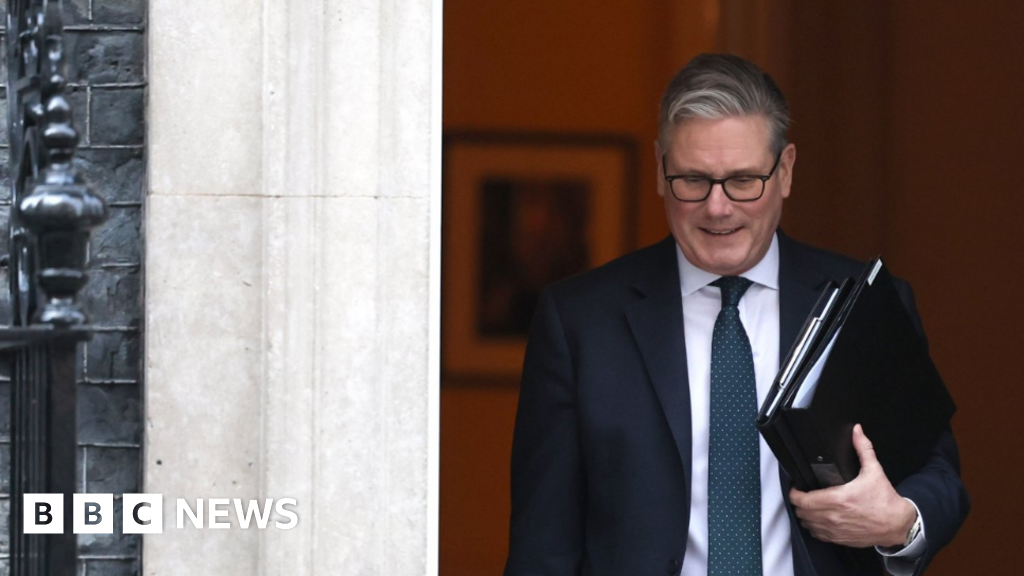
Sir Keir Starmer, the Prime Minister, recently articulated a distinct divergence from President Trump's strategy regarding military actions against Iran, emphasizing the British government's principled opposition to pursuing 'regime change from the skies.' In his inaugural parliamentary address following a series of joint US-Israeli strikes on Iranian targets, Sir Keir staunchly defended his administration's initial decision to withhold permission for the use of UK military installations for the initial wave of these operations. While acknowledging President Trump's expressed dissatisfaction with this stance, the Prime Minister underscored his paramount duty to safeguard Britain's national interests above all else. However, this position evolved as Iran's subsequent retaliatory actions were deemed an 'outrageous' escalation, presenting a direct and immediate threat to British citizens, assets, and allied nations across the volatile Middle East region. This shift prompted a critical reassessment, leading to a conditional agreement for the deployment of UK bases for specific defensive operations aimed at neutralizing Iran's missile infrastructure.
The backdrop to these developments involves significant military engagements initiated by the United States and Israel, which reportedly culminated in the death of Iran's Supreme Leader, Ayatollah Ali Khamenei, on a Saturday preceding Sir Keir's statement. This impactful event triggered a robust and widespread response from Iran, which launched a barrage of missiles and drones across various nations in the region. Reports indicated that targets included Israel, Bahrain, Kuwait, Qatar, the United Arab Emirates, Saudi Arabia, and maritime vessels navigating the strategically vital Strait of Hormuz. Initially, the United Kingdom maintained a firm stance, declining requests from the US military to utilize British bases for what the Prime Minister explicitly categorized as 'offensive strikes.' This decision reflected a clear policy to avoid direct involvement in aggressive military actions, aiming to delineate Britain's role from the more assertive posture adopted by its allies in the immediate aftermath of the initial strikes. The subsequent Iranian retaliation, however, introduced a new dynamic that necessitated a re-evaluation of the UK's engagement parameters.
Following the widespread Iranian retaliation, which officials described as posing an imminent danger to British personnel and strategic interests throughout the Middle East, the UK government revised its position. This led to an agreement to permit the use of British military facilities, but strictly for what were termed 'defensive' strikes targeting Iranian missile sites. Sir Keir unequivocally clarified to Members of Parliament that the deployment of these British bases was exclusively confined to these agreed defensive objectives, explicitly stating that the United Kingdom was not participating in the offensive military operations conducted by the United States and Israel. Furthermore, the Prime Minister addressed a specific incident involving a drone attack on RAF Akrotiri in Cyprus. He confirmed that this particular British airbase was not being utilized by US bombers at the time of the incident, providing crucial context to the operational landscape. Sir Keir also stressed the fundamental importance of establishing a clear and lawful basis for any military actions undertaken by the United Kingdom, drawing a direct parallel to the critical lessons gleaned from historical engagements, particularly referencing the complexities and consequences of the Iraq conflict.
Sir Keir Starmer's parliamentary address underscores a complex and carefully calibrated foreign policy approach, seeking to balance alliance commitments with a distinct national interest and a cautious stance on regional intervention. His explicit rejection of 'regime change from the skies' signals a departure from certain interventionist philosophies, particularly those associated with past US administrations, and potentially, President Trump's more assertive rhetoric. This nuanced position highlights Britain's desire to avoid being drawn into a broader, potentially destabilizing conflict in the Middle East, while simultaneously asserting its right to defend its citizens and interests when directly threatened. The emphasis on a 'lawful basis' for military action, explicitly referencing the 'lessons from Iraq,' suggests a deep-seated institutional memory regarding the pitfalls of poorly justified or internationally unsupported interventions. This approach aims to bolster the legitimacy of UK actions on the global stage, distinguishing them from unilateral or pre-emptive strikes. The conditional nature of base usage for 'defensive' purposes only, despite strong allied pressure, reflects a diplomatic tightrope walk, attempting to maintain strategic partnerships without compromising sovereign decision-making or escalating regional tensions unnecessarily.
In conclusion, Sir Keir Starmer's recent statements delineate a precise and conditional framework for the United Kingdom's involvement in the escalating tensions surrounding Iran. While firmly rejecting an offensive posture aimed at regime change, the UK has demonstrated a clear resolve to protect its national interests and personnel in the face of direct threats. The distinction between 'offensive' and 'defensive' military actions, particularly concerning the use of British bases, remains a cornerstone of this policy. As the situation in the Middle East continues to evolve, the international community will be closely observing how this nuanced British stance influences regional stability and its relationships with key allies like the United States and Israel. The emphasis on a lawful foundation for military engagement, informed by historical precedents, will likely continue to guide the UK's strategic decisions in this volatile geopolitical landscape, shaping its role in future developments.