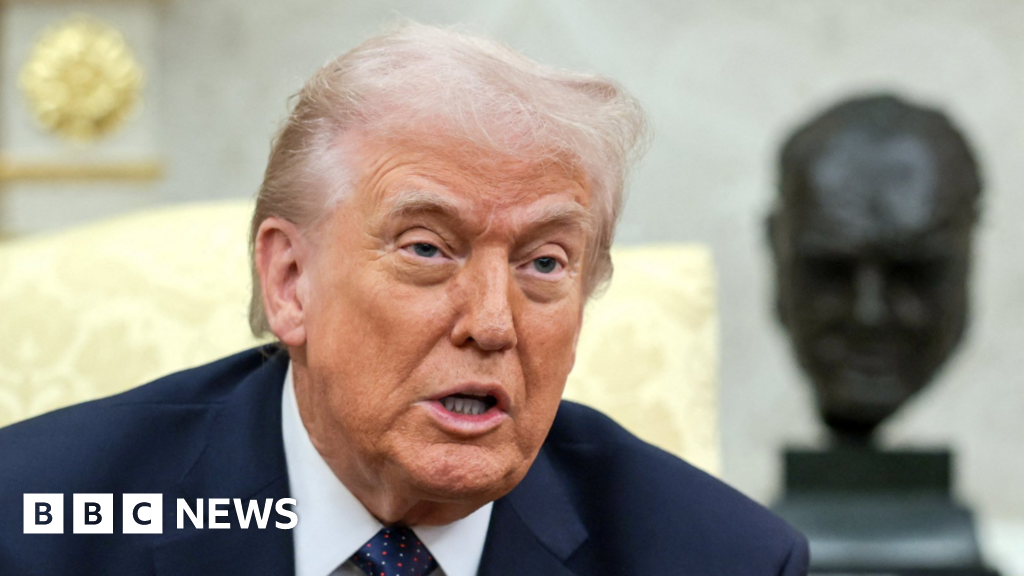
Former President Donald Trump has publicly criticized Sir Keir Starmer, the UK Prime Minister, asserting that he is 'no Winston Churchill' amidst a diplomatic disagreement concerning the utilization of British military installations for initial US-Israeli military actions against Iran. According to reports, the United States had sought permission to use the strategic military base located on Diego Garcia, part of the Chagos Islands, for these operations. However, the UK government initially declined this request, only later consenting to allow American forces access to British military facilities for subsequent 'defensive' strikes targeting Iranian missile infrastructure. Speaking to members of the press from the Oval Office, Trump conveyed his dissatisfaction with the United Kingdom's initial decision, indicating that it necessitated American aircraft to undertake 'many extra hours' of flight time. This friction underscores the complexities of allied military cooperation in rapidly evolving geopolitical crises, highlighting differing strategic priorities between Washington and London regarding the escalating tensions with Tehran.
The geopolitical backdrop to this diplomatic spat involves a series of US-Israeli strikes on Iran and subsequent retaliatory actions by Tehran, which significantly heightened regional instability. The UK's initial reluctance to grant immediate access to its bases, particularly Diego Garcia and potentially RAF Fairford in Gloucestershire, for offensive operations, reflects a nuanced approach to the conflict. Historically, British military bases have played a crucial role in supporting allied operations, especially in the Middle East. However, officials stated that the Prime Minister's initial refusal was rooted in a commitment to judging what was in Britain's national interest, with the government explicitly stating it 'does not believe in regime change from the skies.' This position aimed to delineate the UK's involvement, emphasizing a defensive posture rather than an offensive one, even as the situation escalated with Iran's 'outrageous' response, which reportedly threatened British personnel and interests across the Middle East.
Further details emerging from the situation reveal the operational impact of the UK's initial decision. Former President Trump described Sir Keir Starmer's choice regarding the bases as 'shocking,' specifically referencing the 'lease' of the island and the perceived delay it caused. He elaborated that the inability to use Diego Garcia from the outset resulted in significant logistical challenges, forcing US planes to fly 'many extra hours' and causing considerable surprise within American command. In a related development underscoring the regional volatility, the Royal Navy warship HMS Dragon has reportedly been dispatched to enhance security at a British air base situated in Cyprus, following reports of drone strikes targeting the facility. The UK's stance shifted on Sunday, with officials confirming an agreement to the US request for utilizing British military bases, likely including RAF Fairford and Diego Garcia, but strictly for operations aimed at hitting Tehran's missile infrastructure in a defensive capacity, following Iran's direct threats to British people and allies.
This diplomatic friction between the United States and the United Kingdom, two historically close allies, carries significant implications for future joint military endeavors and the broader 'special relationship.' Expert perspectives suggest that Trump's pointed comparison of Starmer to Winston Churchill highlights a perceived divergence in strategic resolve and a challenge to the traditional alignment of foreign policy objectives. The incident underscores the delicate balancing act faced by the UK government: maintaining solidarity with key allies while safeguarding national sovereignty and pursuing independent strategic interests. Analysts indicate that such public disagreements, even if resolved operationally, can strain trust and potentially influence the willingness of either nation to commit resources to future coalition operations. It also raises questions about the UK's evolving role in global security, particularly concerning its engagement in volatile regions like the Middle East, and how it navigates the pressures of allied expectations versus domestic policy considerations.
In conclusion, the episode surrounding the UK's initial reluctance to permit the use of its military bases for US-Israeli strikes on Iran, and former President Trump's subsequent sharp criticism of Prime Minister Sir Keir Starmer, illustrates the complex dynamics of international alliances during periods of heightened geopolitical tension. While the UK ultimately agreed to allow its bases to be used for 'defensive' operations against Iranian missile sites following a perceived escalation of threats, the initial disagreement highlighted differing strategic approaches. The incident underscores the UK's commitment to protecting its national interests while navigating its responsibilities as a key ally. Moving forward, observers will be closely watching how this episode impacts the 'special relationship' and the broader coordination of Western foreign policy in the Middle East, particularly as regional tensions remain elevated and the necessity for swift, coordinated responses persists.