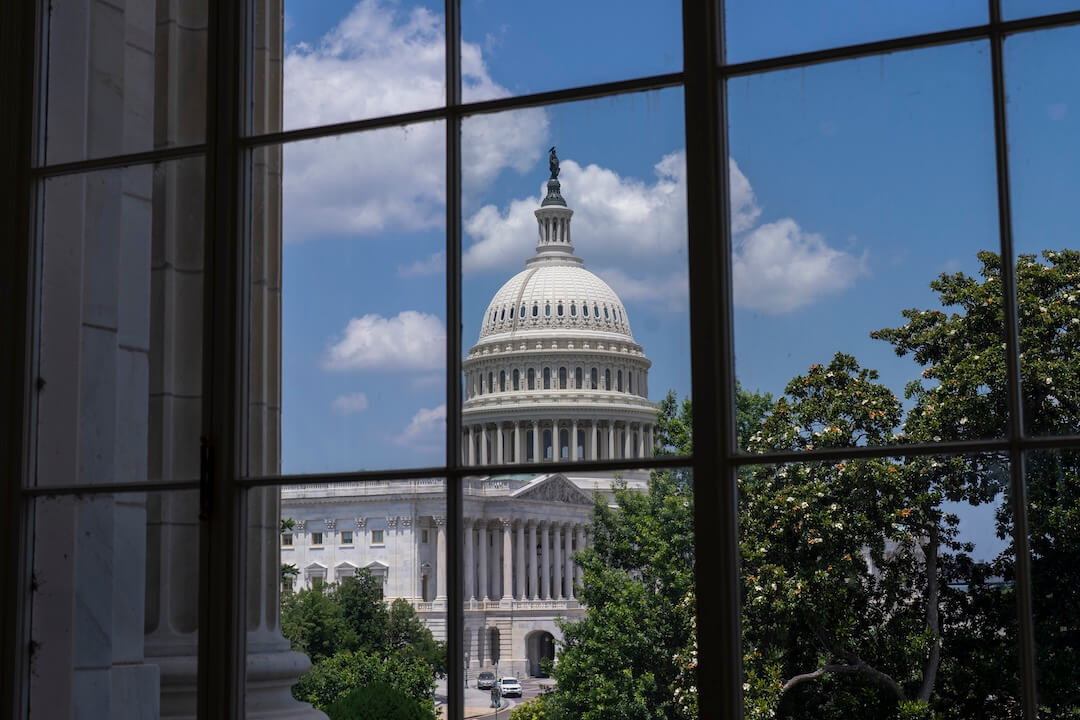
A recent military operation involving the United States and Israel in Iran, which commenced on February 28, has intensified a long-standing constitutional dispute in Washington regarding the authority to initiate armed conflict. This ongoing operation reportedly resulted in the death of Iran's Supreme Leader, Ayatollah Ali Khamenei, according to various reports. In the wake of these strikes, several prominent members of Congress have moved to challenge the executive branch's prerogative on military engagement. Senator Tim Kaine, a Democrat from Virginia, who has collaborated with Republican Senator Rand Paul of Kentucky on a resolution concerning war powers specifically related to Iran, promptly called for an immediate Senate vote on their proposed measure. Concurrently, Representative Ro Khanna, a California Democrat, who co-authored a similar legislative effort in the House of Representatives with Republican Representative Thomas Massie of Kentucky, articulated on March 1 that the core objective of their resolution is to prevent further military entanglements in the Middle East, or at minimum, to ensure congressional deliberation on such actions. This legislative push highlights a significant reassertion of congressional oversight in foreign policy decisions.
The current legislative efforts to rein in presidential war-making authority are rooted deeply in the U.S. Constitution, which, under Article I, Section 8, explicitly grants Congress the power to declare war. However, the practical application of this constitutional mandate has evolved significantly over time, with the last formal declaration of war by Congress occurring during World War II. Since then, numerous military engagements have been authorized by resolutions or undertaken by presidential executive action, often leading to debates about the appropriate balance of power between the legislative and executive branches. This historical context underscores the significance of the present confrontation, as it directly challenges the scope of presidential authority in deploying military force without explicit congressional approval. Furthermore, the situation is particularly notable given President Donald Trump's past campaign rhetoric, which frequently emphasized a desire to keep the United States out of protracted foreign conflicts. The current operation in Iran, therefore, not only reignites a fundamental constitutional question but also tests the consistency of the administration's stated foreign policy objectives.
Despite the bipartisan nature of the proposed resolutions, with Democratic and Republican lawmakers co-sponsoring measures in both chambers, the path to their successful enactment appears fraught with significant obstacles. Reports indicate that both the House and Senate could potentially vote on these measures as early as March 4. However, the likelihood of either resolution passing both legislative bodies is considered low by political observers. Even in the improbable scenario that a resolution were to clear both the House and Senate, President Donald Trump possesses the authority to veto the legislation. Overriding a presidential veto requires a two-thirds majority vote in both chambers, a threshold that is widely regarded as exceptionally difficult to achieve in the current political climate. Historically, no war powers resolution veto has ever been successfully overridden, underscoring the formidable challenge faced by proponents of these measures. Matthew Green, a political scientist at Catholic University, observed last year, according to PolitiFact, that 'party loyalty is a powerful force on Capitol Hill,' suggesting that Republican leadership would be strongly inclined to support the Trump administration's use of military force without requiring congressional consent, further complicating the resolutions' prospects.
The renewed debate over war powers extends beyond the immediate legislative battle, carrying significant implications for the balance of power within the U.S. government and potentially for the future direction of American foreign policy. This situation could also serve as a crucial test of President Trump's support base within his own Republican party, particularly given his prior campaign promises to avoid new foreign wars. Notably, some influential figures associated with the 'MAGA' movement, which forms a core part of Trump's political base, have publicly voiced opposition to military action against Iran. These individuals include former Republican Representative Marjorie Taylor Greene of Georgia and prominent commentator Tucker Carlson, indicating a potential fissure within the president's traditional support network on this specific issue. The pushback from within his own ideological camp suggests that the administration's foreign policy decisions are not universally embraced, even by those who typically align with the president. Representative Khanna, reflecting on the potential outcome, predicted on 'Meet the Press' that the House vote on their resolution would be 'very close,' signaling the deep divisions and the high stakes involved in this constitutional and political struggle.
In summary, the recent U.S. and Israeli military operation in Iran, leading to the reported death of Supreme Leader Ayatollah Ali Khamenei, has forcefully brought the long-standing constitutional question of war-making authority back to the forefront of American politics. While bipartisan resolutions have been introduced in both the House and Senate by figures like Senators Kaine and Paul, and Representatives Khanna and Massie, their legislative journey faces considerable hurdles, primarily the high probability of a presidential veto and the historical difficulty of overriding such a veto. The coming days will be critical as Congress potentially moves to vote on these measures, offering a rare glimpse into the internal dynamics of both parties and the extent of congressional willingness to assert its constitutional prerogatives. Observers will closely monitor the vote counts, particularly in the House, and any subsequent actions by the White House, as this episode is poised to leave a lasting mark on the ongoing struggle between executive and legislative power in matters of national security and foreign engagement.