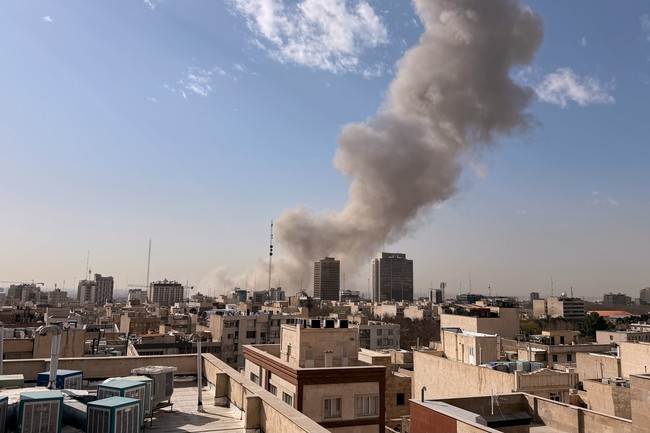
On Saturday morning, a significant, coordinated military operation unfolded as both Israel and the United States launched precision strikes against various military installations and critical missile infrastructure across Iran, according to official reports. Targets included sites within Tehran and other key urban centers, with eyewitness accounts and state media confirming multiple explosions rocking the Iranian capital, particularly in areas adjacent to prominent government compounds. Columns of smoke were observed rising over the Tehran skyline, signaling the immediate impact of the offensive. In response to the escalating situation and to mitigate potential retaliatory threats, Israeli Defense Minister Israel Katz promptly declared a nationwide state of emergency, emphasizing the necessity of safeguarding his nation. This decisive action, which U.S. officials characterized as "not a small strike" and the culmination of several months of strategic planning, follows a period of unsuccessful nuclear negotiations in Switzerland and comes amidst the Iranian regime's intensified suppression of internal dissent, marking a robust stance against what many perceive as a long-standing pattern of evasion regarding international accountability.
The recent coordinated offensive represents a significant escalation following earlier, less comprehensive military actions. Reports indicate that the United States had previously conducted bombing campaigns in June, specifically targeting Iranian nuclear facilities such as those located in Fordow, Natanz, and Isfahan. While these prior strikes inflicted considerable damage, they ultimately proved insufficient in completely halting Iran's persistent nuclear ambitions. The current administration, under President Trump, had consistently signaled a commitment to a forceful response should diplomatic avenues fail to curb Tehran's nuclear program. Indeed, this intervention materializes after the Iranian government reportedly rebuffed international diplomatic overtures and proceeded with efforts to revive its nuclear development. This latest military engagement is widely interpreted as a strategic effort to re-establish a credible deterrent against a regime that has, for decades, been accused of sponsoring various terror proxies, including Hezbollah and the Houthis. Furthermore, the Iranian government's historical record includes instances of anti-Western rhetoric, such as the persistent "Death to America" chants, and the prolonged detention of American citizens, notably the 444-day hostage crisis. The expanded scope of these current strikes, which specifically targeted ballistic missile capabilities, launch infrastructure, and naval assets, underscores a more comprehensive and assertive strategy to address these long-standing concerns.
Further details emerging from the region corroborate the widespread impact of the strikes. Iranian state media, while often controlled, acknowledged significant explosions within central Tehran, specifically highlighting the Pasteh district. This area is notably home to the offices of Supreme Leader Ayatollah Ali Khamenei, suggesting the proximity and strategic nature of some of the targeted sites. Such reports underscore the perceived precision of the operation and its potential to disrupt the operational capacity of key governmental and military command structures. Concurrently, across Israel, air raid sirens blared, prompting immediate public alerts and reflecting a heightened state of readiness in anticipation of potential retaliatory actions from Iran. This defensive posture, combined with Defense Minister Israel Katz's declaration of a national state of emergency, underscores the immediate and serious threat assessment made by Israeli authorities. American officials, speaking on condition of anonymity, reiterated that the U.S. involvement was the result of "months of planning," a statement that reinforces the calculated and deliberate nature of the offensive rather than a reactive measure. The specific targeting of ballistic missile infrastructure, launchers, and naval assets is designed to systematically dismantle Iran's capacity for long-range projection of force and its ability to destabilize maritime routes and regional security.
Analysts suggest that this coordinated military action marks a pivotal shift in regional strategy, explicitly described within official circles as "deterrence reclaimed." This framing implies a departure from previous approaches that may have been perceived as insufficient in curbing Iran's aggressive policies and nuclear ambitions. The underlying sentiment, as conveyed by various sources, is that the international community, particularly Western nations, has perhaps been overly accommodating or ineffective in holding the Islamic Republic accountable for its actions. Furthermore, the situation is complicated by internal dynamics within Iran itself. Social media accounts, such as one attributed to "Yaar Ghadimi" from Tehran, suggest a segment of the Iranian populace actively desires the continuation of conflict until the current Islamic regime is entirely dismantled. This perspective, while not necessarily representative of the entire nation, highlights significant internal divisions and the potential for domestic unrest to intertwine with external pressures. Such sentiments challenge the notion of a monolithic Iranian response to the strikes and could significantly influence the regime's future calculations and the broader geopolitical landscape. The immediate objective of these strikes appears to be a clear and unequivocal message that Iran's pursuit of nuclear weapons and its continued sponsorship of regional proxies will no longer be tolerated without severe repercussions, potentially reshaping the balance of power in the Middle East and testing the resolve of all involved parties.
In summary, the synchronized military operations conducted by Israel and the United States against Iranian military and missile infrastructure represent a critical juncture in regional geopolitics. This decisive action, characterized by its precision and strategic scope, aims to re-establish a credible deterrent against Iran's persistent nuclear program and its regional destabilizing activities, following a period of diplomatic impasse and earlier, less impactful interventions. The immediate aftermath has seen Israel declare a national state of emergency in anticipation of potential retaliation, while Iranian state media has confirmed the impact of the strikes in significant urban centers. Moving forward, the trajectory of this volatile situation will largely hinge on several critical factors: the nature and extent of Iran's retaliatory measures, if any; the unified or fragmented response from the international community; and the evolving dynamics of internal dissent within Iran. Observers globally will be closely monitoring for any indicators that might suggest either a path towards de-escalation or, conversely, a further intensification of this already fraught conflict.