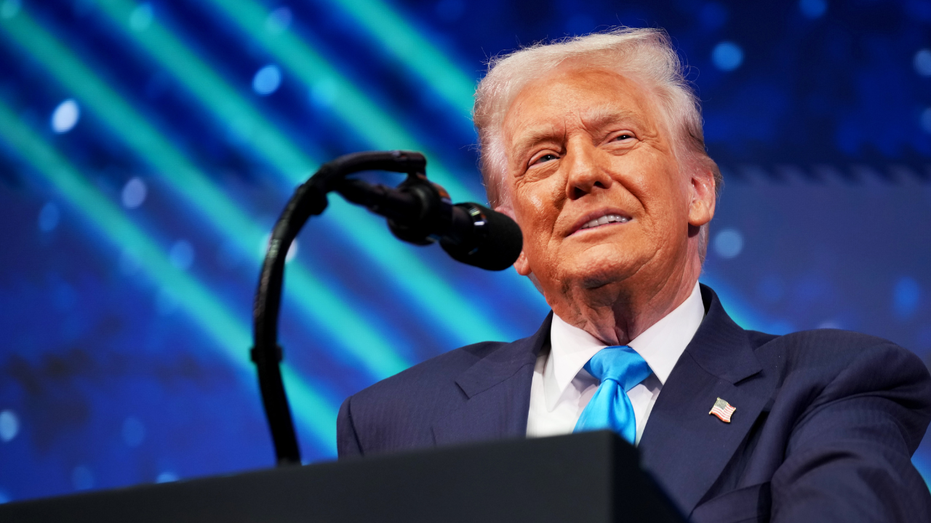
Donald Trump has announced his intention to participate in the White House Correspondents' Association (WHCA) annual dinner this April, marking a notable departure from his previous stance during his presidency. The former president conveyed his decision through a social media post on Monday, indicating this will be his first time attending the event as president or former president. This move is widely seen as a significant shift in the often-strained relationship between Trump and the press corps, given his consistent boycotts of the gathering throughout his time in office. His attendance is anticipated to garner substantial attention, particularly in light of his well-documented history of public criticism directed at media organizations and his prior absence from the long-standing annual tradition. According to his public statement, Trump cited the nation's upcoming 250th birthday as a factor in his decision, alongside a personal assertion that members of the press now recognize his historical importance as a leader.
The White House Correspondents' Dinner traditionally serves as a unique and important forum for the sitting president to engage with journalists, often blending humor with more serious remarks to underscore the vital role of a free press in a democratic society. This event also plays a crucial role in raising funds for journalism scholarships, supporting the next generation of reporters. However, Donald Trump's tenure was characterized by frequent confrontations with the media, which he often labeled as 'fake news.' This antagonism led to his unprecedented boycott of the dinner in 2017, a decision that broke with decades of presidential tradition. His subsequent non-attendance at any of the dinners throughout his presidency further solidified a perception of deep animosity between his administration and the press. This consistent absence was widely interpreted as a symbolic rejection of mainstream media and its function, transforming what was historically a bipartisan social gathering into a prominent point of political contention. In his absence, the dinner proceeded with comedians and journalists hosting, frequently addressing the strained media-political climate.
In his public statement regarding his decision to attend, conveyed via his social media platform, Donald Trump detailed several reasons for his change of heart. He noted that the White House Correspondents' Association had 'very nicely' extended an invitation for him to be the 'Honoree' at this year’s event. Trump also referenced the dinner’s long and storied history, which began in 1924 under then-President Calvin Coolidge, emphasizing its traditional significance. A key element of his explanation, according to his post, was the nation’s forthcoming 250th birthday, suggesting a patriotic motivation for his participation. Furthermore, he included a personal assertion that 'these 'Correspondents' now' acknowledge his historical importance as a leader, reflecting his ongoing narrative about his impact. This decision comes after years where his administration's relationship with the press was marked by frequent accusations of bias and a general distrust of established news outlets, making his willingness to engage with the very organizations he often criticized particularly noteworthy.
Observers and political analysts are now contemplating the broader implications of Donald Trump's decision to attend the WHCA dinner, particularly in an election year. This move could be interpreted in several ways: as a strategic attempt to soften his image, an acknowledgment of the dinner's enduring platform for presidential communication, or even a tactical maneuver to command media attention on his own terms. Expert perspectives suggest that his attendance, after years of deliberate absence and open hostility towards the press, could signal a calculated shift in his engagement strategy. It raises questions about how the media will react to his presence and whether this marks a genuine effort to bridge divides or merely a temporary concession for political gain. The event itself, known for its blend of self-deprecating humor and serious remarks on press freedom, will provide a unique stage for Trump to interact with the very journalists he has frequently assailed, potentially influencing future dynamics between political figures and the news industry.
Donald Trump's announcement to attend the White House Correspondents' Association dinner represents a significant and unexpected development in his relationship with the media. After years of boycotts and open antagonism, his decision to participate in this long-standing tradition signals a potential new chapter, the full implications of which remain to be seen. The event will undoubtedly be scrutinized for the tone of his remarks, the nature of his interactions with journalists, and whether this marks a lasting change in his approach to the press or a strategic, isolated gesture. As the nation approaches its 250th birthday, and with political tensions often running high, all eyes will be on the dinner to observe if this symbolic engagement can foster any degree of reconciliation or if it merely adds another layer of complexity to the already contentious landscape of American political journalism.