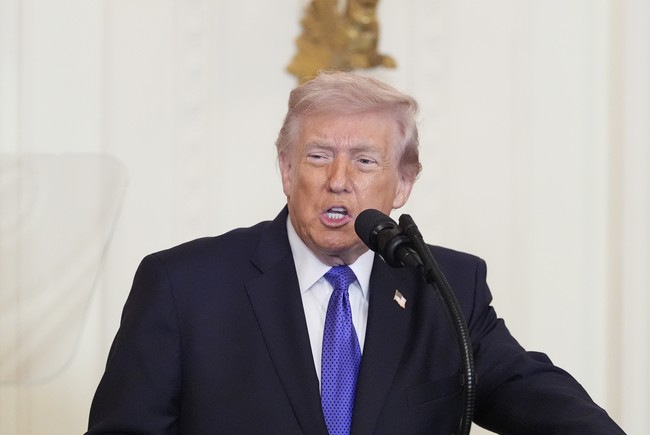
President Donald Trump recently offered a definitive explanation regarding the United States' decision to launch Operation Epic Fury against Iran, directly refuting widespread assertions that Israel had coerced or "dragged" Washington into the conflict. Speaking from the Oval Office during a press conference alongside German Chancellor Friedrich Merz, the President addressed inquiries about the origins and timing of the military action. According to official statements, Trump unequivocally denied that Israel had compelled his administration's hand in initiating the strikes. Instead, he presented a contrasting perspective, suggesting that the impetus for the operation originated from the U.S. side, even going so far as to indicate he might have been the one to influence Israel's readiness for the engagement. This clarification emerges amidst ongoing public discourse and what officials describe as a misinterpretation of earlier remarks made by Secretary of State Marco Rubio, which had fueled claims of Israeli undue influence on American foreign policy decisions concerning Iran. The President's remarks aim to firmly establish the U.S. as the primary decision-maker in the strategic deployment of military force in the region.
The discourse surrounding Operation Epic Fury has been significantly shaped by various narratives, particularly those alleging external pressure on the United States. These claims gained traction following comments attributed to Secretary of State Marco Rubio, which, according to administration officials, were subsequently misinterpreted by some observers across the political spectrum. This misinterpretation led to a prevailing, albeit unverified, belief that Israel had somehow manipulated or forced the U.S. into military confrontation with Iran. The geopolitical tensions between the U.S. and Iran have been a long-standing and complex issue, marked by sanctions, proxy conflicts, and a persistent nuclear proliferation concern. The decision to undertake a significant military operation like Epic Fury carries immense strategic weight, impacting regional stability and international relations. The President's recent intervention seeks to reframe the understanding of this critical juncture, emphasizing an autonomous American decision-making process rather than one dictated by allied interests. This context is crucial for understanding the administration's narrative control efforts regarding sensitive military engagements.
During his address, President Trump elaborated on the strategic rationale behind the pre-emptive strikes, asserting a strong conviction that Iran was poised to initiate an attack. He conveyed his belief that a failure to act decisively would have resulted in an initial offensive from the Iranian side. "If we didn't do it, they were going to attack first," the President reportedly stated, underscoring the perceived imminent threat. This assessment, according to Trump, was not a unilateral conclusion but was informed by the insights of highly skilled negotiators within his administration. These individuals, described as "great negotiators" with extensive experience in international dealings, provided critical evaluations of ongoing discussions with Iranian representatives, whom Trump characterized as "lunatics." Based on the trajectory and nature of these negotiations, the consensus within the U.S. leadership, as articulated by the President, was that Iran was preparing for an aggressive move. Consequently, the decision was made to launch Operation Epic Fury, with Trump noting that both the United States and Israel were prepared for the action, and that the operation had achieved a "very, very powerful impact."
President Trump's forceful clarification carries significant implications for understanding the dynamics of U.S. foreign policy and its alliances in the Middle East. By explicitly denying Israeli coercion and instead suggesting a scenario where he might have influenced Israel's readiness, the President repositions the United States as the primary driver of regional military strategy. This narrative counters perceptions of a junior partner relationship, particularly concerning Israel, and reinforces the notion of American sovereignty in defense decisions. Analysts suggest this stance could be aimed at reassuring domestic audiences about the independence of U.S. military actions, while also sending a clear message to adversaries about the administration's willingness to act pre-emptively based on its own intelligence assessments. Furthermore, characterizing the Iranian leadership as "lunatics" and emphasizing the role of "great negotiators" highlights the administration's approach to diplomacy and conflict resolution, suggesting a blend of hardline rhetoric and reliance on experienced tactical minds. The assertion of a "very, very powerful impact" also serves to validate the military action and its perceived success, potentially influencing future strategic calculations in the volatile region.
In summary, President Trump's recent statements have provided a direct and unyielding account of the motivations behind Operation Epic Fury, fundamentally challenging the narrative of Israeli compulsion. His assertion that the U.S. acted pre-emptively due to a strong belief in an impending Iranian attack, potentially even influencing Israel's timing, underscores a proactive and independent American foreign policy stance. The administration's emphasis on its own intelligence and negotiation assessments, rather than external pressure, aims to solidify its position as the ultimate authority in critical military decisions. Moving forward, observers will be closely watching how this clarified narrative impacts U.S. relations with allies and adversaries alike, particularly in the Middle East. The President's remarks set a clear tone for future engagements, suggesting a continued willingness to take decisive action based on perceived threats, while firmly asserting American leadership in regional security matters.