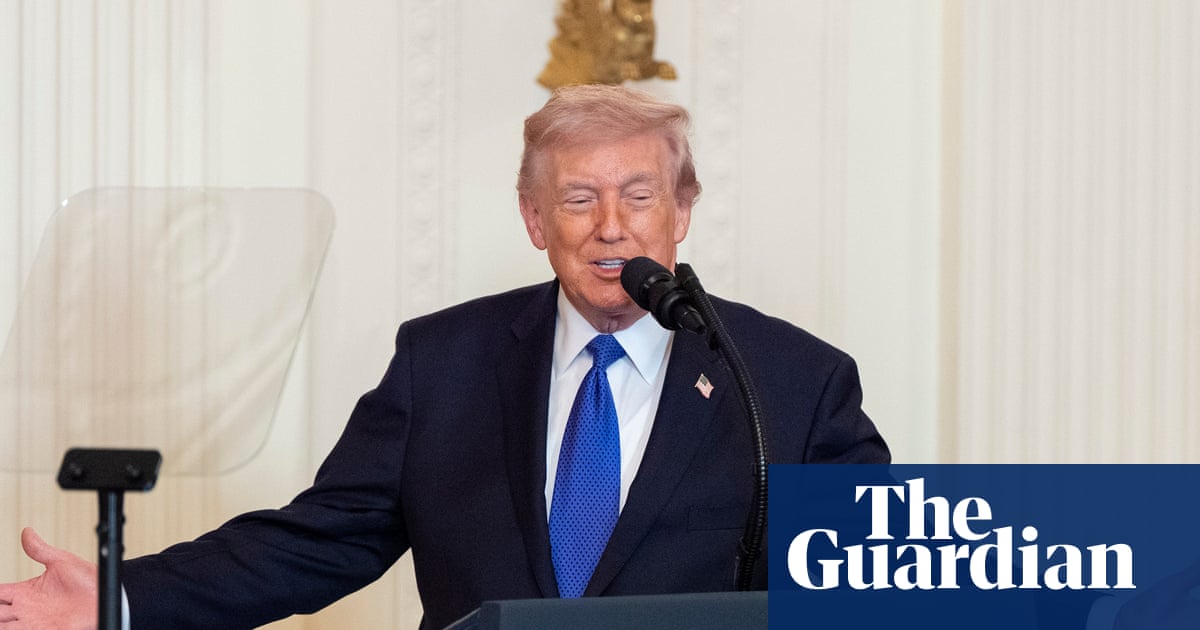
Donald Trump has declared his intention to participate in the upcoming White House Correspondents’ Dinner, an event he has notably abstained from throughout his tenure as president. The announcement, conveyed via a social media post on Monday, marks a significant departure from his previous stance, which included boycotting the dinner in 2017 and subsequently avoiding all such gatherings during his time in office. This decision signals a potential shift in the often-contentious relationship between the former president and the press corps. According to his public statement, Trump cited the nation's forthcoming 250th birthday as a contributing factor to his decision, alongside a personal assertion that members of the press now acknowledge his historical significance as a leader. His attendance is expected to draw considerable attention, given his history of public criticism towards media organizations and his consistent absence from the annual event.
The White House Correspondents’ Dinner traditionally serves as a unique platform for the president to engage with journalists, often through a blend of humor and serious remarks, and to underscore the importance of a free press. However, Donald Trump's relationship with the media has been characterized by frequent clashes and accusations of 'fake news,' leading to his unprecedented boycott of the event in 2017, a move that broke with decades of presidential tradition. His subsequent non-attendance at any of the dinners during his presidency further solidified a perception of deep antagonism between his administration and the press. This consistent absence was widely interpreted as a symbolic rejection of the mainstream media and its role, transforming what was once a bipartisan social gathering into a focal point of political division. The dinner, which also raises funds for journalism scholarships, has continued with comedians and journalists hosting in the president's absence, often addressing the strained media-political environment.
In his social media declaration regarding his attendance, Trump articulated specific reasons for his change of heart. He indicated that his decision was partly motivated by the upcoming 250th anniversary of the United States. Furthermore, according to his post, he believes that the 'Correspondents' have now come to recognize him as one of the most impactful presidents in the nation's history, referring to himself as the 'G.O.A.T.' or 'Greatest Of All Time,' a sentiment he claims is shared by many. He expressed that it would be an 'Honor' to accept their invitation and vowed to ensure the event would be
This unexpected announcement prompts considerable speculation regarding its broader implications for the political and media landscape. Analysts suggest that Trump's decision could be interpreted in several ways: as a strategic move to project an image of engagement and confidence, a calculated attempt to reframe his relationship with the press on his own terms, or simply a reflection of his desire to command the spotlight on a prominent national stage. His previous boycotts were seen by many as a deliberate effort to undermine the legitimacy of mainstream media institutions. His attendance now, particularly with the stated condition of perceived journalistic admiration, could be an attempt to assert dominance or control over the narrative surrounding the event. It remains to be seen whether this marks a genuine softening of his stance towards the press or if it is a singular, opportunistic appearance designed to further his own public image and political objectives. The event itself is likely to become a highly scrutinized moment, with every interaction and statement analyzed for deeper meaning.
In summary, Donald Trump's recent announcement to attend the White House Correspondents’ Dinner for the first time as president represents a notable shift from his consistent boycotts during his previous terms. His public reasoning, citing the nation's 250th birthday and his belief in the press's recognition of his presidential legacy, sets a unique tone for his participation. This decision will undoubtedly place the annual gathering under an intense spotlight, as observers anticipate how the former president will interact with the journalists he has frequently criticized. The upcoming dinner will be closely watched for any indications of evolving dynamics between political leadership and the media, and whether this event signifies a broader change in Trump's approach to press engagement or remains an isolated, strategic appearance.