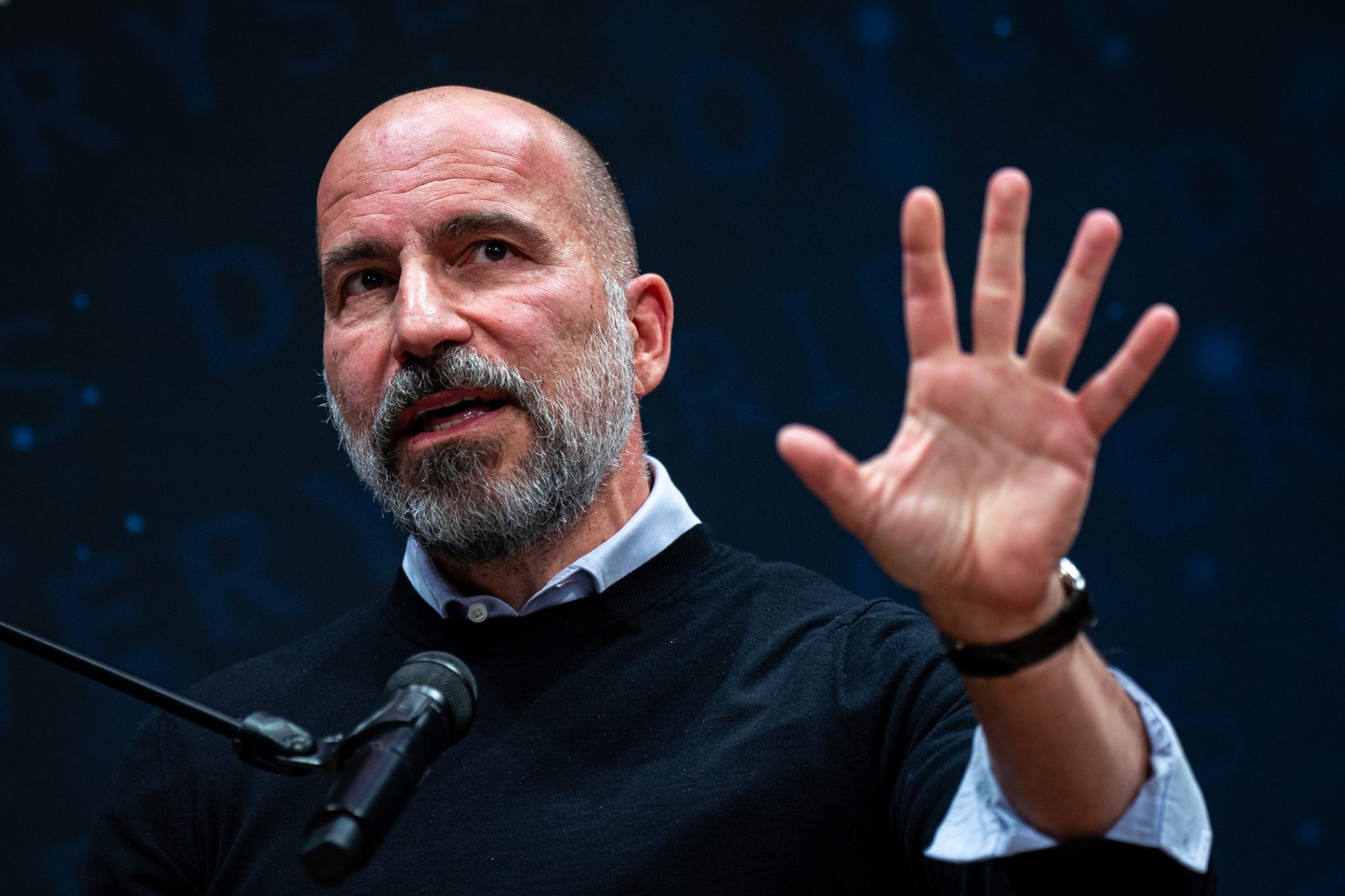
Uber CEO Dara Khosrowshahi has publicly articulated a highly demanding work culture within the $157 billion ride-hailing enterprise, explicitly stating that employees are expected to maintain an exceptional work ethic, which includes responding to his emails over weekends. Speaking on a recent podcast, Khosrowshahi made it clear that individuals seeking a relaxed pace or prioritizing work-life balance, often characterized by practices like 'coffee badging' or a desire for four-day workweeks, would likely not thrive or remain long at the company. According to his statements, underperformers will be identified and, if issues persist without resolution, will be removed from their positions. This philosophy underscores a rigorous environment where constant engagement and high performance are not merely encouraged but are fundamental requirements for continued employment, setting a distinct tone for the company's operational ethos under his leadership.
This stringent approach to employee expectations was reportedly initiated by Khosrowshahi upon his assumption of the CEO role in 2017. At that time, the company faced significant financial challenges, with reports indicating substantial annual losses ranging from $2.5 billion to $3 billion. Sources suggest that the tech giant, despite its rapid growth, had become somewhat complacent, prompting Khosrowshahi to implement a comprehensive strategy aimed at revitalizing its performance and financial health. A crucial component of this turnaround plan involved a critical re-evaluation of the existing team and a fundamental overhaul of Uber's internal work culture. This cultural transformation, as explained by the CEO, extended beyond standard office hours, emphasizing a commitment that permeates all aspects of an employee's professional life at Uber, directly linking sustained effort to the company's recovery and future prosperity.
Elaborating on the specifics of this demanding environment, Khosrowshahi detailed his personal practice of sending work-related communications to his team on Saturdays. He further indicated that a lack of response on Saturday would prompt a follow-up email on Sunday, often containing a direct inquiry such as 'What’s going on?' This anecdote highlights the CEO's expectation for continuous engagement and responsiveness, even outside traditional business hours. According to Khosrowshahi, this leadership philosophy, centered on an unwavering commitment to hard work, has yielded significant positive financial outcomes for Uber. He pointed to the company's impressive generation of $9.8 billion in free cash flow during the previous year as evidence of the strategy's effectiveness. While acknowledging that working at the ride-hailing company is undeniably challenging, Khosrowshahi asserted that employees are afforded genuine autonomy, gain extensive knowledge, and have the opportunity to make a tangible impact, reinforcing the idea that the intense effort is ultimately rewarding.
Khosrowshahi's outspoken stance on work ethic and expectations presents a stark contrast to evolving workplace trends that increasingly prioritize employee well-being, flexibility, and work-life integration. While some organizations are experimenting with four-day workweeks and promoting boundaries between professional and personal life, Uber's CEO champions a culture where dedication extends into personal time, viewing hard work as the most crucial skill for success, not just within the company but in life generally. This perspective, according to reports, suggests that professionals often become overly preoccupied with their career trajectory, potentially overlooking the foundational importance of consistent, strenuous effort. Such a demanding environment, while potentially driving high performance and financial results, could also spark debate regarding its long-term impact on employee morale, retention, and overall mental health, particularly in a competitive talent market where companies are vying for skilled individuals with diverse expectations for their professional lives.
In conclusion, Uber CEO Dara Khosrowshahi has firmly established a company culture that prioritizes an exceptionally demanding work ethic, including expectations for weekend responsiveness, and explicitly discourages any inclination towards 'coasting.' This approach, implemented since his arrival in 2017 to address significant financial losses, is credited by Khosrowshahi with driving Uber's recent financial success, including substantial free cash flow generation. While he acknowledges the intensity of the work, he emphasizes the agency, learning opportunities, and impact available to employees. This philosophy positions Uber distinctly in the ongoing global conversation about modern work environments, setting a high bar for commitment that may appeal to some while potentially challenging the expectations of others seeking greater work-life balance. Future observations will likely focus on how this culture influences talent acquisition and retention within the competitive tech industry.