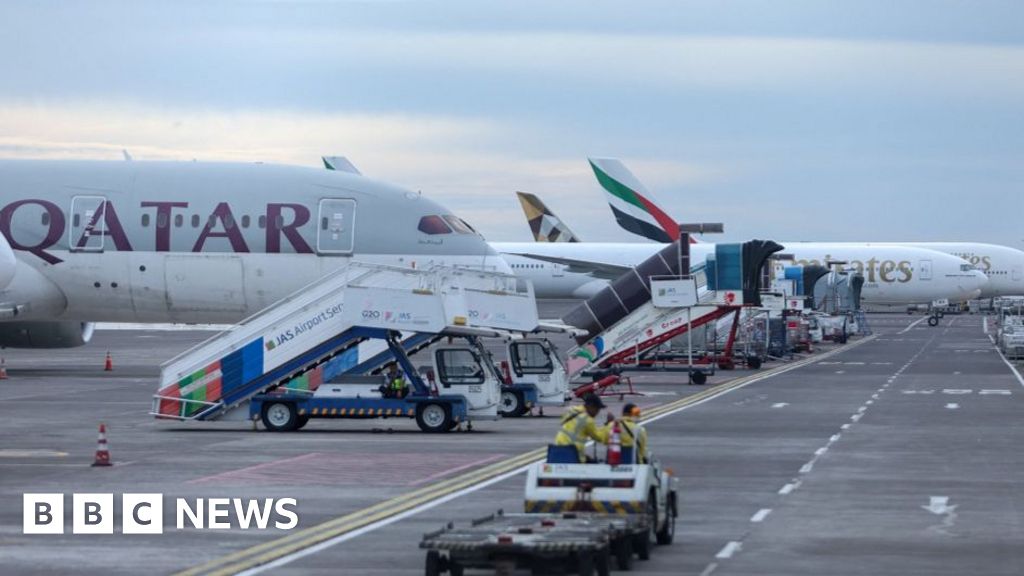
The United Kingdom has initiated a significant operational effort to provide assistance and support to an estimated 200,000 British nationals currently located across the Gulf region, according to recent reports. This proactive measure comes amidst a period of heightened instability, as Iran continues to launch retaliatory strikes in the area, reportedly in response to an ongoing offensive by Israel and the United States. A substantial number of Britons, exceeding 94,000 individuals, have already registered their presence and contact details with the Foreign Office to receive direct updates and guidance. Officials indicate that the majority of these registered individuals are either tourists enjoying holidays in the United Arab Emirates or travelers in transit through major international aviation hubs within the Gulf, underscoring the broad impact of the escalating tensions on both residents and visitors alike. The comprehensive nature of this operation highlights the British government's commitment to safeguarding its citizens amidst rapidly evolving geopolitical challenges in a critical global corridor, with contingency plans actively being formulated to address potential further disruptions, including the possibility of airspace closures.
The current escalation in the Gulf stems from a complex and volatile regional dynamic, with Iran's recent military actions described as a direct response to prior attacks attributed to Israel and the United States. This chain of events has dramatically intensified security concerns across the Middle East, directly impacting civilian travel and regional infrastructure. Reports indicate widespread disruption to air travel, with numerous flights experiencing diversions or cancellations. Key international aviation gateways, including those serving Tel Aviv, Dubai, and Doha, along with other significant international hubs, have seen their operations severely affected. This disruption has left thousands of travelers stranded or facing uncertain journeys, further compounding the challenges for British nationals navigating the precarious situation. The broader context points to a region grappling with persistent geopolitical friction, where military engagements can swiftly translate into widespread civilian inconvenience and safety risks, necessitating robust governmental responses to protect expatriates and visitors. The ongoing strikes by Iran are a critical factor driving the UK's urgent response, as the safety of its citizens becomes paramount in an increasingly unpredictable environment.
In light of the escalating situation, government officials are actively developing contingency strategies, including potential plans for the evacuation of UK nationals, should the region's airspace remain inaccessible for extended periods. The Foreign Office has specifically urged British citizens residing or traveling in Bahrain, Israel, Kuwait, the Palestinian territories, Qatar, and the United Arab Emirates to formally register their presence. This registration process is crucial for ensuring they receive timely and direct updates regarding the rapidly evolving travel advice and security situation. Currently, the official guidance for British nationals is to remain in their present locations, adhere strictly to instructions issued by local authorities, and continuously monitor the Foreign Office's travel advisories, which are anticipated to change frequently and without much prior notice. Prime Minister Sir Keir Starmer, speaking on Sunday evening, confirmed the presence of at least 200,000 British citizens in the affected region, a figure encompassing long-term residents, families on vacation, and individuals merely passing through. He further stated that Iran's sustained attacks had specifically targeted "airports and hotels where British citizens are staying," underscoring the direct threat posed to UK nationals.
The scale of the United Kingdom's operational response, targeting support for 200,000 nationals, underscores the profound level of concern within Whitehall regarding the escalating tensions in the Gulf. This extensive mobilization suggests that officials perceive a significant and immediate risk to British citizens, necessitating comprehensive contingency planning that extends beyond mere travel advisories to include potential mass evacuations. The emphasis on airspace closures as a trigger for evacuation plans highlights a critical vulnerability in modern travel and logistics, indicating that the primary concern is not just direct harm but also the ability to move people safely out of a volatile zone. Observers suggest that the rapid changes anticipated in Foreign Office travel advice reflect the unpredictable nature of the current geopolitical climate, where events can shift dramatically with little warning. Furthermore, the Prime Minister's specific mention of Iranian strikes hitting "airports and hotels where British citizens are staying" serves to personalize the threat, emphasizing the direct danger to civilians and justifying the government's robust and urgent intervention. This situation also presents significant logistical challenges, requiring intricate coordination with regional authorities and international partners to ensure the safety and swift departure of a large expatriate and tourist population, should the need arise.
In summary, the United Kingdom is engaged in a substantial and complex operation to safeguard its 200,000 citizens in the Middle East, a direct consequence of Iran's ongoing retaliatory strikes in response to actions by Israel and the US. With over 94,000 Britons already registered for updates, the government is actively preparing for various scenarios, including potential evacuations if regional airspace remains closed. The current advice for British nationals emphasizes staying put, following local directives, and closely monitoring the Foreign Office's rapidly evolving travel guidance. The Prime Minister's statements highlight the direct impact of the conflict on locations frequented by British citizens, solidifying the urgency of the government's response. Moving forward, the international community and affected citizens will be closely watching the status of regional airspace, the trajectory of diplomatic efforts to de-escalate tensions, and any further updates from the Foreign Office, as the situation remains highly fluid and unpredictable. The coming days will be critical in determining the next steps for British nationals in the region and the broader stability of the Middle East.