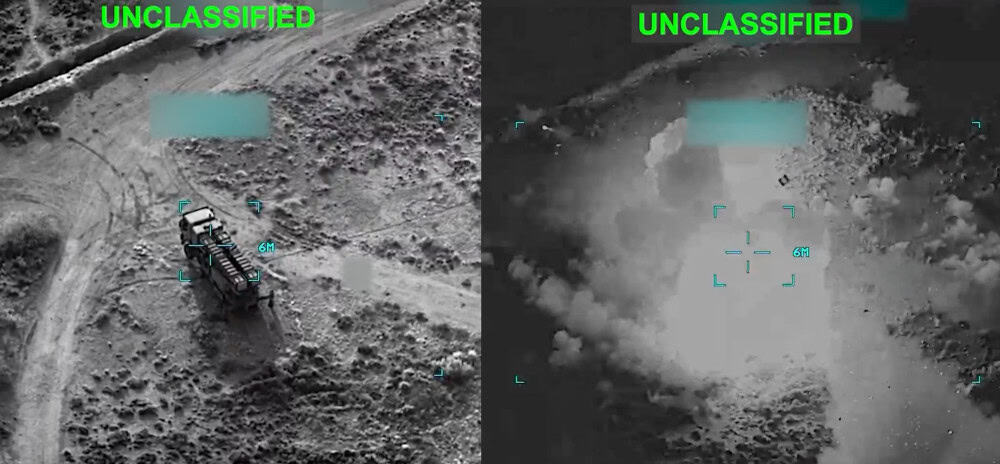
In a significant escalation of regional tensions, the United States and Israel initiated a synchronized military offensive against multiple strategic locations within the Islamic Republic of Iran during the early hours of February 28. The American component of this extensive operation was officially designated "Operation Epic Fury" by the Pentagon, while Israel referred to its parallel efforts as "Operation Lion's Roar." This coordinated campaign reportedly aimed not only at dismantling the Iranian regime's military infrastructure but also at targeting its most senior leadership. Crucially, an Israeli official conveyed to Reuters that the joint operation successfully eliminated Supreme Leader Ali Khamenei, Iran's highest authority. This development marks an unprecedented moment in the long-standing geopolitical friction involving these nations, signaling a dramatic shift in foreign policy approaches towards Tehran and potentially reshaping the power dynamics across the Middle East. The scope and stated objectives of this offensive indicate a decisive move to neutralize perceived threats emanating from Iran, as articulated by both US and Israeli leadership.
The rationale behind this extraordinary military action was articulated by President Donald Trump in a video statement released around 3 am EST. According to reports, President Trump framed the operation as a necessary measure to safeguard the American populace by neutralizing what he described as imminent threats posed by the Iranian government. He underscored a history of antagonism from the Islamic Republic towards the United States, tracing back to the 1979 hostage crisis and citing instances of Iranian proxies causing casualties among US personnel throughout the Middle East. Furthermore, President Trump's remarks highlighted two persistent concerns regarding Tehran's capabilities: its potential for nuclear weaponization and its development of long-range ballistic missiles. Concurrently, Israeli Prime Minister Benjamin Netanyahu echoed similar sentiments, stating that the primary objective of the operation was to decisively end the perceived menace emanating from the Ayatollah regime in Iran. These statements collectively provide critical context for the joint military campaign, emphasizing a shared perception of an enduring and escalating threat from Tehran.
President Trump's address concluded with a direct appeal to the Iranian populace, signaling a broader strategic objective beyond military strikes. He declared that "the hour of your freedom is at hand," urging Iranian citizens to seek shelter until the conclusion of the US air campaign, after which they should "take over your government." This call to action indicated Washington's intention to support anti-regime movements within Iran with what he described as overwhelming strength and decisive force. Moreover, President Trump issued a stark ultimatum to the Islamic Revolutionary Guard Corps (IRGC), the Iranian armed forces, and police units, instructing them to lay down their arms and accept "total immunity or face certain death." In a parallel message, Prime Minister Netanyahu specified that the Israel Defense Forces (IDF) were targeting the "oppressive regime, facilities of the Revolutionary Guards and the Basij," the latter being Tehran's internal security paramilitary force. These detailed statements from both leaders underscore the comprehensive nature of the campaign, extending from military objectives to explicit calls for internal political change within Iran.
The coordinated military campaign and the reported elimination of Supreme Leader Ali Khamenei represent a profound shift in international relations and regional stability. This action, particularly the targeting of a nation's top spiritual and political leader, signifies an unprecedented level of direct confrontation. The explicit calls for regime change from both President Trump and Prime Minister Netanyahu, coupled with the ultimatum issued to Iran's security forces, suggest a strategy aimed at fundamentally altering Iran's political landscape. Such a move carries significant implications for the future of the Middle East, potentially leading to widespread instability, retaliatory actions, or a dramatic internal power struggle within Iran. The success or failure of the US and Israeli objectives, including the encouragement of an anti-regime movement, will likely hinge on the immediate aftermath of the strikes and the response of the Iranian people and its remaining leadership. This aggressive posture could also reshape alliances and rivalries across the globe, forcing international actors to re-evaluate their positions in a newly volatile geopolitical environment.
In summary, the joint US-Israeli military operations, "Operation Epic Fury" and "Operation Lion's Roar," launched on February 28, mark a historic and potentially transformative moment in the ongoing tensions with Iran. With the reported elimination of Supreme Leader Ali Khamenei, attributed to an Israeli official, and the explicit calls for regime change by both President Trump and Prime Minister Netanyahu, the campaign extends far beyond conventional military objectives. The coming days will be critical in observing the immediate reactions from Tehran, the response of the Iranian populace to calls for internal change, and the broader international community's stance on this dramatic escalation. The world watches closely to see how this decisive action will reshape the future of Iran and the geopolitical dynamics of the Middle East.