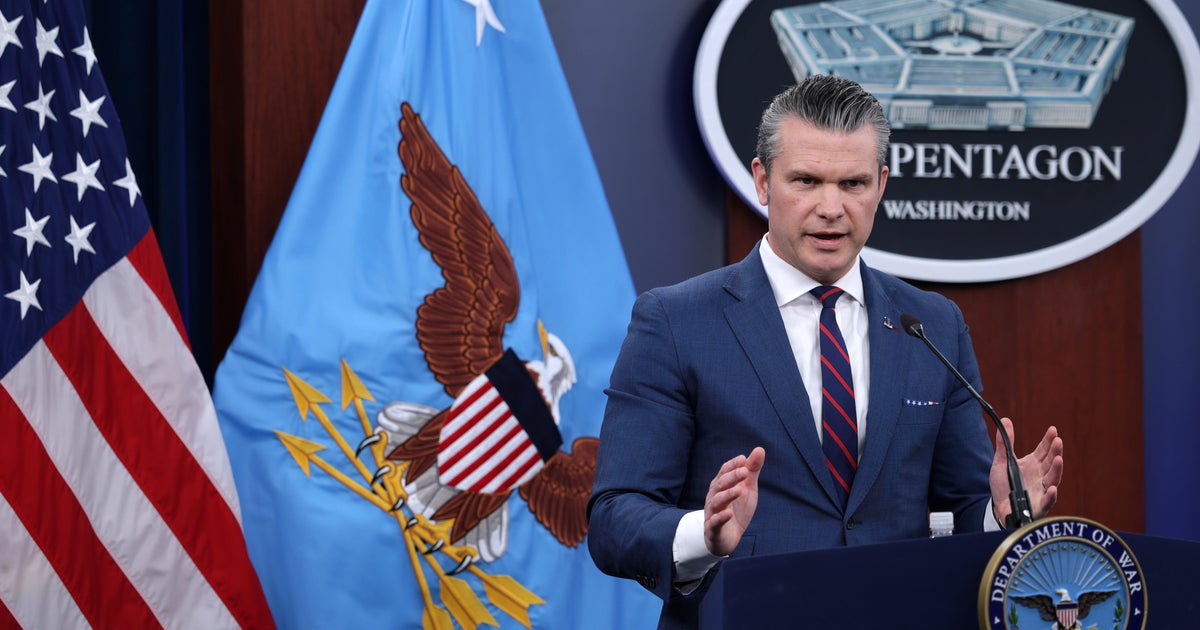
The United States is fully committed to its military campaign against Iran, with Defense Secretary Pete Hegseth declaring on Thursday that the nation possesses the capability to "sustain the fight for as long as it takes." This assertion comes as the conflict, dubbed Operation Epic Fury, entered its sixth day, amidst ongoing Iranian operations. Speaking from Tampa alongside Admiral Brad Cooper, who commands U.S. Central Command and oversees American forces in the Middle East, Secretary Hegseth directly addressed the perceived Iranian strategy, stating that Tehran is likely banking on the U.S. lacking the endurance for a prolonged engagement. However, he firmly countered this notion, emphasizing the military's robust capacity. The briefing provided an update on the extensive operations, which have seen significant developments, including the recent sinking of an Iranian warship, marking a historic naval engagement for the U.S. Navy.
Secretary Hegseth's recent remarks underscore a resolute stance that the U.S. timeline for this mission is self-determined and not subject to external pressures. Just the day prior, on Wednesday, the Defense Secretary had indicated that Operation Epic Fury was merely in its initial stages, suggesting a long-term commitment rather than a swift conclusion. The sinking of an Iranian warship by a U.S. torpedo, an event also confirmed by Hegseth on Wednesday, represents a significant military milestone, being the first instance of the U.S. Navy achieving such a feat since the Second World War. This act serves as a potent demonstration of American naval power and its willingness to engage directly. Furthermore, Hegseth assured reporters that the U.S. possesses an ample supply of weaponry, dismissing any concerns about potential shortages that could hinder ongoing or future operations.
Providing further operational specifics, Admiral Brad Cooper outlined the strategic direction for the next phase of Operation Epic Fury, which will concentrate on systematically dismantling Iran's capacity for missile production. Cooper acknowledged that this particular objective is already in progress but will necessitate a considerable duration to achieve fully. Detailing the intensity of recent actions, Admiral Cooper reported that over the preceding 72 hours, American bomber aircraft had successfully targeted nearly 200 sites deep within Iranian territory, including locations in and around the capital, Tehran. On Thursday, B-2 stealth bombers were deployed to deliver numerous 2,000-pound penetrator munitions, specifically aimed at deeply entrenched ballistic missile launch facilities. In addition to these aerial assaults, U.S. forces have reportedly neutralized 30 Iranian naval vessels, among them a drone carrier described as comparable in size to a World War II-era aircraft carrier. Secretary Hegseth also declared that the U.S. is actively establishing complete air superiority over the region's skies. However, a report from CBS News earlier on Thursday highlighted a potential vulnerability for regional allies, indicating that Arab nations in the Persian Gulf are experiencing critically low stocks of interceptor missiles needed to counter Iranian retaliatory attacks.
The strategic pivot towards systematically dismantling Iran's missile production capabilities, as articulated by Admiral Cooper, signals a long-term approach designed to degrade Tehran's offensive capacity at its source. This objective, while ambitious and time-consuming, aims to reduce Iran's ability to project power and threaten regional stability. H.R. McMaster, a CBS News contributor and former National Security Advisor during President Trump's first term, offered an expert perspective following the press conference, suggesting that U.S. strikes against Iranian air defense systems are crucial for enabling sustained air operations and ensuring the freedom of movement for American aircraft. This aligns with Secretary Hegseth's declaration of establishing "total dominance over the skies," which is a prerequisite for effective long-range strikes and intelligence gathering. The U.S. commitment to a protracted engagement, coupled with assurances of abundant munitions, indicates a resolve to see the mission through, potentially reshaping the regional military balance and forcing a re-evaluation of Iran's strategic calculus.
In summary, the United States is demonstrating a robust and sustained commitment to Operation Epic Fury, with Defense Secretary Pete Hegseth asserting the military's capacity to endure the conflict for an indefinite period. Key developments include the historic sinking of an Iranian warship and extensive aerial bombardments targeting critical Iranian infrastructure, particularly missile production facilities. While U.S. officials project confidence in their operational capabilities and strategic dominance, particularly in the air, reports of dwindling interceptor supplies among Arab allies in the Persian Gulf introduce a potential challenge for regional defense. Moving forward, observers will closely monitor the progress of efforts to dismantle Iran's missile capabilities and assess the broader implications of this protracted engagement on regional security dynamics and international relations.