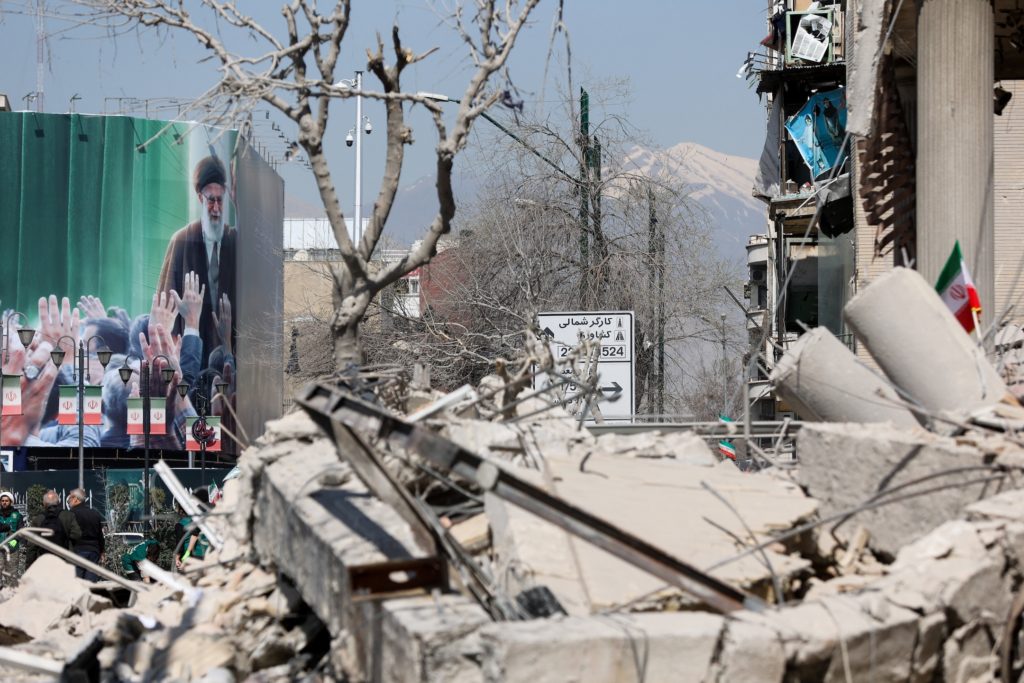
The United States has issued a stark declaration, asserting that its conflict with Iran has merely commenced, signaling a potential for intensified and prolonged engagement. This pronouncement, made on Wednesday, follows a significant expansion of hostilities, including an unprecedented event where a U.S. submarine deployed a torpedo to neutralize an enemy warship – a military action not witnessed since the Second World War. Concurrently, the conflict broadened geographically as Iranian forces reportedly launched a drone into territory belonging to the North Atlantic Treaty Organization (NATO), marking a direct challenge to the alliance. According to various reports, American forces have conducted over 2,000 strikes against targets, while Iran's health ministry has reported a grim toll of more than 920 fatalities within its borders, underscoring the severe human cost of the escalating confrontation. These developments, as detailed in recent dispatches, paint a picture of a rapidly intensifying and increasingly complex regional conflict with far-reaching implications.
The latest series of events represents a dramatic escalation in an already volatile geopolitical landscape, fundamentally altering the trajectory of the U.S.-Iran confrontation. The U.S. declaration that the 'war has only just begun' suggests a strategic shift towards a more aggressive and sustained campaign, moving beyond what might have been perceived as limited engagements. The reported use of a submarine-launched torpedo to sink a warship carries immense historical and tactical weight, signifying a commitment to high-intensity naval warfare and demonstrating advanced military capabilities in a manner unseen for decades. This particular action underscores the gravity of the current hostilities, elevating the conflict to a level of conventional warfare rarely observed in the post-WWII era. Furthermore, Iran's alleged drone strike into NATO territory introduces a dangerous new dimension, potentially drawing international alliances directly into the fray and raising concerns about regional stability and broader global security implications. These actions collectively indicate a profound deepening of the conflict, moving beyond proxy skirmishes to direct, high-stakes military confrontations.
Specific details emerging from the conflict zone highlight the intensity and scope of the ongoing hostilities. The reported drone incursion by Iran into NATO-aligned territory is a particularly provocative act, challenging the collective defense principles of the transatlantic alliance and potentially triggering a robust international response. While the precise target and impact of the drone are not fully detailed in available reports, the mere act of violating NATO airspace or land signifies a significant escalation in Iran's operational reach and willingness to confront a broader coalition. On the U.S. side, the reported figure of over 2,000 targets struck suggests a comprehensive and sustained air and naval campaign aimed at degrading Iranian military capabilities and infrastructure. These strikes, according to official statements, are part of a broader strategy to counter Iranian aggression. Tragically, the human toll continues to mount, with Iran's health ministry indicating that more than 920 individuals have lost their lives, a stark reminder of the devastating impact of modern warfare on civilian populations and military personnel alike. These figures, while independently reported, underscore the severe consequences of the expanding conflict.
Analysts and observers are closely scrutinizing these developments, noting that the U.S. declaration of the war having 'only just begun' signals a long-term commitment to military action, potentially reshaping regional power dynamics for years to come. This statement, according to expert perspectives, could indicate a shift from retaliatory strikes to a more proactive and sustained campaign aimed at achieving broader strategic objectives. The expansion of the conflict into NATO territory, as evidenced by the drone incident, raises critical questions about the potential for a wider internationalization of the conflict, compelling allied nations to consider their responses under collective defense treaties. Furthermore, the employment of sophisticated naval assets, such as a submarine-launched torpedo against a warship, demonstrates a willingness to engage in high-end conventional warfare, which could have significant implications for maritime security and global trade routes. The sheer scale of U.S. strikes and the tragic human cost reported by Iran underscore the intense nature of the current engagement and the potential for further destabilization across the Middle East.
In summary, the U.S.-Iran conflict has entered a significantly more intense and unpredictable phase, marked by a clear declaration from the United States of a prolonged engagement. Key escalations include Iran's drone strike into NATO territory and a historic U.S. submarine torpedo attack on a warship, the first such event since World War II. With over 2,000 reported U.S. strikes and more than 920 fatalities reported by Iran's health ministry, the human and material costs are rapidly escalating. The implications of these developments are profound, suggesting a potential for broader international involvement and a sustained period of military confrontation. Observers will be closely monitoring diplomatic efforts, further military actions, and the evolving humanitarian situation as the conflict continues to unfold, with the potential for far-reaching consequences for regional and global stability.