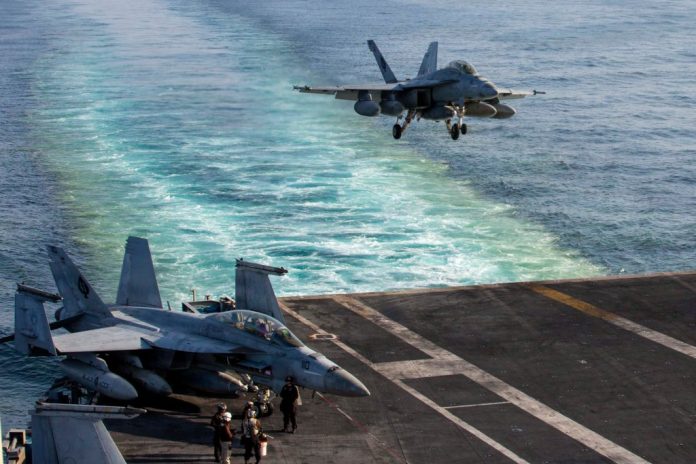
A significant escalation in the Middle East has unfolded over the past week, with reports indicating a joint military campaign by the United States and Israel against Iran. This intense period of conflict has reportedly resulted in the death of Ayatollah Ali Khamenei, Iran's supreme leader, alongside numerous high-ranking Iranian military and security officials. Sources indicate that critical Iranian military infrastructure, including air defense systems, command and control centers, and naval assets, has been largely incapacitated. While these developments mark a substantial blow to the Iranian regime, concerns are mounting regarding the strategic costs incurred by the United States. Specifically, reports highlight a significant depletion of the already limited U.S. stockpile of air defense munitions, raising questions about future military preparedness and the capacity to address ongoing threats, even as Iran reportedly continues to launch drone and missile attacks across the wider Middle East region.
The ongoing joint U.S.-Israeli military action, now approaching its seventh day, represents a dramatic shift in regional dynamics. This coordinated effort has targeted the core of Iran's military and political establishment, with the reported elimination of its top leadership and the widespread destruction of its conventional defense capabilities. The strategic importance of these reported losses cannot be overstated, potentially reshaping the balance of power in the Middle East. However, the intensity of the conflict has also brought to light critical vulnerabilities within U.S. military readiness. The rapid expenditure of air defense munitions underscores a pre-existing challenge concerning the adequacy of American stockpiles, a factor that could have far-reaching implications for Washington's ability to project power and respond to future global contingencies, even as the immediate objectives against Iran appear to have been met.
A pressing concern emerging from the recent hostilities is the substantial draw on the United States' air defense munitions inventory. According to reports, a considerable portion of this stockpile, which was already deemed insufficient, has been expended during the operations against Iran. Experts suggest that merely increasing Pentagon purchase orders will not suffice to rapidly replenish these critical assets. Rebuilding the U.S. capacity to credibly counter sophisticated missile threats, such as potential barrages from China in a hypothetical future conflict over Taiwan, is projected to be a protracted endeavor. Officials estimate that it could take until at least 2029 to achieve a satisfactory level of readiness, and this timeline is contingent upon several challenging factors: a fundamental transformation in the defense industrial base, the absence of other significant global conflicts, and sustained, aggressive procurement efforts by the current U.S. administration. Meanwhile, despite the reported damage to its military infrastructure, Iran reportedly continues to deploy drones and missiles against targets throughout the Middle East.
The strategic implications of the depleted U.S. air defense munitions extend far beyond the immediate conflict with Iran. Analysts suggest that this vulnerability could significantly impact America's ability to deter or respond to aggression in other critical theaters, particularly in the Indo-Pacific. The prospect of facing a major power like China in a conflict, such as over Taiwan, while simultaneously grappling with an inadequate missile defense inventory, presents a formidable challenge to U.S. national security. This situation highlights a broader issue of industrial capacity and the speed at which the defense sector can scale up production to meet wartime demands. Furthermore, with the reported demise of Ayatollah Ali Khamenei, some sources raise concerns about the potential for a fragmented or more radicalized Iranian response, including a possible surge in terrorist activities and an increased risk of operatives attempting to cross U.S. borders, adding a complex layer to post-conflict security considerations.
In conclusion, while the joint U.S.-Israeli military operations have reportedly achieved significant immediate objectives against Iran, including the neutralization of key leadership and military assets, the strategic costs for the United States are substantial and long-term. The critical depletion of air defense munitions exposes a significant vulnerability that could hamper future U.S. military readiness and its capacity to address emerging global threats, particularly in the context of potential conflicts with adversaries like China. The arduous path to reconstituting these vital stockpiles, potentially stretching until the end of the decade, necessitates a comprehensive review of defense industrial capabilities. As the region navigates the aftermath of these intense hostilities, continued vigilance will be paramount, not only to counter ongoing Iranian aggression but also to monitor potential shifts in global security landscapes and address concerns regarding domestic security in the wake of leadership changes in Tehran.