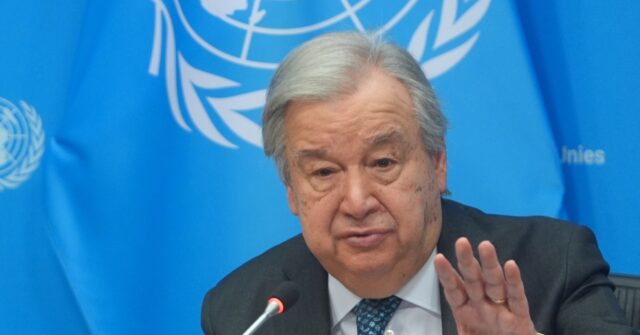
An urgent session of the United Nations Security Council has been scheduled for Saturday to address recent military actions undertaken by the United States and Israel against targets within Iran. This development follows swift condemnation from prominent United Nations officials regarding the strikes. According to reports from the Reuters news agency, the Security Council is slated to gather around 4 p.m. local time to deliberate on what has been identified as "Operation Epic Fury." This operation, initiated by U.S. President Donald Trump, reportedly aims to neutralize the Islamic nation's missile capabilities and potentially facilitate a change in its current Islamist government. The international community is closely watching these events, as the implications for regional stability and global diplomacy are significant. The rapid response from the UN leadership underscores the gravity of the situation, highlighting widespread concerns about escalating tensions in an already volatile region. The meeting's agenda is expected to focus on de-escalation and the immediate cessation of hostilities, reflecting the international body's mandate to maintain global peace and security.
The backdrop to these recent strikes is a long-standing and complex history of geopolitical friction involving Iran, the United States, and Israel. For decades, Iran's development of its missile program and its regional influence have been a source of significant concern for numerous international actors, particularly the U.S. and Israel, who view these as destabilizing factors. The nature of Iran's government, often described as an Islamist regime, has also been a point of contention, leading to various international sanctions and diplomatic pressures over the years. Previous efforts to curb Iran's nuclear ambitions and missile development through multilateral agreements have often been fraught with challenges, contributing to a persistent state of tension. This latest military engagement, dubbed Operation Epic Fury, represents a significant escalation in this ongoing standoff, moving beyond economic and diplomatic measures to direct military intervention with stated objectives that include not only disabling critical military infrastructure but also potentially altering the political landscape of the nation. Such actions invariably raise questions about sovereignty, international law, and the potential for broader conflict in the Middle East.
The United Kingdom, which currently holds the rotating presidency of the Security Council, will chair the critical Saturday meeting. British Prime Minister Sir Keir Starmer clarified that while UK forces are not directly participating in Operation Epic Fury, British aircraft are present in the airspace over the Middle East as part of a broader defensive posture. In a coordinated appeal, Prime Minister Starmer, alongside German Chancellor Friedrich Merz and French President Emmanuel Macron, issued a joint call for Iran to refrain from any further indiscriminate military strikes. Speaking from Downing Street, the UK leader delivered a pointed message, asserting that Iran possesses the agency to bring the current crisis to an end. He urged the Iranian leadership to cease any additional military actions, dismantle its weapons program, and discontinue what he described as the severe violence and oppression against its own populace, emphasizing the Iranian people's inherent right to determine their future. Separately, French President Macron had earlier emphasized the necessity of an urgent Security Council meeting, underscoring the immediate need for international diplomatic intervention to resolve the burgeoning conflict.
The international community's reaction, particularly the swift condemnation from United Nations leaders and the urgent convening of the Security Council, signals a profound concern over the potential for widespread escalation. Analysts suggest that direct military strikes aimed at a nation's missile capabilities and with the explicit goal of regime change represent a significant departure from conventional diplomatic and coercive strategies, potentially setting a dangerous precedent for international relations. The coordinated calls for de-escalation from key European powers — the UK, Germany, and France — highlight a nuanced but firm stance, emphasizing restraint even as they acknowledge the complexities of regional security. This collective European position may also reflect a desire to prevent a wider conflict that could destabilize global energy markets and trigger a humanitarian crisis. Observers are closely watching how the Security Council meeting will navigate these complex issues, balancing the stated security interests of the U.S. and Israel with the imperative of maintaining international peace and upholding principles of national sovereignty, especially in the face of UN condemnation.
As the United Nations Security Council prepares to convene, the world watches a critical juncture unfold in the Middle East. The immediate focus will be on the outcomes of Saturday's emergency session, particularly any resolutions or joint statements that may emerge regarding the U.S.-Israel strikes and the calls for Iranian restraint. The diplomatic efforts of the UK, France, and Germany underscore a collective European push for de-escalation, contrasting with the assertive military actions. Moving forward, the international community will be closely monitoring any retaliatory actions from Iran, the ongoing humanitarian situation, and the broader geopolitical ramifications of Operation Epic Fury. The path to stability in the region remains precarious, with the potential for either a concerted diplomatic push towards peace or a further descent into conflict hanging in the balance, making the upcoming discussions at the UN Security Council paramount.