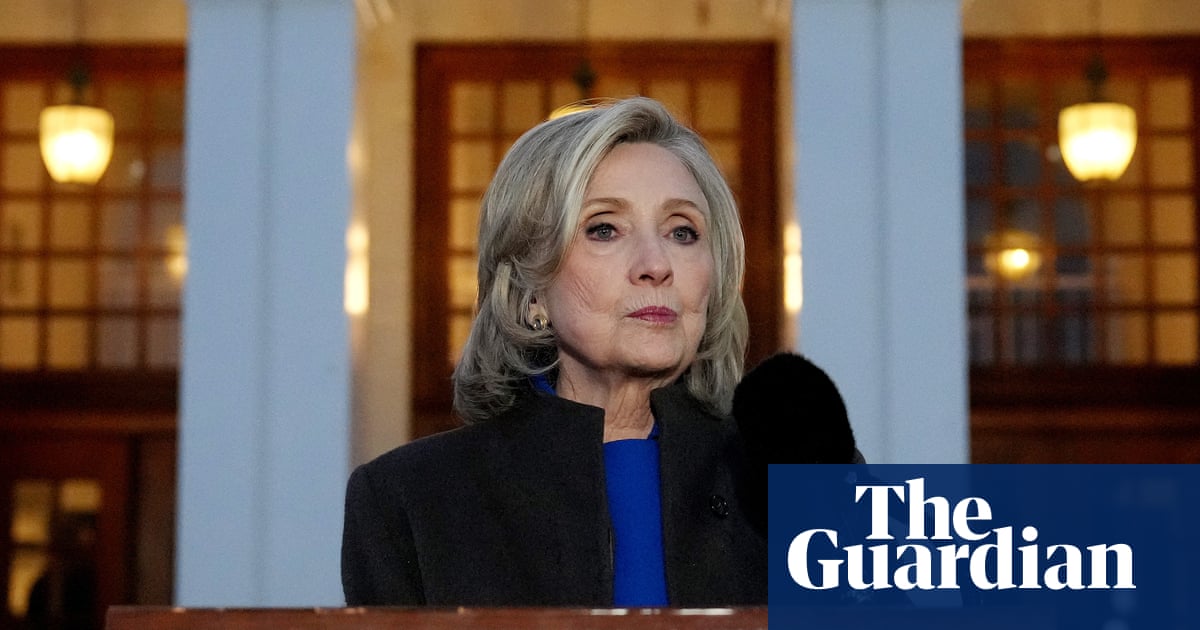
Former Secretary of State Hillary Clinton delivered a forceful condemnation of a congressional committee on Thursday, accusing its Republican members of orchestrating a politically motivated 'fishing expedition' designed to divert attention from former President Donald Trump's actions. During a closed-door testimony, Clinton reportedly launched into a scathing opening statement, characterizing the proceedings as 'partisan political theatre' and 'an insult to the American people.' She reiterated her consistent denial of ever having met Jeffrey Epstein, the disgraced financier and convicted sex trafficker who passed away in 2019. Clinton's appearance before the committee, which is probing her purported connections to Epstein, followed a subpoena from Republican chair James Comer, with the former First Lady and Secretary of State reluctantly agreeing to testify under threat of contempt of Congress charges. Her testimony marks the initial phase of a two-day session, which will also include a deposition from her husband, former President Bill Clinton, scheduled for Friday, both taking place at an arts center near their Chappaqua, New York residence.
The congressional inquiry into alleged links between high-profile figures and Jeffrey Epstein has been a subject of intense public and political scrutiny since the financier's death in 2019. Epstein, a wealthy businessman, was convicted of sex offenses and faced further charges of sex trafficking before his demise, which was officially ruled a suicide. The committee's stated objective is to uncover the full extent of Epstein's network and hold accountable those who may have facilitated or benefited from his illicit activities. However, the decision to compel the Clintons' testimony has been framed by some, including Hillary Clinton herself, as a partisan maneuver. The subpoena issued by Republican chair James Comer underscores the committee's determination to pursue lines of inquiry related to the Clintons, despite their repeated denials of any involvement with Epstein's criminal enterprise. This ongoing investigation unfolds against a backdrop of heightened political polarization, where congressional oversight often becomes a battleground for competing political narratives and accusations of selective targeting.
In her prepared remarks, which she shared publicly, Hillary Clinton did not mince words, asserting that the committee had compelled her testimony despite being 'fully aware that I have no knowledge that would assist your investigation.' She contended that the true purpose was 'to distract attention from President Trump’s actions and to cover them up despite legitimate calls for answers.' Clinton further excoriated the proceedings as being 'designed to protect one political party and one public official, rather than to seek truth and justice for the victims and survivors.' Drawing on her extensive career campaigning against sex trafficking, she challenged the committee's sincerity, stating that if it were genuinely committed to understanding Epstein's crimes, it would directly question the current president under oath about his alleged 'tens of thousands of times' appearing in Epstein's files, rather than relying on 'press gaggles' for answers. She concluded that a serious investigation would not 'waste time on fishing expeditions,' implying a wealth of more pertinent information remains unaddressed.
Observers suggest that Hillary Clinton's combative stance highlights the deeply entrenched partisan divisions that often characterize high-profile congressional investigations. Her direct accusation of a 'fishing expedition' aimed at protecting Donald Trump underscores a broader political strategy of deflection and counter-accusation, a common feature in contemporary American politics. This approach, according to political analysts, serves to frame the inquiry not as a search for truth, but as a politically motivated attack, thereby potentially undermining the committee's legitimacy in the eyes of a significant portion of the public. The implications extend beyond the immediate testimony, touching upon the perceived weaponization of congressional power and the ongoing struggle for narrative control between the two major political parties. The committee's decision to pursue the Clintons, despite their denials, also raises questions about the scope and focus of its mandate, particularly when juxtaposed with Clinton's challenge to investigate other figures more directly.
Hillary Clinton's fiery testimony represents a significant moment in the ongoing congressional investigation into Jeffrey Epstein's connections, firmly establishing her position that the inquiry is politically motivated and lacks genuine investigative intent. Her accusations of partisan theatre and an attempt to shield Donald Trump set a contentious tone for the proceedings, which are set to continue with Bill Clinton's deposition. The coming days will likely see further political maneuvering and public statements as the committee attempts to advance its investigation. The ultimate impact of these testimonies on public perception and the broader political landscape remains to be seen, as both sides continue to vie for control of the narrative surrounding Epstein's dark legacy and the accountability of those associated with him.