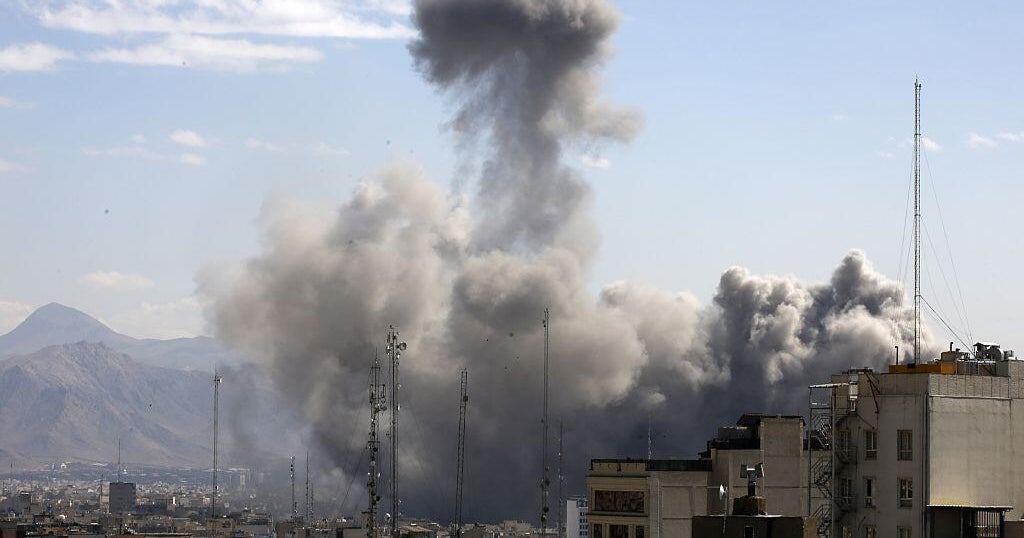
A significant military operation unfolded on Saturday, as the United States and Israel launched a coordinated assault across Iran, according to multiple reports. This extensive strike, as articulated by President Trump, was purportedly designed to dismantle the Iranian regime's military infrastructure and neutralize the perceived threat of Tehran developing nuclear weapons. In swift response, Iran initiated its own series of missile attacks, targeting both Israel and several Arab nations allied with the U.S. The initial day of these escalating hostilities saw the death of Iran's Supreme Leader, Ayatollah Ali Khamenei, a pivotal figure in the nation's leadership. The human cost of the conflict quickly mounted, with the U.S. Central Command (CENTCOM) confirming on Monday that six American service members had perished during the operation. Meanwhile, reports from Israel indicated at least eleven fatalities within its borders. The Iranian Red Crescent, a humanitarian organization, reported a far more substantial toll within Iran, estimating nearly 800 lives lost amidst the widespread attacks. This rapid escalation marks a critical juncture in Middle Eastern geopolitics, demonstrating a dramatic shift in the long-standing tensions between these regional and global powers.
The recent military actions represent a dramatic intensification of decades-long animosities between Iran, Israel, and the United States. For years, international concerns have centered on Iran's nuclear ambitions and its regional influence, which many nations, particularly Israel and the U.S., view as destabilizing. The stated objective behind Saturday's joint U.S.-Israeli offensive—to eradicate Iran's military capabilities and eliminate its potential for nuclear weapon development—underscores the profound strategic calculations driving this conflict. This move signals a decisive shift from previous diplomatic or covert efforts to a direct military confrontation aimed at fundamentally altering Iran's strategic posture. The Middle East, a region perpetually on edge, now faces an unprecedented level of overt warfare involving major state actors. The targeting of high-profile Iranian leadership, including the Supreme Leader, indicates a willingness to pursue regime-altering objectives, significantly raising the stakes and the potential for a broader, more protracted regional conflagration. The decision to launch such an extensive strike reflects a perceived urgency in addressing the Iranian threat, setting a new precedent for military intervention in the region.
The scope of the initial U.S.-Israeli offensive was geographically extensive, impacting numerous critical locations across Iran. According to Iranian news outlets and corroborated by reporting from CBS News and the Associated Press, significant strikes occurred in Isfahan, a city known for housing a major nuclear facility, as well as in the holy city of Qom. Other targeted areas included Karaj, Kermanshah, Lorestan, and Tabriz, indicating a broad effort to degrade Iran's infrastructure and strategic assets. An individual with direct involvement in the Israeli operations informed CBS News that the initial wave of attacks specifically aimed at key figures within the Iranian leadership, identifying Supreme Leader Ayatollah Ali Khamenei and President Masoud Pezeshkian as primary targets. Following these initial strikes, Iran's retaliatory actions were equally widespread, with missile attacks extending beyond Israel to target a multitude of U.S.-allied Arab nations. These retaliatory strikes reportedly impacted Jordan, Kuwait, Iraq, Bahrain, Qatar, the United Arab Emirates, Saudi Arabia, and Oman. The geographical spread of both the initial and retaliatory strikes has been visually documented by a map compiled by the CBS News data team, which synthesizes official government statements and journalistic reports to illustrate the comprehensive nature of the conflict.
The death of Supreme Leader Ayatollah Ali Khamenei, a figure who has dominated Iranian politics for decades, introduces profound uncertainty into the country's future leadership and potentially its strategic direction. His demise could trigger a power vacuum or a contentious succession process, with significant implications for both domestic stability and foreign policy. Regionally, Iran's broad retaliatory strikes against numerous U.S. allies underscore the immediate and widespread destabilization caused by the conflict. This expansion of hostilities beyond direct U.S.-Iran or Israel-Iran confrontation into neighboring states significantly complicates diplomatic efforts and raises the specter of a much larger regional war. Experts suggest that while the initial U.S.-Israeli strikes aimed to cripple Iran's military and nuclear ambitions, the robust and geographically extensive Iranian response indicates that these objectives may not have been fully achieved, or at least not without severe consequences. The involvement of so many nations, either as targets or as allies, transforms this conflict from a bilateral dispute into a multifaceted regional crisis, demanding urgent international attention and posing immense challenges for de-escalation. The immediate future will likely see heightened military readiness across the Middle East and intense diplomatic maneuvering to prevent further escalation.
In summary, the Middle East has been plunged into a new phase of intense conflict following a major U.S.-Israeli offensive against Iran and Tehran's subsequent widespread retaliatory missile attacks. The initial strikes, aimed at dismantling Iran's military capabilities and nuclear aspirations, resulted in the death of Supreme Leader Ayatollah Ali Khamenei and significant casualties on all sides, including U.S. service members and Israeli citizens, alongside hundreds of Iranians. Iran's response, targeting multiple U.S.-allied Arab nations, has dramatically broadened the scope of hostilities, transforming a long-simmering rivalry into an overt, multi-state confrontation. The immediate future remains highly volatile, with the potential for further military actions, shifts in regional alliances, and a pressing need for international intervention to prevent a full-scale regional war. Observers will be closely monitoring leadership transitions within Iran, the ongoing military postures of all involved parties, and any diplomatic initiatives aimed at de-escalation in this rapidly evolving and dangerous situation.