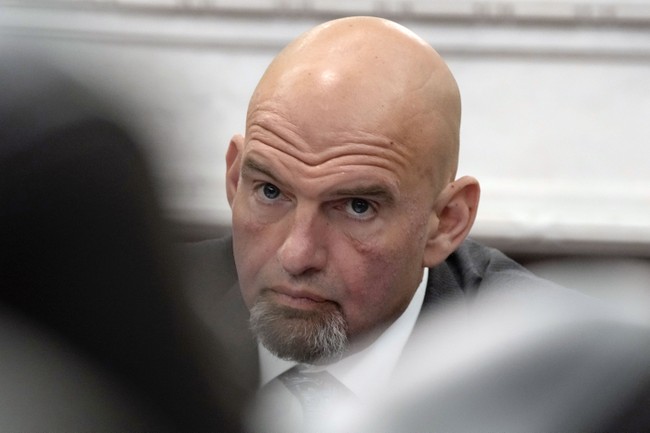
Senator John Fetterman, a Democrat representing Pennsylvania, recently adopted a notably independent stance in Washington, diverging from many within his own party regarding a United States military operation against Iran. On Tuesday, the senator engaged with reporters in an exchange that, according to observers, appeared less like a standard interview and more like an attempt to pressure him into condemning the U.S. strikes. Video footage of the interaction indicates that journalists repeatedly pressed the Pennsylvania Democrat concerning the operation, which targeted Iran’s leadership. The atmosphere quickly became confrontational, with several inquiries seemingly designed to elicit criticism of the strike. Senator Fetterman, recognizing the line of questioning, firmly refused to conform, instead offering a robust defense of the action and asserting that the world is now a safer and more just place following the removal of what he described as "one of the most evil people on the face of the earth," as reported by C-SPAN.
This recent public display of defiance against prevailing party sentiment and journalistic pressure is becoming a discernible pattern for Senator Fetterman, though it remains an unusual approach for most Democrats. His willingness to speak plainly and break ranks has been noted in previous instances, such as his common-sense remarks on voter identification, which also contrasted with typical Democratic positions. The political environment within the Democratic Party, as acknowledged by Senator Fetterman himself, often renders agreement with figures like President Donald Trump as politically 'toxic.' However, he has consistently signaled that such political pressures will not dictate his responses, particularly on matters of national security and foreign policy. The context of the recent strike follows decades of complex diplomatic efforts, economic sanctions, and protracted negotiations with the Iranian regime, which Fetterman suggested had yielded limited results, implying that the recent action was a necessary and effective alternative.
During the contentious press gaggle, Senator Fetterman directly addressed the perceived political difficulty for a Democrat to align with the President on any issue. He articulated his view, stating, "it's pretty toxic for a Democrat to say I happen to agree with the president on really anything at this point." Despite this, he challenged reporters to find opposition to the strike, noting that a common bipartisan consensus has been to prevent Iran from acquiring nuclear weapons. He then questioned why, if the strike contributed to this goal, its positive outcome could not simply be acknowledged. According to the C-SPAN footage, the senator specifically referred to the target of the strike as Iranian Supreme Leader Khamenei, emphasizing that his elimination made the world "safer, and it's more just now." He pressed the journalists, asking, "Why can't you just acknowledge that one of the most evil people on the face of the earth was erased? That's a good thing."
Senator Fetterman's outspoken support for the U.S. strike, particularly given its target, carries significant implications for both the Democratic Party and broader U.S. foreign policy discourse. His willingness to publicly endorse an action that many within his party might criticize, or at least remain silent on, highlights a potential fault line within the Democratic foreign policy establishment. While the party generally advocates for diplomatic solutions and de-escalation, Fetterman's stance suggests a pragmatic willingness to use force when deemed necessary and effective, particularly against figures he identifies as profoundly malevolent. This position could resonate with a segment of the electorate that values decisive action in foreign affairs, potentially offering a different model for Democratic engagement on national security issues. Experts suggest that such a stance, while potentially alienating some progressive elements, could also broaden the party's appeal by demonstrating a capacity for bipartisan alignment on certain strategic objectives, especially concerning adversaries like Iran.
In conclusion, Senator John Fetterman's recent defense of the U.S. strike against Iran's leadership marks a significant moment of political independence and direct confrontation with the press. His assertion that the world is "safer and more just" following the operation, coupled with his challenge to reporters to acknowledge the positive outcome, underscores a unique approach to foreign policy within the Democratic Party. This incident further solidifies Fetterman's reputation for bluntness and a willingness to break from party orthodoxy, even when it means aligning with a Republican president on sensitive issues. As debates surrounding U.S. engagement in the Middle East continue, observers will be watching to see if Fetterman's independent voice influences broader Democratic discourse or remains an outlier in the party's evolving foreign policy platform.