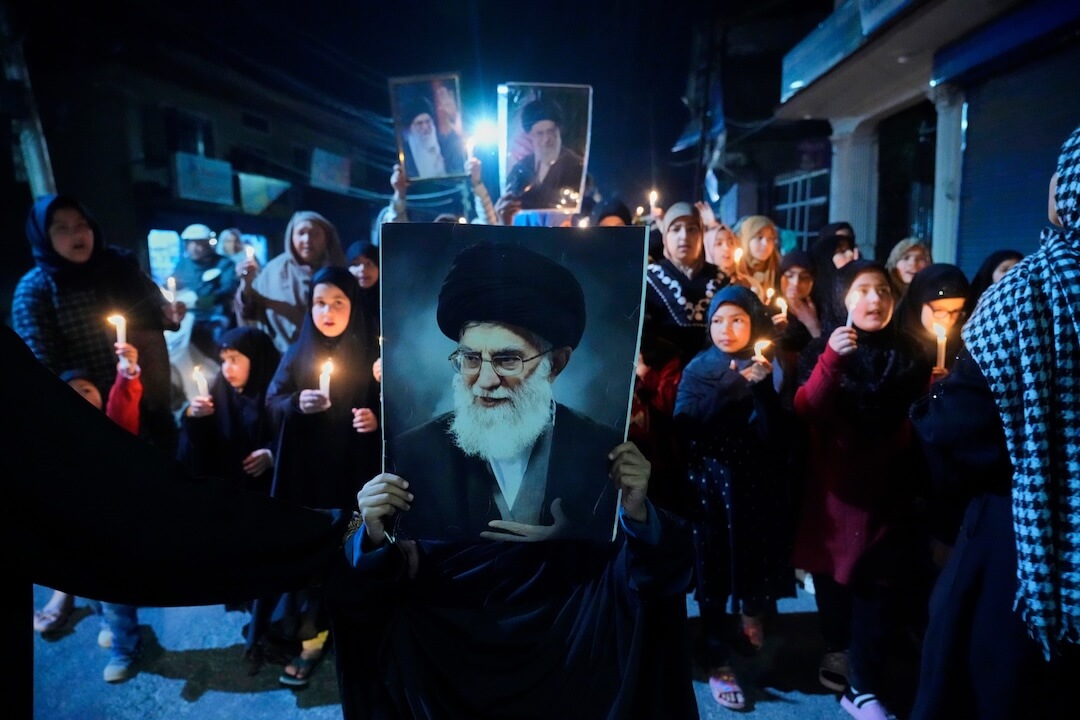
Iran's Supreme Leader, Ali Khamenei, was reportedly killed in an airstrike on his Tehran compound on the morning of February 28, 2026, marking the end of a nearly four-decade tenure as the most influential figure in Iranian politics. His passing brings into sharp focus the profound impact he had on the Islamic Republic, not only through his direct command of state apparatus but also through his extensive use of public addresses to shape national discourse. Independent analysis by Factnameh, a Persian-language fact-checking organization, sheds light on the nature of his public pronouncements, revealing a significant pattern in the accuracy of his claims. According to reports, this examination of 49 statements made by the former leader found a substantial majority to be either misleading, false, or outright ridiculous, offering a critical perspective on the information landscape under his leadership.
Khamenei's journey to becoming Iran's paramount leader began in the immediate aftermath of the 1979 revolution, where he emerged as a central architect of the new system. He served as Iran's president throughout the 1980s, a period of significant upheaval and consolidation for the nascent Islamic Republic. Following the death of Ayatollah Khomeini, he ascended to the position of Supreme Leader, a role he held for nearly forty years, cementing his status as the ultimate authority. During his extensive rule, Khamenei wielded immense power, functioning not only as the commander-in-chief of the armed forces but also holding the authority to appoint and dismiss the head of the judiciary. Furthermore, sources indicate he frequently intervened, both openly and covertly, in the affairs of cabinet ministers and members of parliament, demonstrating his pervasive influence across all branches of government. Beyond political and military control, he played a crucial role in formulating social and cultural policies, alongside defining Iran's major domestic, regional, and international strategies.
A cornerstone of Khamenei's authority was his prolific use of public speeches, which served as a primary conduit for communicating his core views and policies to diverse audiences. These addresses, sometimes delivered multiple times a week, were instrumental in projecting his vision and asserting his influence, complementing his extensive financial, military, bureaucratic, and diplomatic powers. To assess the factual basis of his public statements, Factnameh, an independent Persian-language fact-checking organization and a verified signatory of the International Fact-Checking Network Code of Principles, undertook a comprehensive review. Their examination of 49 specific claims attributed to the Supreme Leader yielded striking results: 13 statements were labeled 'Ridiculous,' 19 were rated 'False,' and 11 were categorized as 'Misleading.' Only two claims were found to be 'Half True,' with a mere four statements earning a 'True' rating. Factnameh reportedly initiated its first fact-check of a Supreme Leader's statement during its inaugural year of operation, specifically in Nowruz 2018, the Persian New Year.
The findings from Factnameh's rigorous analysis underscore a significant aspect of Khamenei's communication strategy: a substantial portion of his public rhetoric consisted of abstract concepts, general commentary on national affairs, and often included rhetorical threats directed at perceived 'enemies.' Such pronouncements, by their very nature, frequently eluded objective verification, making them difficult for fact-checkers to assess definitively. This pattern suggests a deliberate approach to shaping narratives that prioritized ideological messaging and strategic positioning over verifiable factual claims. The prevalence of statements deemed 'Ridiculous,' 'False,' or 'Misleading' by an independent body highlights the potential for a disconnect between official narratives and factual reality under his leadership. This method of communication, blending uncheckable rhetoric with verifiable but often inaccurate claims, played a crucial role in maintaining control over public perception and discourse within Iran and influencing regional and international narratives.
Ali Khamenei's nearly forty-year reign as Iran's Supreme Leader was characterized by an unparalleled concentration of power and a sophisticated deployment of rhetoric to guide the nation's trajectory. His death marks a pivotal moment, prompting a re-evaluation of the information environment he cultivated. The independent scrutiny of his public statements by Factnameh offers a critical lens through which to understand the veracity of the narratives he propagated. The overwhelming proportion of his claims found to be inaccurate or unverifiable underscores the challenges in discerning truth within the highly controlled information ecosystem of the Islamic Republic. As Iran navigates a future without its long-serving Supreme Leader, the legacy of his powerful, yet often factually dubious, rhetoric will undoubtedly remain a significant subject of study and debate.